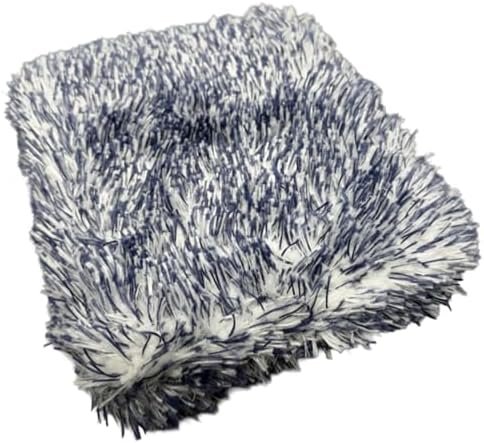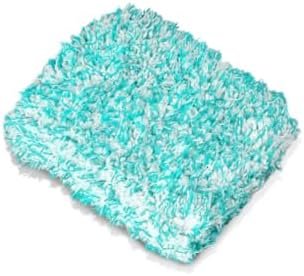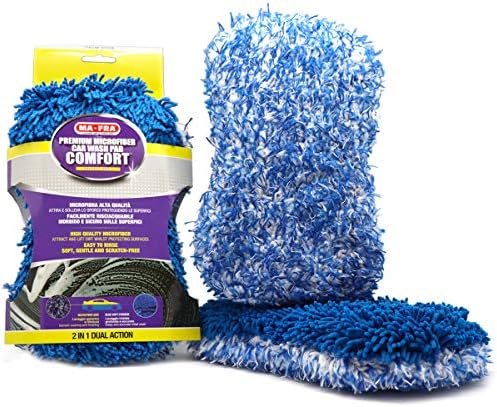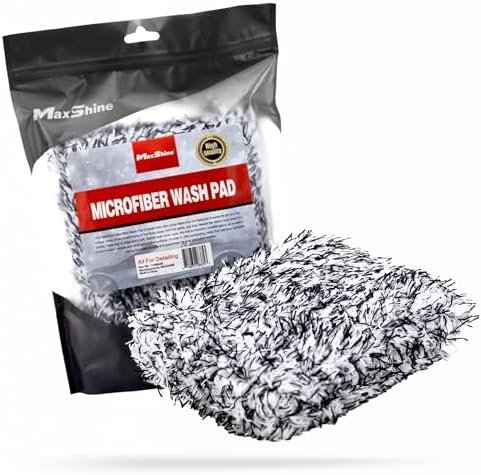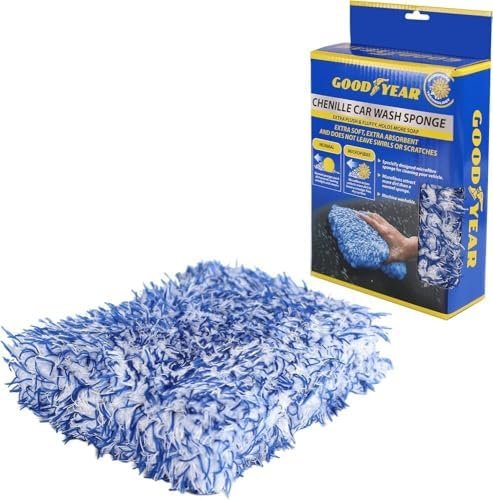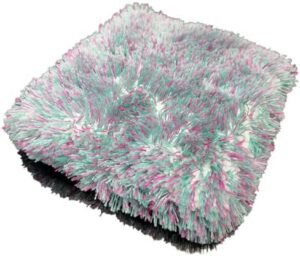




- 1000 GSM 80/20 blend
- Dual-length fibre design
- Removable foam inserts
- Mitt or pad use
| Product | Our Rating | Key Specs | ||
|---|---|---|---|---|
Wash Monster
|
|
Check Latest Price | ||
THOR Wash Boss V2
|
|
Check Latest Price | ||
MIC415
|
|
Check Latest Price | ||
Plush Wash Pad
|
|
Check Latest Price | ||
DabDab
|
|
Check Latest Price |
Wash pads sit between mitts and sponges. You hold them rather than wear them, which changes how pressure is applied. Done properly, they are just as capable as mitts. Done poorly, they increase the risk of dragging dirt.
Pads give you a controlled, flat contact surface, but technique plays a bigger role than with mitts.
With a pad, you are holding it rather than wearing it. That changes how pressure is applied and how it moves across the surface. A mitt conforms to your hand automatically. A pad requires more conscious attention to keep pressure even and light.
Most modern wash pads use plush microfibre, so performance is very close to a good wash mitt. The fibre length and density determine how well the pad traps contamination away from the surface rather than keeping it in contact with the paint.
Like mitts, the goal is simple: remove dirt without letting it grind into the paint. Pads do not replace pre-wash, and they do not fix poor technique. If the surface is not properly pre-cleaned, you are still making contact with contamination.
Good pads lift and hold dirt effectively, but they depend more on how they are used than mitts do.
Pile length, material, and structure each affect how safely the pad handles dirt.
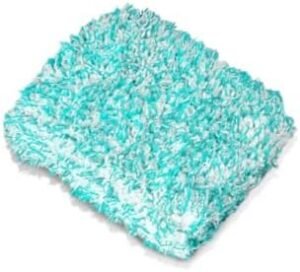
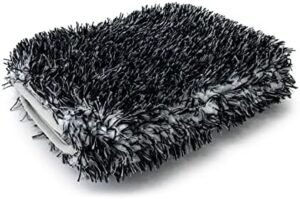
The closest alternative to a wash mitt. Thick fibres help pull dirt away from the surface and trap it safely within the pad. These are the safest and most versatile option, especially for paintwork, and are the natural starting point for most setups.
If you are moving from mitts to pads, start here. The long pile does the same job and the transition in technique is minimal.
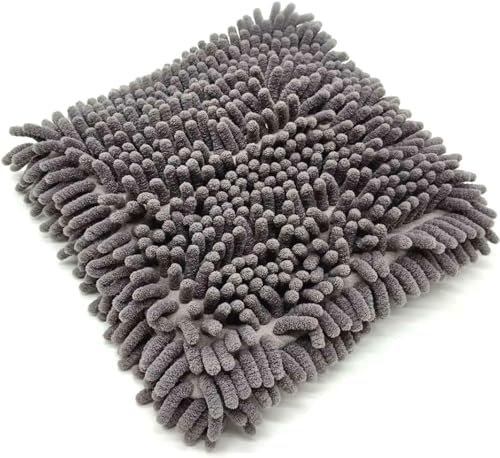
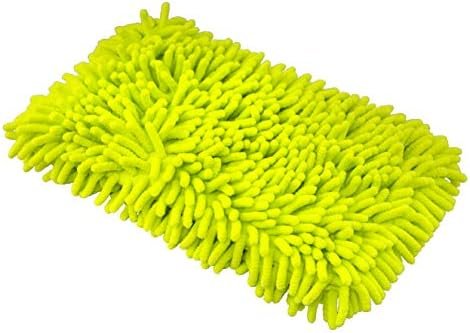
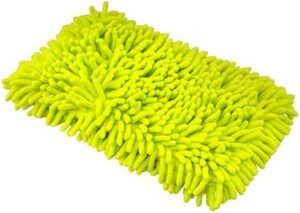
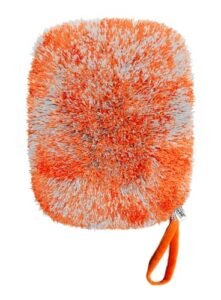
Similar to chenille mitts, with thicker noodle strands that hold a lot of shampoo and offer a cushioned feel in use. Slightly bulkier than flat alternatives, but effective at lifting dirt away from the surface on open panels.
A good choice if you prefer a heavily lubricated wash and like the feel of generous shampoo coverage across every panel.
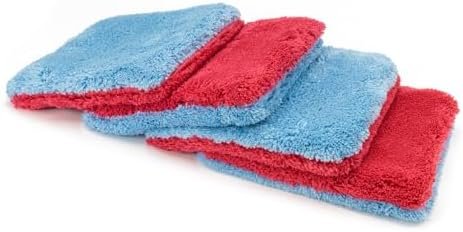
Shorter pile and more compact design. They feel more precise and easier to control, especially in tighter areas, but do not pull contamination as far away from the surface as plush options. Better suited to lighter dirt or well-maintained cars.
Best reserved for cars that are regularly washed and lightly soiled. On heavier contamination, the shorter pile increases risk.
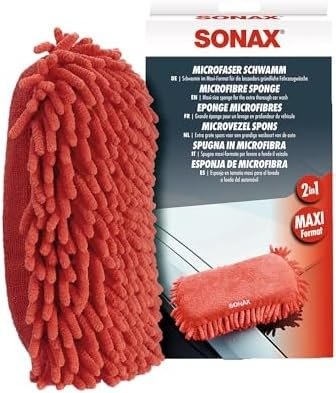
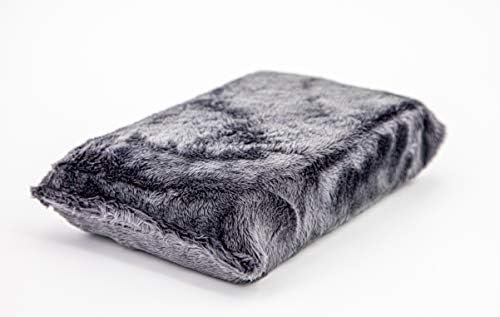
A mix of sponge structure with a microfibre outer layer, aiming to combine absorption with safer contact. Performance depends heavily on quality. Better versions behave close to proper wash pads, while lower-quality hybrids lean closer to traditional sponges.
Worth considering if you like the feel of a sponge but want better surface safety. Check fibre quality before buying. The outer layer is what matters most.
Each tool has a different relationship with pressure and technique in use.
Sit in the hand rather than wrapping around it. High-quality versions use the same plush microfibre as mitts, so dirt-lifting performance is very close. They are easier to drop and require slightly more attention to keep pressure even across different panel shapes.
Wrap around the hand, giving more even pressure and better feedback as you work across panels. They are harder to drop and tend to feel more intuitive on curved or complex bodywork. For most setups, still the safer default for beginners.
Newer grooved and cut sponge designs create channels to move dirt away from the surface, making them a step up from older flat designs. They still rely more on careful use and process than deep-pile pads or mitts for dirt separation.
The right pad depends as much on your wash method as on your paint condition.
Plush microfibre pads offer the closest performance to a wash mitt while keeping the pad format. Prioritise longer, thicker fibres. That is what separates safer pads from more basic ones.
→ Plush microfibre padIf you prefer generous shampoo coverage and a cushioned feel in use, chenille pads hold more product and work well across large open panels.
→ Chenille padFlatter pads offer more control and precision on cars that are washed regularly and stay lightly soiled. They require a bit more care than plush options on heavier contamination.
→ Flat microfibre padPads work particularly well here. Using a fresh pad for each section removes most of the contamination risk. Stock up on several and rotate through them rather than rinsing and reusing.
→ Multiple pads, any plush typePads are more technique-dependent than mitts. These four mistakes are the most common reason things go wrong.
Because pads sit in your hand, it is easier to press harder without realising. Let the shampoo and fibres do the work. If you are using pressure to move dirt, the pre-wash stage needs more attention.
Pads can hold a lot of dirt. Without proper rinsing or swapping between sections, that contamination gets spread across every panel. Whether you rinse in a bucket or swap pads, you need a system.
Pads are easier to drop than mitts. Once a pad hits the ground, it likely has debris in the fibres. Using it again without cleaning it first is a common cause of unexpected scratching.
Shorter fibres do not separate dirt as effectively. This increases the chance of dragging contamination across the surface. Flat pads are fine on lightly soiled paint, but the wrong choice on heavier dirt.
The care routine after each wash is what keeps your pads effective and your paint safe.
Remove all trapped dirt before storing. A thorough rinse after each session prevents contamination from setting into the fibres and carrying into the next wash.
No fabric softener. Use microfibre-safe detergent and keep pads away from regular laundry to avoid picking up lint or grit from other items in the load.
Store only when completely dry. Damp pads stored away will degrade faster and can develop odours that transfer during the next wash session.
If you are washing regularly, rotating between several pads extends their lifespan and ensures each one has time to dry properly between uses.
Click through to check today's price and availability from trusted retailers.
Find the best UK detailing products across our range of categories.


Your independent guide to the best car detailing products in the UK.
Hundreds of car cleaning products, pulled from trusted UK retailers across every category - shampoos, sealants, interior, glass, tools and more.
Customer ratings, review volume, price-to-performance and editor testing notes feed the score. No brand payments, ever.
Total Car Clean is 100% reader-supported. We may earn a small commission from affiliate links, but we remain unbiased to help you find the best products.