Best Pump Sprayers for Detailing

9 products ready to shop 9 products Last checked Checked:

Top Pump Sprayers Picks from the TCC Team

Product Our Rating Key Specs
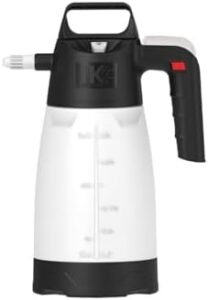
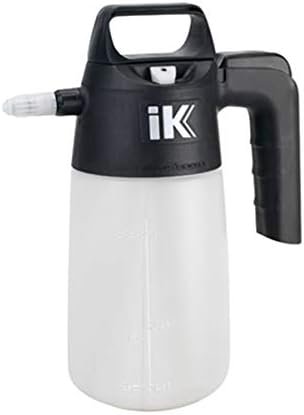
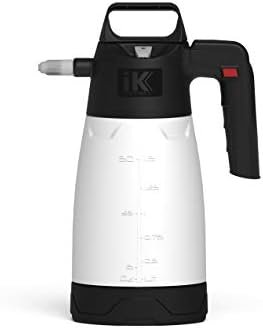
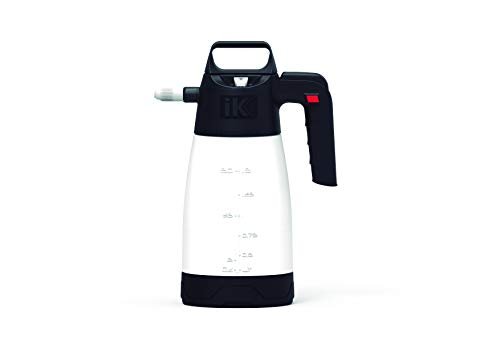
Hand Pressure Sprayer Multi
4.8

A professional-grade pump sprayer with acid-resistant Viton seals and adjustable cone and fan nozzles, built for applying harsh detailing chemicals safely and precisely.

  • Acid-resistant seals
  • Adjustable cone and fan
  • Wide stable base
  • EU-made
Check Latest Price
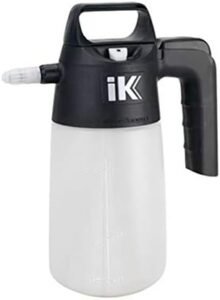
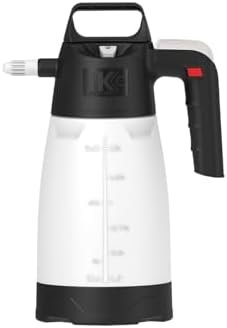
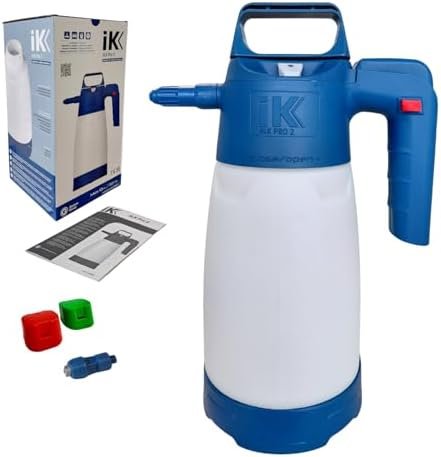
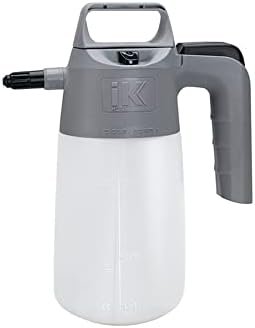
MULTI Pro 2 360°
4.7

A pressurised acid-resistant sprayer with a weighted flexible tube allowing spray in any position including upside down for complete coverage in tight areas.

  • Sprays fully upside down
  • Acid-resistant construction
  • 3 nozzles included
  • Safety lock and valve
Check Latest Price
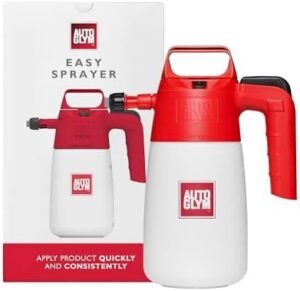
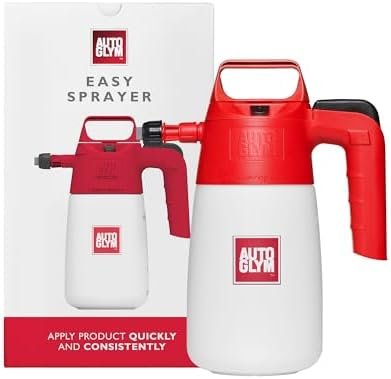
Easy Sprayer
4.5

A durable 1-litre multipurpose pressure sprayer delivering continuous spray with minimal pumping, compatible with a wide range of Autoglym cleaning products.

  • Continuous spray output
  • 1-litre capacity
  • Wide stable base
  • No pressure washer needed
Check Latest Price
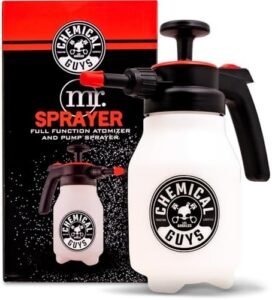
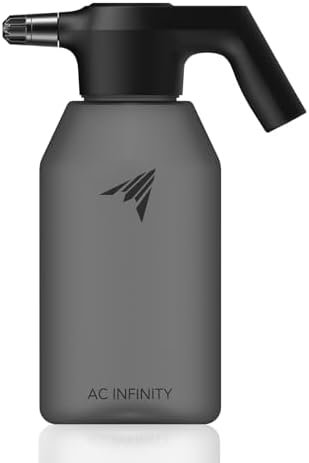
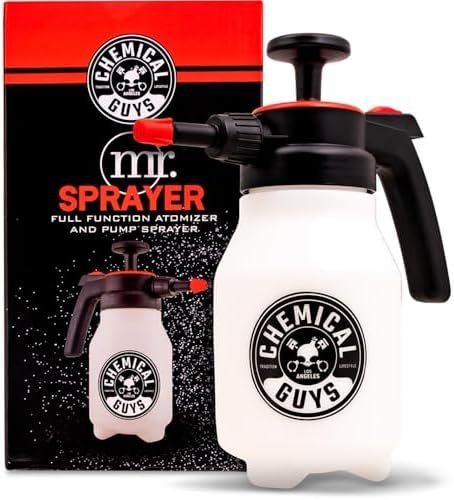
Mr. Sprayer
4.3

A 1.5L pump sprayer with a fully adjustable nozzle and locking trigger, featuring pre-labelled dilution markings for quick waterless washes and detail sprays.

  • EPDM alkaline-resistant seals
  • Handles pH 11–14
  • Wide funnel mouth
  • Safety valve built-in
Check Latest Price
#1 Best overall
Hand Pressure Sprayer Multi (iK)
Hand Pressure Sprayer Multi
4.8
  • Acid-resistant seals
  • Adjustable cone and fan
  • Wide stable base
  • EU-made
#2 Top pick
MULTI Pro 2 360° (IK)
MULTI Pro 2 360°
4.7
  • Sprays fully upside down
  • Acid-resistant construction
  • 3 nozzles included
  • Safety lock and valve
#3 Best value
Easy Sprayer (Autoglym)
Easy Sprayer
4.5
  • Continuous spray output
  • 1-litre capacity
  • Wide stable base
  • No pressure washer needed
#4 Daily driver
Mr. Sprayer (Chemical Guys)
Mr. Sprayer
4.3
  • EPDM alkaline-resistant seals
  • Handles pH 11–14
  • Wide funnel mouth
  • Safety valve built-in
The essential tool

One Sprayer. Every Chemical.

Pump sprayers are the most versatile applicator in any detailing kit. Wheel cleaner, APC, pre-wash, traffic film remover, fabric protector, all applied precisely where you need them, with the coverage and dwell time that trigger bottles and spray heads cannot match. The key is choosing the right sprayer material for the chemistry you run.

4 Types
1-5L Capacities
All Chemical types
No Power needed

How Pump Sprayers Work in Detailing

More than a trigger bottle, and why material choice matters as much as the sprayer itself

A pump sprayer uses a manual pump handle to pressurise the tank, then releases that pressure through an adjustable nozzle tip. The nozzle controls the spray pattern from a fine mist to a focused jet stream. Once the tank is pressurised, you can apply product continuously without squeezing a trigger, useful when covering large areas like bonnets, roofs, or entire wheel arches in one pass.

Unlike foam pump sprayers, standard pump sprayers apply product directly without adding air or foam. That makes them the right tool for chemicals that should not be diluted with additional air: wheel cleaners, tar removers, fabric protectors, and iron removers. The concentrated, even coverage increases dwell time and reduces waste compared to trigger spray heads that often produce an inconsistent pattern.

The most important decision with a pump sprayer is not the brand or the volume, it is the tank and seal material. Standard polyethylene tanks handle the majority of car care chemicals without issue, but concentrated acids, strong solvents, and high-pH alkalis can degrade seals and wands over time. Using a chemical-resistant sprayer (often HDPE with Viton or EPDM seals) for your most aggressive products will protect the sprayer and keep the chemistry performing as intended.

What Pump Sprayers Do (and Don't Do)

The right applicator for precision chemical work, not a foam alternative

A pump sprayer IS...
  • Apply wheel cleaner, APC, pre-wash, iron remover, and fabric protector evenly and precisely
  • Cover large surface areas in one pressurised sweep without repeatedly squeezing a trigger
  • Adjust the nozzle from a wide fan to a focused jet for different tasks and surfaces
  • Suitable for use away from a tap or power source, fully portable with no electricity needed
  • A more economical applicator than trigger bottles for high-volume or diluted-product use
A pump sprayer ISN'T...
  • A foam applicator: it does not introduce air, so it does not produce clinging foam. For that, use a foam cannon with a pressure washer or a foam pump sprayer
  • A pressure washer substitute, output pressure is low and water volume is limited
  • Universal with all materials, aggressive acids and solvents can degrade standard seals
  • Consistent at very low volumes, small trigger bottles give finer metered control
  • Capable of rinsing, it applies product but cannot remove it without a separate rinse step

Four Types of Pump Sprayer

Matched to the chemicals you run and the tasks you need to cover

Type 01
Standard Polyethylene Sprayers
Handles most detailing chemicals, the everyday workhorse for pre-wash and APC
Most popular
  • PE or HDPE tank handles diluted alkaline and neutral pH products without degradation
  • Available in 1L, 2L, and 5L capacities, 2L suits most solo detailing sessions
  • Adjustable fan nozzle covers large areas quickly or focuses down for wheel arches and sills
  • Suitable for pre-wash, APC at normal dilution, and most snow foam concentrates
Standard PE sprayers are fine for most TFR and pre-wash products at label dilution ratios. Where they struggle is with concentrated acids and undiluted solvent-heavy products.
Type 02
Chemical-Resistant Sprayers
Viton or EPDM seals and reinforced wands for acid wheel cleaners and strong solvents
Best for harsh chemicals
  • Viton seals resist acids, strong alkalis, and most organic solvents that degrade standard EPDM
  • Reinforced wand and lance are rated for repeated use with undiluted product
  • Designed for dedicated chemical use: wheel cleaner, iron remover, tar remover, or solvent prep
  • Keeps dedicated chemicals separate, reducing cross-contamination between products
If you use an acid-based wheel cleaner or a high-strength iron remover, a chemical-resistant sprayer is the right investment. Standard seals fail quietly: the product loses pressure and starts leaking at the collar.
Type 03
360 Degree and Multi-Angle Sprayers
Spray from any angle including fully inverted, useful for wheel arches and underbody work
Best for undercarriage
  • Internal tube design allows spraying at any angle without losing pressure or siphon
  • Eliminates the need to tilt the tank to reach wheel arches, sills, or underbody areas
  • Curved lances and flexi-wands extend reach into tight areas without contorting the sprayer
  • Particularly useful for applying underbody protectant or wheel arch liner treatments
Standard siphon tubes only draw from the bottom of the tank: tilt the sprayer past 45 degrees and pressure output drops immediately. A 360-degree siphon solves this without adjustment.
Type 04
Professional and High-Volume Sprayers
5L plus capacity and brass fittings for high-frequency use across multiple vehicles
Best for high volume
  • Larger tanks reduce refill frequency during multi-vehicle sessions or full decontamination work
  • Brass nozzle bodies and pump internals resist wear from repetitive pressurisation cycles
  • Padded shoulder straps on some models distribute weight across extended use periods
  • Some models accept interchangeable nozzle heads for switching between fan and jet applications
The extra weight of a full 5L tank adds up quickly during a long session. High-volume models with a shoulder harness or backpack-style carry significantly reduce hand and wrist fatigue.

Match the Sprayer to the Chemistry

The wrong sprayer material does not fail immediately, it degrades gradually until the seals leak and the pump loses pressure

Alkaline / High pH
TFR, APC, Pre-Wash, Snow Foam
pH 8 to 13 range
The most common category in car detailing. Most pre-wash products, traffic film removers, all-purpose cleaners, and snow foam concentrates fall here. These are the chemicals you apply most often, usually at diluted ratios.
OK Standard PE or HDPE tank with EPDM seals handles alkaline products well at normal dilution ratios
Caution Highly concentrated strong alkalis (pH 12+) will degrade standard nylon wands over repeated use, so rinse the sprayer thoroughly after every session
OK Chemical-resistant Viton seal sprayers are compatible but generally unnecessary unless you are running undiluted product frequently
Acidic / Low pH
Wheel Cleaner, Iron Remover, Fallout Remover
pH 1 to 5 range
Acid-based products are used for wheel cleaning, iron fallout removal, and water spot treatment on glass. They are the most aggressive category for sprayer seals and the most common cause of premature sprayer failure in detailing kits.
Avoid Standard EPDM seals and nylon wands degrade with repeated acid exposure: the pump loses prime, the collar leaks, and the output becomes inconsistent
OK Viton seal chemical-resistant sprayers are purpose-built for acid-based products and maintain consistent output over hundreds of uses
Caution Even with a Viton sprayer, rinse the tank thoroughly after use: residual acid sitting in the wand and nozzle shortens lifespan
Solvent-Based
Tar Remover, Adhesive Remover, Degreaser
Typically near-neutral pH, solvent-based
Solvent-based products work by dissolving hydrocarbon contamination rather than attacking it chemically. Because the damage mechanism is solvent action rather than pH, even products with a near-neutral pH reading can degrade standard sprayer seals and wand plastics rapidly.
Avoid Standard PE tanks often swell or soften with aromatic or chlorinated solvents: the sprayer may appear intact but output pressure drops
OK HDPE tanks with Viton seals and stainless or brass wands handle most detailing-grade solvents reliably
Caution Many detailers apply solvent products directly from a trigger bottle for targeted use, which avoids the compatibility question entirely for occasional use
Neutral / Water-Based
Fabric Protector, Trim Dressing, Dilute Rinse Aid
pH 6 to 8 range
Neutral and water-based products are the easiest on sprayer materials. Fabric protectors, interior dressings, dilute rinse aids, and some ceramic spray sealants fall here. Standard sprayers work well, and long-term degradation is minimal with routine rinsing and storage.
OK Any standard PE or HDPE pump sprayer handles neutral water-based products without issue
OK A dedicated sprayer for fabric protector and interior products keeps these products separate from wheel chemicals and avoids contamination
Caution Ceramic spray sealants can cure inside the nozzle if left in the tank: rinse thoroughly and store empty after every use
The practical rule: run one sprayer per chemical category rather than one sprayer for everything. A standard HDPE sprayer for pre-wash and APC, a Viton-seal sprayer for wheel cleaner and iron remover, and a clean sprayer for fabric and interior work covers the full range without compatibility risk. Colour-coding the caps makes it instant to grab the right one.

How to Choose a Pump Sprayer

Volume, chemical compatibility, and angle of use narrow it down quickly

Consider 01

What Chemicals Will You Run Through It?

This is the most important decision. If you plan to use acid-based wheel cleaner or strong iron removers, invest in a Viton seal chemical-resistant model from day one. A standard sprayer used for wheel chemicals will degrade within a season and require replacement.

Consider 02

How Many Vehicles Per Session?

A 1L trigger-style sprayer works fine for a single car. For two or more vehicles in a session, a 2L to 5L pump sprayer eliminates the constant refilling that breaks your workflow. Larger capacity also means you can pre-mix a full batch of product at the correct dilution ratio.

Consider 03

Do You Work on Wheel Arches or Underbody?

Standard siphon tubes only draw from the base of the tank. Tilt the sprayer sideways to reach a deep wheel arch and the output drops immediately. If underbody or wheel arch work is part of your routine, a 360-degree siphon model is worth the small price difference.

Consider 04

How Many Separate Products Do You Use?

Running multiple products through a single sprayer creates cross-contamination risk and makes chemical compatibility a harder problem to solve. A set of two or three colour-coded sprayers dedicated to specific chemical categories is cleaner, safer for your products, and faster to grab during a session.

The Minimum Useful Setup

One standard 2L HDPE sprayer for pre-wash and APC at dilution, and one chemical-resistant Viton seal sprayer for wheel cleaner or iron remover. This covers the two main chemical categories detailers use most often, avoids compatibility issues, and keeps aggressive chemistry away from the tank that handles your bodywork products. Add a third clean sprayer for fabric protector and interior products if needed.

Pump Sprayer Mistakes That Affect Results

Most problems come down to the wrong sprayer for the chemical, or poor maintenance habits

Mistake 01

Using a Standard Sprayer for Acid Wheel Cleaners

Standard EPDM seals degrade quietly when exposed to acid. The sprayer keeps working but loses prime, the output becomes inconsistent, and the collar starts to weep. By the time it fails completely, you have already applied product unevenly across dozens of sessions. Pair acid chemistry with sprayers rated for it, starting with products matched to your wheels in our wheel cleaners hub.

Mistake 02

Not Rinsing the Tank After Every Use

Residual product left in the tank continues to contact the seals and internal components. For alkaline and acidic products this accelerates degradation. For ceramic sprays and fabric protectors it can cure inside the nozzle tip and block the output. A 30-second rinse and empty after every session doubles sprayer lifespan.

Mistake 03

Storing a Pressurised Tank

Leaving the sprayer pressurised between sessions puts constant stress on the pump valve and seals. Release pressure after every use by pointing the wand safely away and pressing the trigger until the output drops. The pump was not designed to hold pressure indefinitely.

Mistake 04

One Sprayer for All Chemicals

Running APC, wheel cleaner, and fabric protector through the same sprayer in sequence creates contamination between products. Alkaline residue in the tank neutralises your acid wheel cleaner. Wheel cleaner residue leaves the tank unsuitable for a subsequent fabric application. Dedicate sprayers by chemical category.

The mistake that costs the most: ignoring compatibility until the sprayer fails

Most detailers only discover their sprayer is incompatible with their wheel cleaner when the pump stops holding prime mid-session. By then the seals have already degraded, the product has been applied inconsistently for months, and the sprayer needs replacing. Check the chemical compatibility of your sprayer before you fill it for the first time, not after.

What Comes After the Spray

Dwell time and the next step depend on which product you applied

01

Allow the Full Dwell Time

A pump sprayer deposits product consistently, but the chemistry still needs time to work. Pre-wash products need two to five minutes to break down road contamination. Wheel cleaners need time to react with brake dust before rinsing. Do not rush the rinse step to save time: the dwell is where most of the cleaning happens.

02

Rinse Thoroughly Before Contact Washing

For pre-wash applications, rinse off all of the applied product before any contact wash stage. Pre-wash chemicals are not designed to stay on the surface and should not be rubbed in with a mitt. A pressure washer rinse removes the contamination that has been loosened by the product, then follow with a car shampoo contact wash when you are ready for the mitt stage.

03

Rinse the Sprayer After Use

Fill the tank with clean water, pressurise, and spray through until the output runs clear. For wheel cleaner or iron remover sprayers, run a second rinse. Release any remaining pressure, leave the cap loose, and store upright. This simple habit prevents blocked nozzles and extends seal life considerably.

Pump sprayers are the most overlooked tool in a detailing setup, and the most misused. The right sprayer for the right chemical, kept clean and stored correctly, will outlast most other equipment in your kit. The material the tank and seals are made from matters more than any feature or brand name on the label. Match the sprayer to the chemistry, keep a dedicated unit for aggressive products, and the rest takes care of itself.

Browse All Pump Sprayers

Click through to check today's price and availability from trusted retailers.

Browse by Category

Find the best UK detailing products across our range of categories.

Our methodology

Your independent guide to the best car detailing products in the UK.

Step 01 · Sourcing

We start with every option

Hundreds of car cleaning products, pulled from trusted UK retailers across every category - shampoos, sealants, interior, glass, tools and more.

Step 02 · Scoring

Ranked by real-world signals

Customer ratings, review volume, price-to-performance and editor testing notes feed the score. No brand payments, ever.

Step 03 · Freshness

We keep it fresh and clean

Total Car Clean is 100% reader-supported. We may earn a small commission from affiliate links, but we remain unbiased to help you find the best products.

Independent No paid rankings UK-focused