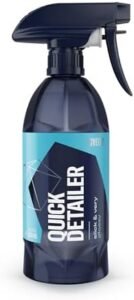
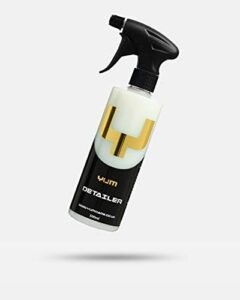
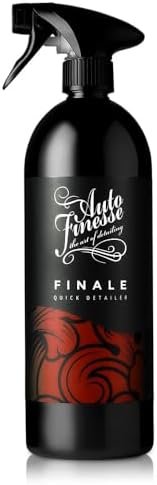
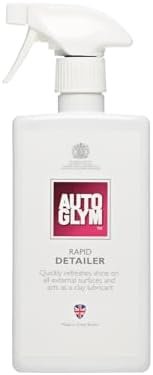
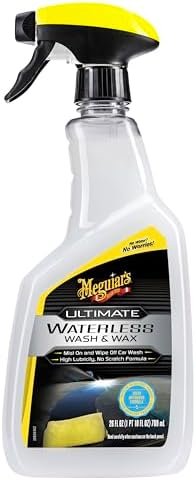
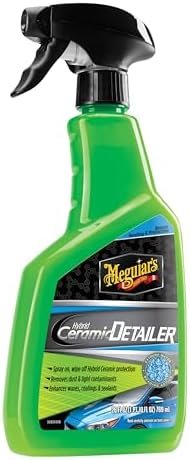
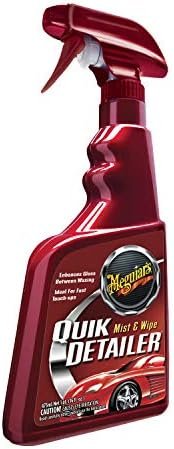
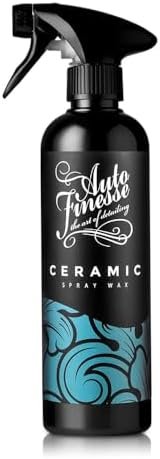
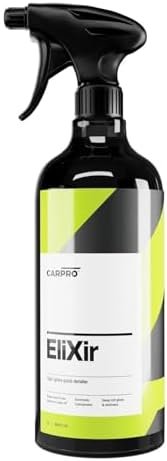
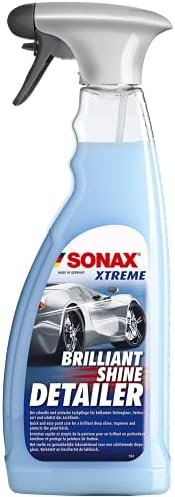
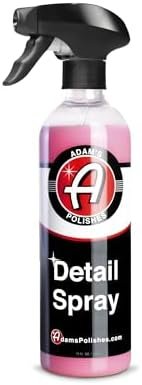
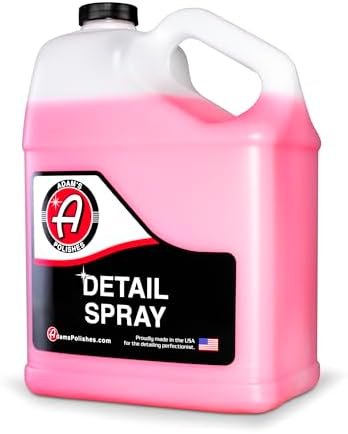
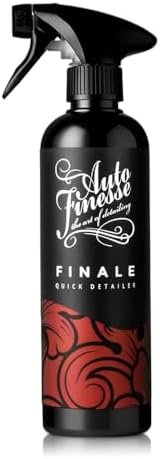
- 500ml trigger spray
- Safe on paint, glass and trim
- Clay lube and drying aid
- High-gloss waterless detailer
| Product | Our Rating | Key Specs | ||
|---|---|---|---|---|
Detailer
|
|
Check Latest Price | ||
Qm2 Quick Detailer
|
|
Check Latest Price | ||
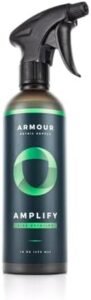
Amplify
|
|
Check Latest Price | ||
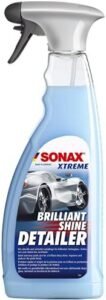
Brilliant Shine Detailer
|
|
Check Latest Price | ||
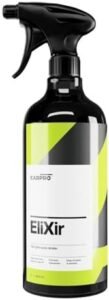
Elixir
|
|
Check Latest Price |
Quick detailers handle light dust, fingerprints, and minor marks between proper washes. They're maintenance products, not cleaning tools. The main benefit is lubrication: a quick spray gives you enough slip to remove light contamination safely without dragging particles across the paint. Using them correctly saves your finish from the kind of fine marring that builds up over time.
Lubrication, light cleaning, and finish maintenance in a single product.
The key job a quick detailer does is provide enough slip to safely remove light contamination without dragging it across the paint. Without that lubrication, even a soft microfibre cloth can drag particles and cause fine marring over time.
A light spray after a few days of parking reduces the fine layer of dust and fingerprints that dulls the look of even well-protected paint. It takes minutes and keeps the car looking recently washed without the effort of a full wash session.
A maintenance tool for lightly dusty paint, not a substitute for proper washing.
Traditional for simple maintenance, spray sealant hybrids for maintenance with protection.
Simple and quick
Focus on light lubrication, clean removal, and a fresh finish. Straightforward to use: spray, wipe, done. No extra steps, no complicated application, and minimal residue if you don't over-apply.
Easiest to useMaintenance with protection
Combine quick detailing with a layer of synthetic protection. Clean light marks and top up the existing wax or sealant at the same time. Slightly more to manage than traditional detailers, but more rewarding for maintained cars.
Cleans and protectsThe most common detailer mistake is using one when the car actually needs a proper wash.
Quick detailer is fine
The paint feels smooth and looks clean. The contamination is surface-level and wasn't deposited under pressure or driven through. A light mist and one or two wipes is all it needs.
Assess before reaching for the bottle
The paint may look manageable but could have bonded contamination underneath. Running a finger across the surface helps. If it feels rough or gritty, decontamination or a full wash is the safer call before reaching for a detailer.
Detailer will cause damage
Using a detailer here drags abrasive particles across the surface. This is how fine marring and swirl marks accumulate over time. Wash the car properly first, then use a detailer as a finishing or maintenance step once the paint is actually clean.
Match the product to how you maintain your car and what you want from it.
A traditional detailer does the job. Simple formula, easy application, no fuss. Spray a light mist, wipe with a clean microfibre cloth, and you're done. There's no benefit to a more complex product when straightforward cleaning is all you need.
Choose a spray sealant hybrid. You'll clean light marks whilst refreshing your existing protection layer in a single step. Particularly useful if you wash regularly and want each session to contribute a little to the durability of the base layer underneath.
Check the label before using any detailer on a ceramic coating. Some detailers are formulated to work with ceramic protection and enhance its hydrophobic properties. Others can interfere with the coating's behaviour or leave residue that affects water beading. Coating-compatible or "ceramic safe" products are the safer default.
Start with a traditional detailer. Fewer variables, less risk of streaking or misuse, and a straightforward routine to build from. Once you're comfortable with how a detailer feels and behaves on your paint, switching to a hybrid is an easy and worthwhile upgrade.
It probably needs a proper wash instead. If there's any visible grime, road film, or dust you can feel under your fingers, washing first is always the safer option. Detailers are for maintaining clean paint, not as a shortcut to avoid washing. Using one on dirty paint is the single most reliable way to introduce fine scratches and swirl marks over time.
Most detailer problems come from using the product in the wrong situation.
This is the biggest mistake. Detailers are for light dust, not mud, grime, or road film. Using them on heavily soiled paint drags abrasive contamination across the surface, causing fine scratches that accumulate into visible swirl marks over time.
Spray once, wipe once or twice, and move on. Repeatedly rubbing the same spot increases the risk of marring, especially if there's any grit left on the surface. If the mark isn't coming off with one or two passes, the car needs a proper wash, not more wiping.
Detailers dry too quickly on hot surfaces, making them harder to buff and more likely to streak or leave residue. Work in the shade or wait for the panel to cool. The difference in application ease between a hot panel and a shaded one is more significant than most expect.
More isn't better. A light mist is enough to provide the lubrication needed to clean the surface. Over-application leaves residue, makes buffing harder, and can cause streaking on dark paint. Two or three light sprays per panel is more than sufficient for most situations.
Detailers aren't a long-term replacement for washing. If you rely on them too heavily and skip proper washes, contamination builds up on and below the surface, eventually damaging the paint and reducing the effectiveness of any protection underneath. Use them in between washes, not instead of them. A car that gets a proper wash regularly and a detailer in between will always be in better condition than one maintained exclusively with detailers.
Simple habits that keep your detailer working safely and your finish in good shape.
01
Detailers are stopgaps. Once the car gets properly dirty, it needs a full wash with shampoo and wash mitts. Don't let regular detailer use become a reason to delay washing. The two routines work together rather than one replacing the other.
02
If a cloth is picking up a lot of dirt during detailing, the car is too contaminated for a detailer. Wash or replace the cloth before using it again. A dirty microfibre used for detailing is just as capable of scratching paint as not using a detailer at all.
03
Even spray sealant hybrids don't replace proper wax or coating applications. Keep up with your usual protection routine — wax, sealant, or ceramic as suits your car. Detailers maintain what's already there, they can't rebuild protection that has worn away or substitute for a full reapplication when the time comes.
Click through to check today's price and availability from trusted retailers.
Quick detailers add a thin layer of gloss and slickness to the paint between proper washes. They’re spray-and-wipe products designed to remove light dust, fingerprints, or water spots without needing a full wash setup. Most also contain polymers or waxes that temporarily boost protection and water beading. From our experience, quick detailers are best used as maintenance products rather than primary protection. They keep an already-protected surface looking fresh and extend the life of wax, sealant, or ceramic coatings. They won’t correct defects or provide serious protection on their own, but they’re useful for topping up between washes or after rain.
You can remove light dust or pollen, but quick detailers aren’t designed for properly dirty cars. Using them on a car with road grime, mud, or heavy contamination risks scratching the paint because you’re wiping particles across the surface instead of rinsing them away first. The safest use is after a wash to dry and add gloss, or on a lightly dusty car that doesn’t need a full wash. From what we see in reviews, people who use quick detailers on genuinely dirty cars often complain about marring or streaking, which is user error rather than product failure. Always pre-rinse if there’s visible dirt.
No, they serve different purposes. Wax provides primary protection and lasts weeks or months depending on the type. Quick detailers add a temporary boost of gloss and slickness that lasts a few days at most. Some quick detailers contain wax or polymers, but the concentration and durability are much lower than a proper wax application. From our experience, quick detailers work best as a topper for existing protection, not a replacement. If your car’s already waxed or sealed, a quick detailer maintains that protection between full applications. If the paint’s bare, a quick detailer won’t offer enough protection to be worthwhile.
As often as you want to maintain gloss and slickness, typically after every wash or weekly if the car’s lightly dusty. Quick detailers are designed for frequent use, and there’s no real downside to using them regularly as long as the car isn’t heavily soiled when you apply them. From what we see, most people use quick detailers once or twice a week on daily drivers, or immediately after washing to enhance drying and add shine. If you’re using one daily, that’s probably overkill unless you’re obsessive about keeping the car spotless. Weekly or after each wash is a more practical routine.
No, quick detailers don’t have the abrasives needed to remove scratches. They might temporarily fill in very fine marks or make them less visible by adding gloss, but that’s masking, not correcting. As soon as the detailer wears off, the scratches reappear. If you have visible scratches or swirl marks, you need a polish or compound to actually level the clear coat and remove the defect. From our experience, people who expect quick detailers to fix paint damage are always disappointed. They’re maintenance products, not correction products.
Find the best UK detailing products across our range of categories.


Your independent guide to the best car detailing products in the UK.
Hundreds of car cleaning products, pulled from trusted UK retailers across every category - shampoos, sealants, interior, glass, tools and more.
Customer ratings, review volume, price-to-performance and editor testing notes feed the score. No brand payments, ever.
Total Car Clean is 100% reader-supported. We may earn a small commission from affiliate links, but we remain unbiased to help you find the best products.