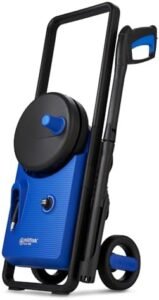
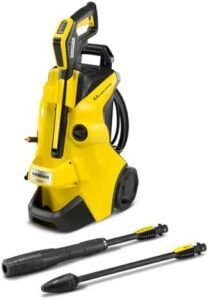
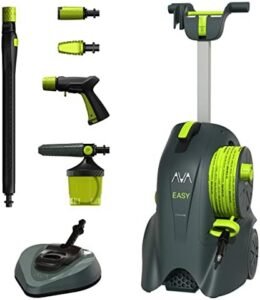
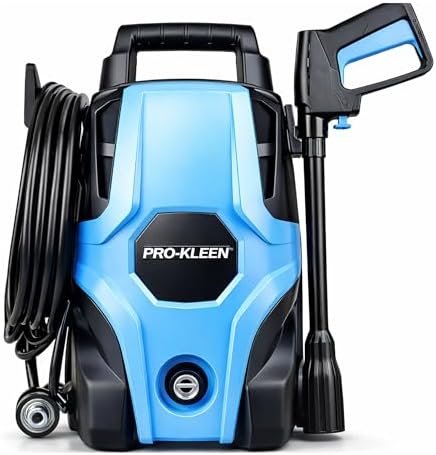
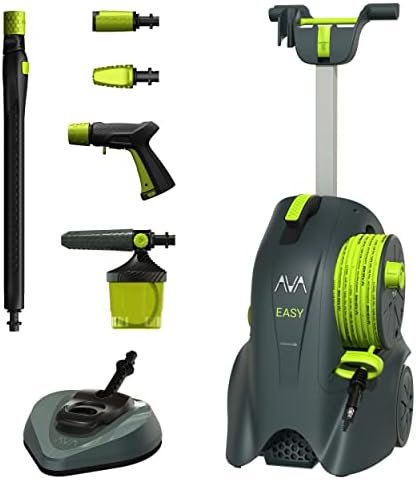
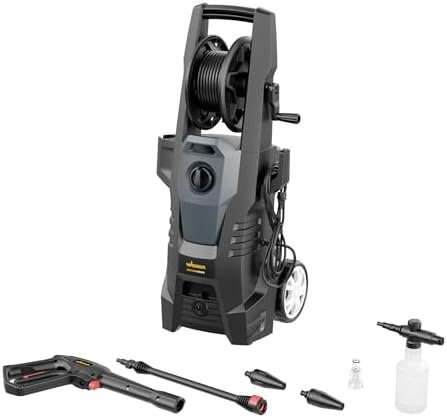
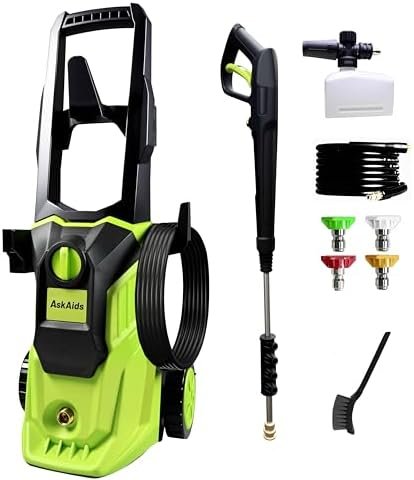
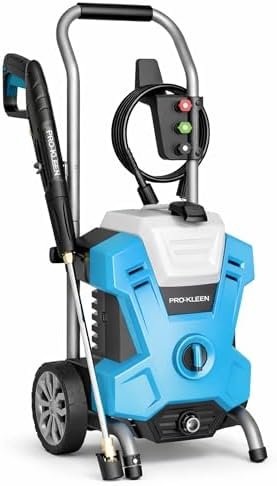
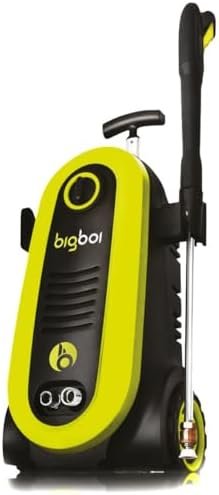
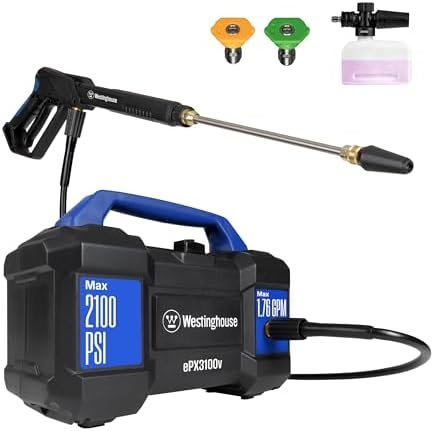
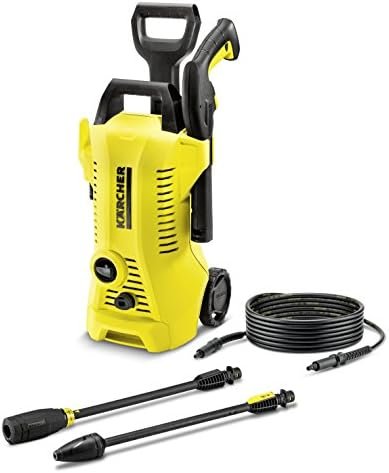
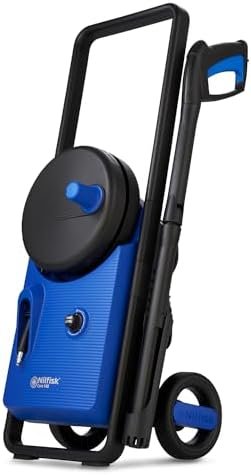
- 145 bar pressure
- 500 l/h flow rate
- Premium accessories
- Long steel hose
| Product | Our Rating | Key Specs | ||
|---|---|---|---|---|
Easy P57
|
|
Check Latest Price | ||
Core 140
|
|
Check Latest Price | ||
K4 Power Control
|
|
Check Latest Price | ||
RY110PWA
|
|
Check Latest Price | ||
WashR FLO
|
|
Check Latest Price |
Electric pressure washers plug into mains and deliver consistent, unlimited output. No battery to manage, no pressure drop mid-job, no recharging between vehicles. The range spans compact 80-bar entry-level models to 200-bar high-power machines, and choosing the right output for the job matters as much as the brand. Too little pressure leaves grime behind. Too much damages paint, strips sealants, or tears into timber.
Why output spec is the most important number when choosing a model
Electric pressure washers use a mains-powered motor to drive a pump that pressurises water through a high-pressure lance and nozzle. The output is consistent for as long as the machine is running, no battery depletion, no pressure drop after 15 minutes. This makes them the default choice for home car washing and the starting point for anyone moving up from a bucket and sponge.
Bar rating (or PSI) tells you the maximum pressure the machine can produce. Flow rate, measured in litres per minute, tells you how much water it moves. Both numbers matter. A machine with high bar but low flow rate delivers intense, narrow pressure rather than a broad, effective clean. For car washing, 120-150 bar with a good flow rate outperforms a 180-bar machine with a restricted nozzle.
The finish you're after also matters. Matte paintwork, ceramic coatings, and fresh wax layers require lower pressure than driveways or concrete. Understanding where your vehicle sits on the finish spectrum helps you choose between a compact entry-level model and a mid-range option with adjustable output.
Versatile home washers with real capability limits worth understanding
Three output ranges, each suited to different cleaning demands
Using the right bar range protects surfaces and improves results
The most pressure-sensitive surface in your cleaning routine. Fresh wax, ceramic coatings, and paint protection film all have maximum safe pressure limits. Lower settings with a wide fan nozzle cover ground without stripping protection.
Tougher surfaces that tolerate higher pressure. Brake dust and road grime bond tightly to alloy faces and arch liners. A 25-degree nozzle at 120-150 bar cuts through contamination effectively without risk of damage.
Hard surfaces that tolerate and benefit from high pressure. A surface cleaner attachment (spinning bar with twin jets) produces dramatically better results on large paved areas than a single lance nozzle.
Timber is the surface most commonly damaged by pressure washing. Too much pressure or too close a nozzle angle strips wood fibre, leaving a raised, rough surface. Lower settings with wide nozzle angle and longer distance are essential.
Start with use frequency and the surfaces you need to clean
An entry-level model up to 110 bar handles car washing comfortably and is the most compact and affordable option. If you wash one or two cars weekly and have no driveway or patio to clean, there is no reason to spend more.
A mid-range 120-160 bar model covers both tasks without compromise. Look for one supplied with a surface cleaner attachment for driveways and a foam cannon adapter for pre-wash use. This tier gives the best return across multiple cleaning jobs.
Most mid-range and above electric washers accept a standard M22 foam cannon. Check thread size before buying a separate cannon. A washer with a variable pressure setting makes it easier to dial in the ideal foam thickness.
Choose 150 bar or above with a good flow rate, at least 7 litres per minute. Add a rotary surface cleaner attachment: it covers large areas far faster than a lance and produces consistent results without striping.
Electric machines are right for the vast majority of home users, including those who wash their car daily. Professional grade only makes sense when you're using the machine commercially, running sessions of several hours without breaks, or need hot water for grease removal. If your machine overheating after 45 minutes of use is a problem, that points to professional, not a more powerful electric. See our professional pressure washer guide for the full comparison.
The habits that damage surfaces, reduce cleaning quality, and shorten machine life
Higher pressure does not always mean better results. Car paint, timber, and decking all have upper safe limits. Get comfortable with lower settings and wider nozzle angles, you'll get better results with less risk.
Distance matters as much as bar rating. At 150 bar from 10cm, you can strip wax, lift paint protection film edges, and damage rubber seals. For bodywork, stay 30-40cm back and let the detergent do the chemical work.
Two machines at 150 bar can feel completely different in use if one moves 6 litres per minute and the other moves 9. Higher flow rate covers ground faster and rinses more effectively. Look at both numbers, not just bar.
Running a foam cannon or chemical injection means detergent residue in the pump system. Running clean water through for 60 seconds after every chemical session extends pump life significantly.
Water left in the pump, hose, and lance during freezing temperatures expands and cracks components. After every winter session, disconnect the water feed and run the pump briefly to clear residual water before storing in a dry place.
Post-session care that keeps the machine running well for years
Squeeze the trigger to release built-up pressure in the hose before disconnecting any fittings. Disconnecting under pressure strains the quick-connect fittings and can cause them to fail over time.
Always run fresh water through the system for at least 60 seconds after using any cleaning chemical, including after a foam cannon run. This clears detergent from pump, hose, and lance, preventing seal degradation from prolonged chemical contact.
Kinks in a high-pressure hose create weak spots that fail suddenly under pressure. Coil the hose loosely and hang or store flat rather than bent. Store indoors or in a dry location, UV exposure and temperature extremes degrade hose material over time.
Click through to check today's price and availability from trusted retailers.
80-120 bar is effective and safe for car bodywork. You don’t need maximum pressure to clean a car, higher settings are for driveways and heavy grime. If you do use more pressure, keep the nozzle at least 30cm from the surface and use a 40-degree or wider fan nozzle. Distance and nozzle angle matter as much as the bar setting.
Most accept a standard M22 threaded foam cannon, but some entry-level models use proprietary fittings that need an adapter. You also need at least 100 bar and around 6 litres per minute flow rate to produce decent foam consistency, below that the foam tends to be thin and watery. Check both connection type and flow rate before buying a foam cannon separately.
Yes, with the right technique. Keep pressure to 120 bar or below on coated surfaces, maintain at least 30-40cm from the paintwork, and use a wide fan nozzle (40 degrees or wider). Avoid targeting PPF edges or seams directly at close range as these can lift under concentrated pressure. On coated cars the foam pre-wash does most of the cleaning work, leaving the rinse stage low-risk.
The most common cause is thermal cut-out, the machine shutting off the motor to prevent overheating when the duty cycle is exceeded. Let it cool for 15-20 minutes before restarting. If it cuts out quickly, check that water is flowing freely, restricted supply causes the pump to run hot fast. A blocked inlet filter is a frequent culprit worth checking first.
Find the best UK detailing products across our range of categories.


Your independent guide to the best car detailing products in the UK.
Hundreds of car cleaning products, pulled from trusted UK retailers across every category - shampoos, sealants, interior, glass, tools and more.
Customer ratings, review volume, price-to-performance and editor testing notes feed the score. No brand payments, ever.
Total Car Clean is 100% reader-supported. We may earn a small commission from affiliate links, but we remain unbiased to help you find the best products.