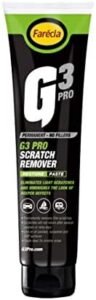
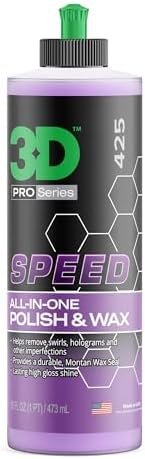
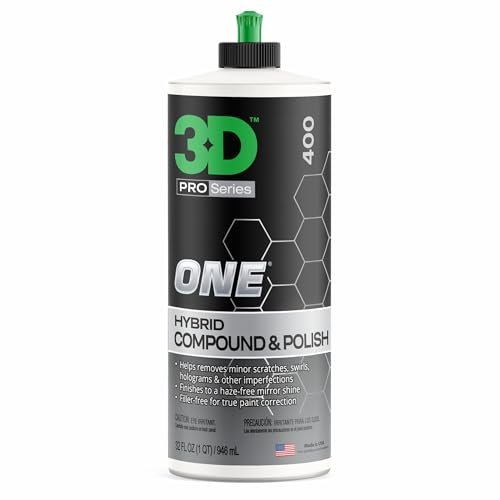
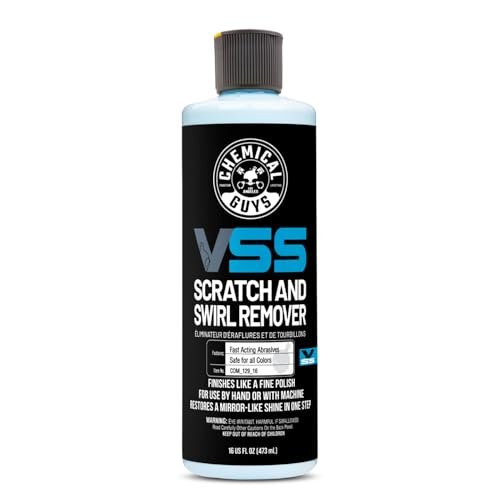
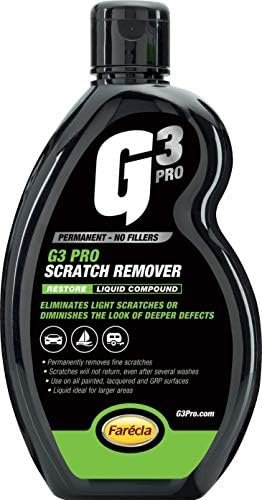
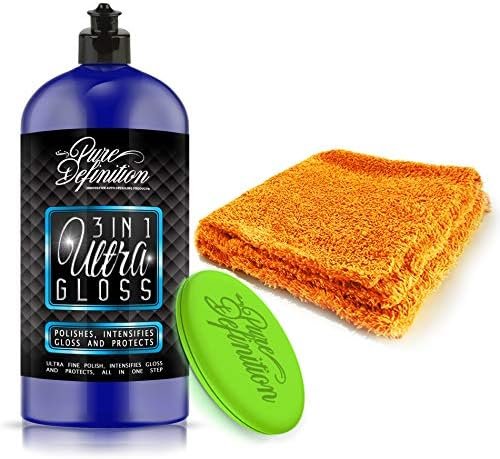
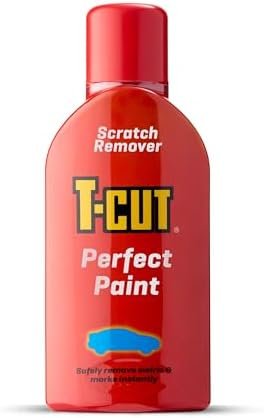
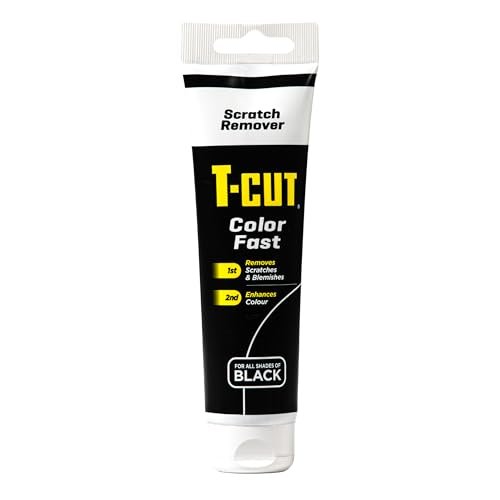
- Silicone and filler free
- Thick paste for precision
- Hand application only
- Body shop trusted brand
Note: These products will only remove fine scratches, swirls and some light paint transfer. Deeper, more aggressive scratches and marks will require sanding, paint and polishing.
| Product | Our Rating | Key Specs | ||
|---|---|---|---|---|
Farecla G3 Pro Scratch Remover Paste
|
|
Check Latest Price | ||
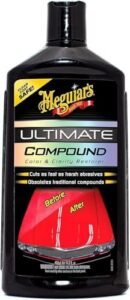
Meguiar's Ultimate Compound
|
|
Check Latest Price | ||
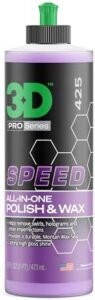
3D Speed All-In-One
|
|
Check Latest Price | ||
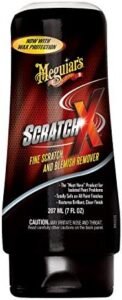
Meguiar's Scratch-X 2.0
|
|
Check Latest Price | ||
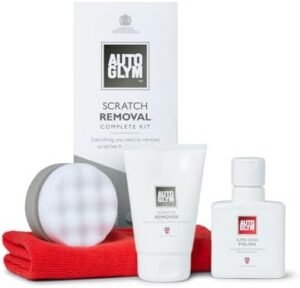
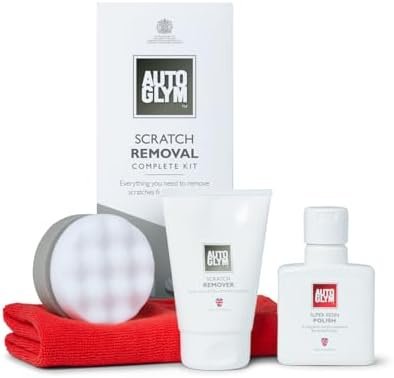
Autoglym Scratch Removal Kit
|
|
Check Latest Price |
Not all scratches require full paint correction. Many marks that catch the eye are superficial and sit in the very top layer of clear coat. Scratch fix products exist for the gap between washing and machine polishing, when the defect is minor but visible enough to bother you. These are not magic erasers, and understanding what they can and cannot do prevents disappointment.
Scratch fix products fill or level. Understanding which does which sets the right expectations.
Polymer-based fillers are designed to sit in the scratch and make it less visible by reducing the contrast between the mark and the surrounding paint. They work quickly and require minimal effort, but the results are temporary. Rain, washing, and wax applications gradually remove the filler and the scratch reappears.
Abrasive products work by gently levelling the clear coat around the scratch. This reduces the depth difference between the defect and the surrounding paint, making it less likely to catch the light. The results are permanent since you are physically changing the surface, but clear coat is being removed in the process. For heavier defects, compounding followed by polishing is the usual correction path.
Both approaches only work on scratches that sit within the clear coat layer. If you can see colour change, white primer, or bare metal in the scratch, no scratch fix product will produce a satisfactory result. That level of damage needs touch-up paint or professional repair, not a surface product.
These are cosmetic improvement tools, not structural repair products.
Temporary filling for quick improvement, or permanent levelling for lasting results.
Quick and low effort
Polymer-based products that sit in the scratch and make it less visible. Work quickly with minimal effort. The improvement is temporary and fades as the product wears away over time.
Temporary improvementMore effort, lasting result
Gently level the clear coat around the scratch to reduce the depth difference between the defect and the surrounding paint. Physically changes the surface rather than masking it, so results are permanent.
Permanent reductionThe depth of the damage determines which product works and whether any product works at all.
The mark is in the top layer of clear coat. Paint colour is unaffected. The scratch catches the light but no colour change is visible when you look straight at it. This is the sweet spot for scratch fix products.
Filler or light abrasiveThe scratch is deeper into the clear coat but has not broken through to the base colour. Light abrasives may produce some improvement but results will be marginal. Machine polishing with a polisher is a better option at this level.
Machine polish more effectiveThe scratch has gone through the clear coat into base coat, primer, or bare metal. You can see a colour change or white or silver in the mark. No scratch fix product will produce a satisfactory result here.
Touch-up paint or professional repairFour scenarios and a practical starting rule that applies to most situations.
Fillers are the simplest option here. They are quick, low-risk, and require no real technique. If you just need the scratch to be less obvious temporarily, a filler applied and buffed off is the fastest path to a visible improvement with minimal effort or risk to the paint.
Light abrasive products are the better choice when you want a lasting result rather than a temporary one. They take more effort and require a light touch, but the improvement does not wash away. Use sparingly and only on areas where the scratch is genuinely within the clear coat layer.
Neither product type will give satisfactory results on damage that has gone through the clear coat. If you can see a colour change, white primer, or silver metal in the mark, the scratch needs touch-up paint or machine polishing if the damage is still within the clear coat but not responding to surface products.
Start with a filler. If it works and the scratch becomes noticeably less visible, the damage was surface level and the filler is doing its job. If it makes little or no difference after a proper application, that tells you the defect is deeper than surface level and you need a different approach, either a light abrasive or a more serious method through the correction category.
Three mistakes driven by mismatched expectations rather than poor technique.
Fillers are temporary by design. They wash off within weeks, sometimes sooner if you are washing regularly or the weather is wet. This is not a product failure, it is how they work. If you need a lasting result, a light abrasive product is the right choice, not a filler applied repeatedly in the same spot.
Light abrasives still remove clear coat even if the amount per application is small. Using them too frequently or too aggressively on the same area gradually thins the protective layer over time. Use only when needed, apply with a light touch, and treat each application as a one-off rather than a regular maintenance step.
If the scratch has gone through the clear coat, no scratch fix product will make it disappear. This is where most frustration with scratch fix products comes from, simply because expectations do not match what the product is designed to do. If colour or primer is visible, a surface product is the wrong tool for the job. For heavier clear-coat work, compare compounds and polishes.
A simple finish that extends how long the improvement lasts and blends the treated area into the surrounding paint.
Whether you have used a filler or a light abrasive, applying a wax or sealant over the treated area afterwards helps protect it and blends the repair into the surrounding paint. For fillers, this also gives the product an extra layer of protection that slows how quickly it wears away. For abrasive results, it seals the freshly levelled clear coat against contamination.
Fillers will need reapplying as they wear off through washing and weathering. Abrasive products should be used sparingly since the clear coat is finite. Repeated correction in the same spot increases the risk of going through the clear coat layer entirely. Reserve abrasive products for genuine single-use correction rather than routine maintenance.
Click through to check today's price and availability from trusted retailers.
Compounds contain more abrasive particles for heavy defect removal, while scratch fixes are finer and used for refining the finish.
Hand scratch fixing is possible but time-consuming and less effective. A dual-action scratch fixer is highly recommended for better results.
Only when needed to remove defects. Over-scratch fixing removes clear coat. Aim for every 1-2 years or when defects become noticeable.
Yes, scratch fixing removes defects and ensures a perfect surface for coating application. Skipping this step can lock in imperfections.
Find the best UK detailing products across our range of categories.


Your independent guide to the best car detailing products in the UK.
Hundreds of car cleaning products, pulled from trusted UK retailers across every category - shampoos, sealants, interior, glass, tools and more.
Customer ratings, review volume, price-to-performance and editor testing notes feed the score. No brand payments, ever.
Total Car Clean is 100% reader-supported. We may earn a small commission from affiliate links, but we remain unbiased to help you find the best products.