

Best Clay Bars, Mitts & Towels for Smooth Car Paintwork

16 products ready to shop 16 products Last checked Checked:

Top Clay Picks from the TCC Team

Product Our Rating Key Specs
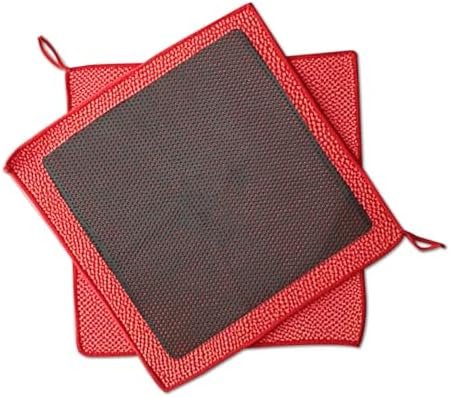
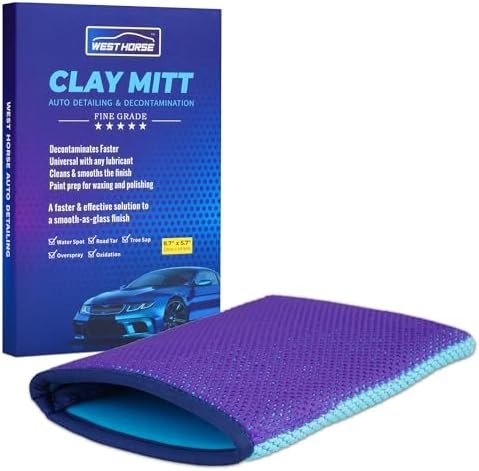
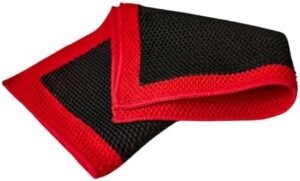
Fine Grade Clay Towel
4.7

A synthetic clay towel that removes medium-to-heavy bonded contaminants from paint, glass, and metal.

  • Fine grade synthetic clay
  • Four working surfaces
  • Reusable and rinseable
  • Multi-surface safe
Check Latest Price
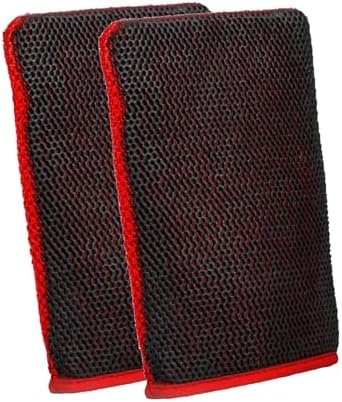
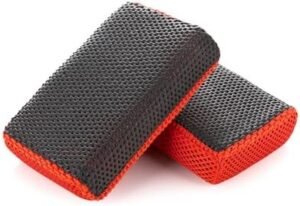
Reset Clay Scrubber
4.5

A dual-sided scrubber that combines surface scrubbing and claying to remove bugs, overspray, and road grime.

  • Dual-sided scrub design
  • Fine grade clay
  • Drop-safe and reusable
  • Bucket or standalone use
Check Latest Price
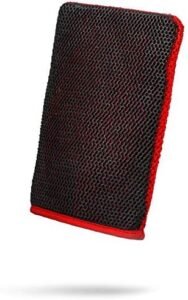
Clay Bar Infused Mitt
4.3

A medium-grade clay mitt that covers large panels faster than a bar, removing fallout, overspray, and rail dust.

  • Medium grade clay
  • Drop-resistant mitt design
  • Covers panels quickly
  • Multi-surface compatible
Check Latest Price
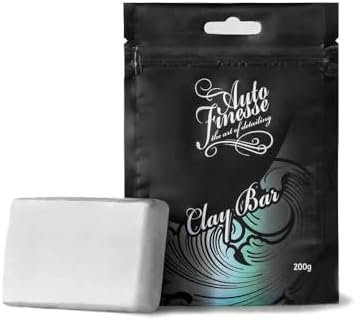
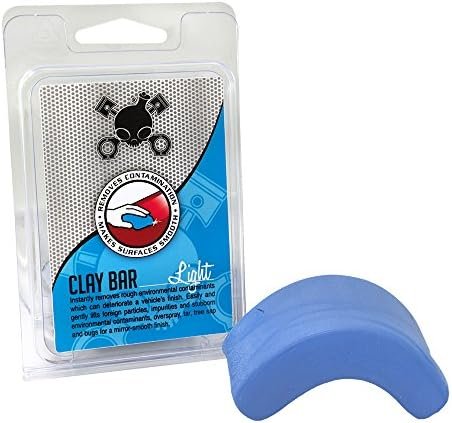
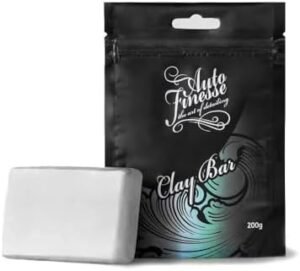
Clay Bar (200g)
4.4

A 200g natural Kaolin clay bar that removes organic and inorganic contaminants with less risk of marring than polymer clays.

  • Natural Kaolin clay
  • Gentler than polymer clays
  • Organic and inorganic removal
  • Large 200g bar
Check Latest Price
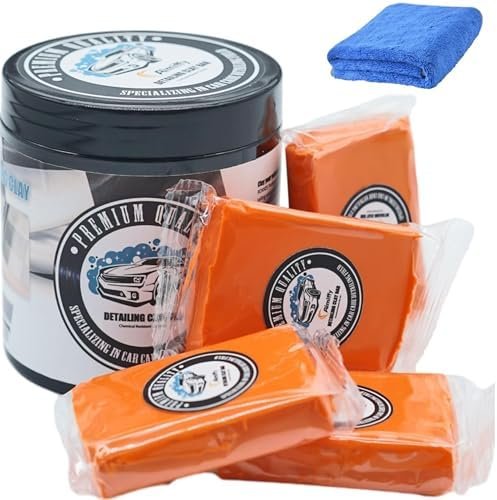
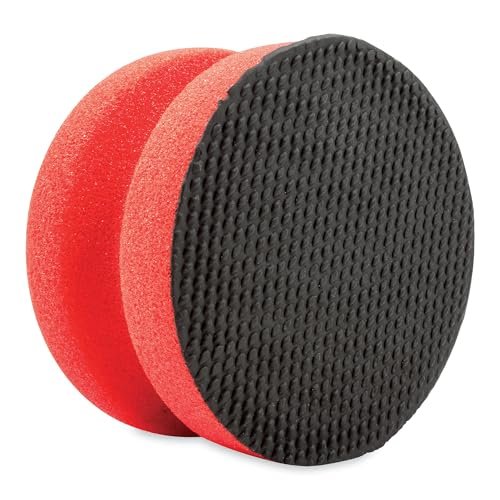
Brillant Finish Synthetic Clay
4.2

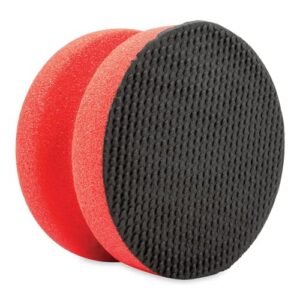
A foam-handled synthetic clay pad with a diamond-pattern polymer face that cuts faster than a traditional clay bar.

  • Diamond-pattern polymer face
  • Ergonomic foam handle
  • Quicker than traditional clay
  • Preps up to 24 cars
Check Latest Price
#1 Best overall
Fine Grade Clay Towel (DIY Detail)
Fine Grade Clay Towel
4.7
  • Fine grade synthetic clay
  • Four working surfaces
  • Reusable and rinseable
  • Multi-surface safe
#2 Top pick
Reset Clay Scrubber (P&S)
Reset Clay Scrubber
4.5
  • Dual-sided scrub design
  • Fine grade clay
  • Drop-safe and reusable
  • Bucket or standalone use
#3 Best value
Clay Bar Infused Mitt (Adam's Polishes)
Clay Bar Infused Mitt
4.3
  • Medium grade clay
  • Drop-resistant mitt design
  • Covers panels quickly
  • Multi-surface compatible
#4 Daily driver
Clay Bar (200g) (Auto Finesse)
Clay Bar (200g)
4.4
  • Natural Kaolin clay
  • Gentler than polymer clays
  • Organic and inorganic removal
  • Large 200g bar
#5 Premium pick
Brillant Finish Synthetic Clay (Griot's Garage)
Brillant Finish Synthetic Clay
4.2
  • Diamond-pattern polymer face
  • Ergonomic foam handle
  • Quicker than traditional clay
  • Preps up to 24 cars
Clay Bars, Mitts & Towels

The Step That Reveals
What Paint Actually Feels Like

Paint can look clean and still feel rough. Washing removes loose dirt. Clay removes what washing leaves behind, the bonded contamination embedded into the surface that no amount of shampoo can shift.

👜

The bag test: Place a clean plastic bag over your hand and run it slowly across your paintwork. If it drags or feels gritty, your paint has bonded contamination. If it glides smoothly, it is already clean. This is the simplest way to know whether claying is needed.

2Clay types covered
Surface smoothness washing can't achieve
0Contamination left for protection to bond over
💧Lubrication is everything

Washing Cleans the Surface. Clay Cleans the Surface Itself.

Bonded contamination stays behind after every wash until clay physically lifts it out.

🔬

Washing Leaves Bonded Contamination Behind

Shampoo removes loose dirt. But brake dust, industrial fallout, and bonded grime physically embed into the clear coat during normal driving. These particles sit in the surface rather than on it, and no wash chemical fully dissolves them.

It Transforms How the Surface Feels

From our experience, claying transforms surface smoothness in a way nothing else does. The paint goes from rough and gritty to genuinely glassy. That feeling is not cosmetic, it means the surface is actually clean, not just visually clean.

🛡️

Protection Bonds Better to Clean Paint

Wax, sealant, and ceramic coating all bond to the surface. If bonded contamination is still present underneath, protection cannot adhere as well or last as long. Claying before protection is what gives those products the clean canvas they need to perform properly.

What Clay Is (and Isn't)

Clay is a mechanical decontamination tool, it works by physical contact, not chemistry.

✓ What it is

A mechanical tool that physically lifts bonded particles from paint

A mechanical decontamination tool, it grabs and pulls bonded contamination out of the surface rather than dissolving it chemically
Designed for use on clean, wet paint with proper lubrication, it must glide, not drag
An occasional-use step, not part of every wash, typically used before polishing or applying fresh protection
Available as traditional clay bars, synthetic mitts, synthetic pads, and clay towels
✗ What it isn't

A polish, a cleaner, or a shortcut around washing first

It does not clean loose dirt, that is what washing is for. Always wash thoroughly before claying
It does not polish or remove scratches, it removes contamination, not paint defects
It does not apply protection, it strips protection already on the surface, so reapplication is always needed afterwards
Without proper lubrication, clay drags on the surface and can cause marring, technique is not optional

Two Approaches to Decontamination

Traditional clay pulls harder. Synthetic clay forgives more. Both do the job when used correctly.

🧱

Traditional Clay Bars

Maximum contamination removal
Most Aggressive

Traditional clay bars offer the most aggressive contamination removal. They pull embedded particles from paint more thoroughly than synthetic alternatives. The trade-off is higher risk if misused, if a clay bar is dropped or picks up a large particle, it can scratch paint. Once you understand the process, the risk is manageable.

Maximum contamination removal per pass
Best for heavily neglected paint or pre-polish prep
Precise, easy to work small areas and edges
Cannot be rinsed if dropped, must be discarded
Higher risk in inexperienced hands

Best suited to enthusiasts comfortable with the process, heavily contaminated paint, or pre-polish decontamination where maximum particle removal matters.

🧤

Synthetic Clay Mitts, Pads & Towels

Easier to use, lower risk
Recommended for Most

Synthetic clay tools use a clay-infused polymer surface that attaches to the hand like a wash mitt and can be rinsed if contaminated. They are easier to use and significantly more forgiving. They do not remove contamination quite as aggressively as traditional clay, but for most maintenance use cases, that difference is not meaningful.

Rinsable if dropped, significantly lower risk
Easier to use with consistent coverage and pressure
Available as mitt, pad, or towel to suit preference
Slightly less aggressive than traditional clay bars
Higher initial cost than a clay bar kit

What we see in reviews: people appreciate the convenience and forgiveness of synthetic clay. For regular maintenance decontamination, it is the safer and more practical choice.

Traditional Clay Bar vs Synthetic Clay

Every key difference between the two formats, at a glance.

🧱 Traditional Clay Bar🧤 Synthetic Clay Mitt / Pad / Towel
Contamination removal
Maximum
Very good
Ease of useModerateEasy
Risk levelHigher, scratch risk if droppedLower, rinse and continue
If dropped on the groundDiscard immediately, do not use againRinse thoroughly and continue
Best forHeavy contamination, pre-polish prep, experienced detailersRegular maintenance, beginners, faster coverage
Lubrication neededYes, essentialYes, essential
Coverage speedSlower, small working area at a timeFaster, larger surface area per pass
PriceLower upfront, discard if contaminatedHigher upfront, reusable for longer
Recommended forEnthusiasts & pre-polishMost users & maintenance

Four Steps. Lubrication Is the Only Rule That Really Matters.

Clay is straightforward when the surface stays wet. Every problem comes from letting it dry.

1

Wash Thoroughly First

Clay on clean paint. Loose dirt left on the surface will get dragged across the clear coat. A full wash, including pre-wash and rinse, is required before you start. Never clay a dry or dirty car.

2

Lubricate Generously

Spray a clay lubricant or diluted shampoo directly onto the panel and onto the clay. The surface must stay wet throughout. If it looks like it is drying, spray more. Lubrication is the only thing preventing the clay from dragging.

3

Glide With Light Pressure

Work in straight lines, not circles. Use light pressure, the clay does the work, not your arm. You will feel the surface become smoother as contamination is removed. Stop and re-lubricate if any drag is felt.

4

Wipe and Inspect

Wipe away residue with a clean microfibre towel. Run a finger across the surface or repeat the bag test. The glassy, smooth feel tells you the panel is clean. Move to the next section.

💧

If you take one thing from this page: lubrication is everything. The moment clay makes dry contact with paint, the risk of marring increases dramatically. Keep the surface wet, keep the clay wet, and the process is safe. Run out of lubricant and the process is not.

Match the Clay to Your Experience and Your Paint

Beginners start with synthetic. Traditional clay earns its place for prep work and heavy contamination.

🧤

For Beginners and Regular Maintenance

Synthetic clay is the safer starting point. It is more forgiving, rinsable if dropped, and easier to use across large areas without the same risk profile as a traditional bar. Most users will never need to move beyond synthetic clay for maintenance decontamination.

→ Synthetic clay mitt, pad, or towel
🧱

For Heavy Contamination or Pre-Polish Prep

Traditional clay bars remove stubborn bonded particles more aggressively than synthetic alternatives. If the paint is heavily neglected, or you are decontaminating before machine polishing, the extra aggression is worth the additional care required in use.

→ Traditional clay bar

Three Ways Clay Causes the Damage It Should Prevent

All three are avoidable with the right preparation, the process is safe when done correctly.

💧

Skipping Lubrication

Clay must glide across the surface, not drag. Without enough lubricant, it grabs the paint and causes marring. This is where most clay damage comes from, not from the clay itself, but from dry contact. More lubricant is almost always the right call.

🪣

Claying on Dirty Paint

Claying dirty paint drags loose grit across the surface alongside the bonded contamination. Always wash thoroughly first, then clay on clean, wet paint with proper lubrication. The wash is not optional preparation, it is part of the process.

💪

Applying Too Much Pressure

Clay works through contact, not force. Pushing hard does not improve results, it just increases the risk of marring. Light pressure and a smooth gliding motion are all that is needed. If it feels like you need more force, the surface needs more lubrication.

Clay Reveals Bare Paint. Protect It Straight Away.

Claying strips whatever protection was on the surface, reapplication is not optional, it is the point.

🚿

Rinse Lubricant Residue

Clay and lubricant leave a film on the surface. Rinse it off thoroughly, then dry the car normally. Any lubricant residue left behind can affect how protection bonds to the surface at the next step.

🛡️

Polish or Apply Protection

Claying reveals bare paint. If you are planning to polish, this is the moment, clean, decontaminated paint responds better to correction. If not, apply protection straight away to keep the surface sealed.

Claying smooths paint, it does not make it shiny.The gloss comes from what you apply after.

Browse All Clay Products

Click through to check today's price and availability from trusted retailers.

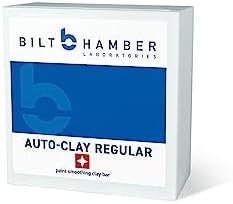
Bilt Hamber Auto Clay Bar Regular 200g

Bilt Hamber Auto Clay Bar Regular 200g

4.6/5
Check latest price

FAQs

A clay bar removes bonded contamination that washing can’t shift. It works by physically lifting embedded particles like industrial fallout, tree sap, and overspray from the paint surface. You’re essentially using a soft, malleable bar to pull contamination out of the clear coat. The result is paint that feels glassy smooth. Most people notice the difference immediately when they run their hand over the surface after claying. From our experience, this step makes the biggest tactile improvement to paintwork, even more than washing alone.

Not when used properly. Clay needs lubrication to glide across the paint safely, whether you’re using a bar, mitt, or towel. Without enough lube, clay can drag and cause fine scratches or marring. As long as you use plenty of lubricant and work gently, it’s very safe. The risk comes from rushing, using too much pressure, or continuing to use contaminated clay without cleaning it. If it feels like it’s sticking or pulling, add more lubricant immediately. We’ve found that beginners often worry about this, but clay is designed to be softer than paint. If you feel resistance, stop and check for contamination on the clay itself, then rinse before continuing.

For most people, two to four times a year is enough. If you park outside regularly, live near industrial areas, or drive on motorways often, you might need it more frequently. The paint will tell you when it’s time, if it still feels rough after washing, it needs claying. Over-claying doesn’t help and can cause unnecessary wear on the clear coat. We clay before applying wax or ceramic coatings, or when we notice the paint losing its smoothness. It’s a periodic step, not part of regular maintenance.

A clay towel works exactly like a clay bar or mitt, it removes bonded contamination from the paint. The difference is in the format: clay towels are larger, which makes them faster for covering big areas like bonnets and roofs. They’re particularly useful if you’re claying multiple cars or working on larger vehicles. Like clay mitts, they can be rinsed clean and reused, which makes them more practical than traditional clay bars. From what we see in reviews, people appreciate how quickly they can finish the job with a clay towel.

Run your hand over the paint after washing and drying. If it feels rough, gritty, or bumpy, you need to clay. Smooth, glassy paint doesn’t need claying until contamination builds up again. You can also use a plastic bag over your hand as a test. The bag amplifies the texture, making it easier to feel contamination. If the paint feels rough through the bag, claying will help. Most people are surprised how much smoother the paint feels after claying for the first time.

No, polishing is only necessary if you want to remove fine scratches or improve gloss beyond what claying achieves. Claying removes contamination but doesn't correct paint defects. If the paint looks good after claying and you're happy with the finish, move straight to protection like wax or sealant. Polishing is a separate step that comes after decontamination if you're doing paint correction. From our experience, most people clay and then protect. Polishing is only needed if you're chasing perfection or dealing with visible defects.
Yes, if the paint feels rough after washing. Claying restores smoothness and allows wax, sealant, or ceramic coatings to bond properly. Without it, protection sits on top of contamination and won't last as long or perform as well. For cars that are maintained regularly and feel smooth after washing, claying might not be necessary every time. We clay a few times a year or before applying protection. It's not essential for every wash, but when the paint needs it, the improvement is significant.
Clay mitts are easier and faster for most people. They're more forgiving if you drop them, you just rinse and carry on, whereas a clay bar needs to be discarded. Mitts also cover larger areas more quickly, which makes them ideal for full-car decontamination. Clay bars offer more control and precision, which some people prefer for detailed work or smaller areas. From our experience, if you're new to claying or working on your own car at home, a clay mitt is the better starting point. It's less intimidating and reduces the chance of mistakes.

Related Insights and Articles

Browse by Category

Find the best UK detailing products across our range of categories.

Our methodology

Your independent guide to the best car detailing products in the UK.

Step 01 · Sourcing

We start with every option

Hundreds of car cleaning products, pulled from trusted UK retailers across every category - shampoos, sealants, interior, glass, tools and more.

Step 02 · Scoring

Ranked by real-world signals

Customer ratings, review volume, price-to-performance and editor testing notes feed the score. No brand payments, ever.

Step 03 · Freshness

We keep it fresh and clean

Total Car Clean is 100% reader-supported. We may earn a small commission from affiliate links, but we remain unbiased to help you find the best products.

Independent No paid rankings UK-focused