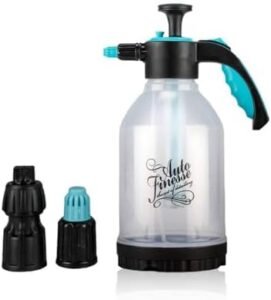
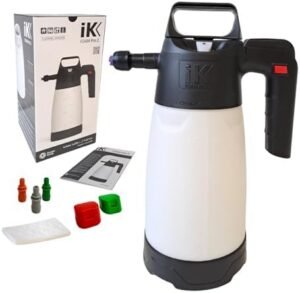
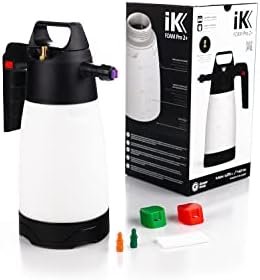
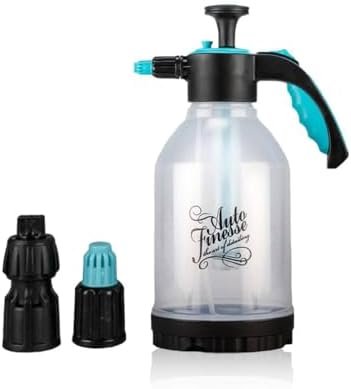
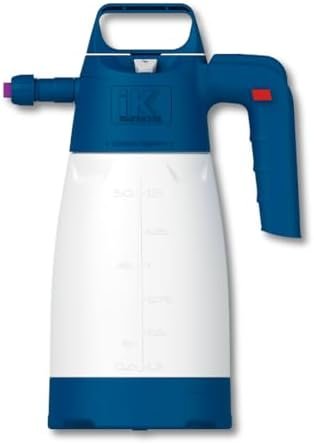
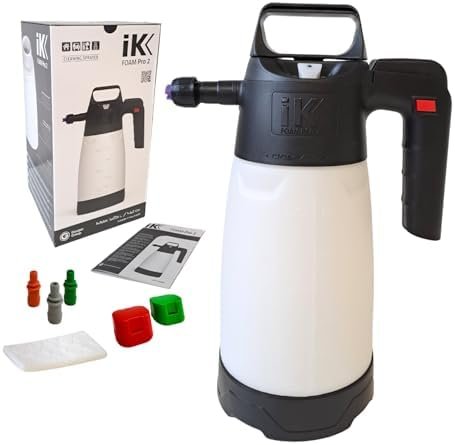
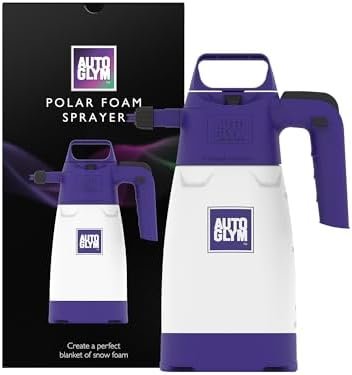
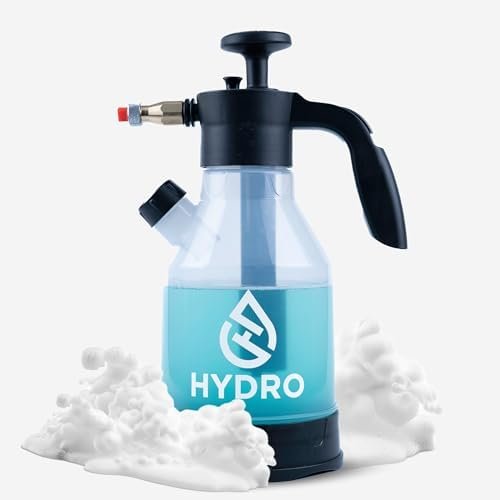
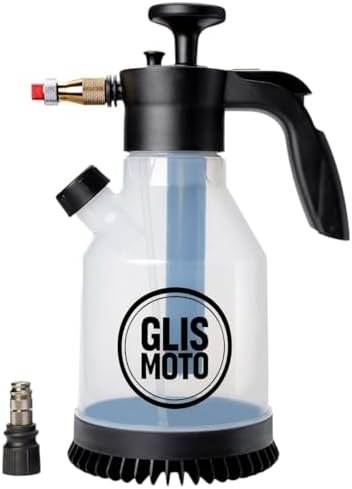
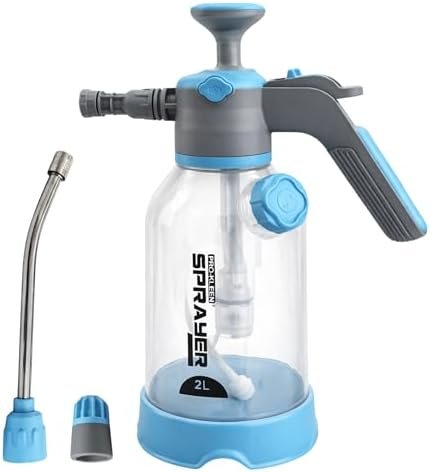
- Italian nickel-plated brass
- Compressed air connector
- 3 foam types included
- Acid-resistant Viton seals
| Product | Our Rating | Key Specs | ||
|---|---|---|---|---|
Foam Pro 2+
|
|
Check Latest Price | ||
Foaming Pump Sprayer
|
|
Check Latest Price | ||
Foam PRO 2
|
|
Check Latest Price | ||
Hydro Spray Bottle
|
|
Check Latest Price |
Foam pump sprayers apply pre-wash product by hand using manual pressure. You fill the bottle, pump the handle to pressurise, and spray foam directly onto the vehicle. No pressure washer, no power outlet, no hose required. The foam is lighter than a pressure washer foam cannon but dwell time and coverage work the same way. For anyone without a pressure washer, a pump sprayer is the standard approach for proper pre-wash foam application.
Manual pressure, foam nozzle, and chemistry, that is the entire system
Foam pump sprayers build pressure by hand using a pump handle on the lid. Pumping the handle compresses air inside the sealed bottle, which pushes the product up through a dip tube and out through a foam nozzle. The nozzle mixes the product with air as it exits, producing foam.
The foam produced is lighter and less dense than a foam cannon on a pressure washer. Pressure washer setups generate significantly more air-mixing force at the nozzle, which is what creates thick, clinging snow foam. Pump sprayer foam works on the same principle but at lower pressure, producing a wetter, less dense coverage. This still allows dwell time and chemical contact with the surface, it is just a lighter delivery.
The benefit is complete control and independence. You can use a pump sprayer in a garage with no water connection, in a car park, at a show, or anywhere you want to apply a pre-wash stage. The technique matters more with pump sprayers than with a foam cannon: how thoroughly you pump, how far you hold the nozzle from the surface, and how systematically you cover the vehicle affects the result significantly.
A portable, manual foam delivery tool, effective when used correctly
From basic hand pumps to professional grade, matched to how often and where you wash
How you apply matters as much as what you apply, technique drives the result with pump sprayers
The ratio of product to water in the bottle sets the ceiling for foam quality. Too dilute and the foam is thin and short-lived. Too concentrated wastes product without adding dwell benefit.
Under-pumped sprayers produce weak, inconsistent foam. Most sprayers need 10-15 firm pump strokes to reach working pressure. Starting to spray before full pressure is reached wastes the first application.
Random application leaves missed panels. Working the vehicle in a consistent pattern (roof, bonnet, boot, sides) ensures every surface gets coverage before the first foam starts to dry.
Pump sprayer foam dries faster than pressure washer foam because it is less dense. In warm or sunny conditions it can dry on the surface within 2-3 minutes. Monitoring dwell time and rinsing before it dries is critical.
Frequency of use and vehicle size are the two most important factors
A standard hand pump sprayer is everything you need. Fill it, pump it, spray it. Keep it pre-diluted with your favourite pre-wash product and the application step adds under five minutes to your wash routine.
A foam-specific model with an adjustable nozzle produces noticeably denser, more consistent foam than a basic garden-style sprayer. If foam coverage and dwell consistency matter, the difference in output between a foam-specific model and a generic sprayer is noticeable.
Choose a higher-capacity model at 1.5-2 litres with good build quality. On SUVs and larger vehicles a 1-litre bottle runs out mid-application. A compressed air-compatible model removes the manual pumping requirement entirely if you have a tyre inflator available.
Invest in a professional-grade unit with chemical-resistant seals and metal or reinforced construction. Consumer-grade sprayers lose pressure quickly and seal failures become a regular nuisance under daily chemical exposure. A professional unit built for the work pays back its premium in reliability.
The outputs are similar: light to moderate pre-wash foam without a pressure washer. The difference is effort and consistency. Manual pump sprayers vary in pressure between strokes and require regular repumping on larger vehicles. Electric sprayers maintain consistent pressure automatically. If you regularly wash larger vehicles or find manual pumping tiring, the electric option is worth the additional cost. See our Electric Foam Sprayer guide for a full comparison of what that step up delivers.
The habits that reduce foam quality and make pre-wash less effective
Pump sprayers produce lighter, less dense foam than a foam cannon on a pressure washer. That is not a failing, it is the nature of the tool. If you expect foam cannon density from a hand pump, you will be disappointed regardless of which sprayer you buy. Adjust expectations and focus on dwell time and coverage.
Under-pumping is the most common cause of thin, inconsistent foam from pump sprayers. Most models need 10-15 firm pump strokes to reach working pressure. Starting too early wastes the first spray and produces poor initial coverage.
Too dilute produces thin foam with short dwell time. Too concentrated wastes product without meaningful improvement. Always follow the product's recommended dilution and adjust based on real results rather than defaulting to maximum concentration.
Pump sprayer foam dries faster than pressure washer foam. Once dry it can leave residue and no longer delivers dwell benefit. Work in sections on warm or sunny days and rinse before the foam has dried, not after.
Standard garden sprayers produce a liquid spray rather than foam. If your sprayer is not producing foam, the nozzle is likely a plain spray nozzle rather than a foam-rated one. Most garden sprayers can accept an aftermarket foam nozzle, but if foam application is the primary use, buying a sprayer designed for foam from the start produces far better results. For non-foam chemicals, see pump sprayers for detailing.
Rinse, wash, and clean the sprayer for the next use
Rinse with clean water from roof to sills, carrying contamination off the vehicle rather than redistributing it. A garden hose or pressure washer rinse both work. Ensure lower panels, door sills, and arches are fully rinsed before starting the contact wash stage.
The foam pre-wash reduces contamination load but does not replace physical washing. A contact wash with a mitt and shampoo removes what the chemistry has loosened. The pre-wash stage makes this safer and more effective by reducing the abrasive risk of washing over bonded grime.
Empty any remaining product, fill with clean water, pump, and spray through the system. Leaving diluted pre-wash product sitting in the bottle between sessions degrades seals over time and can block the nozzle. Five minutes of cleaning after each use prevents the most common causes of sprayer failure.
Click through to check today's price and availability from trusted retailers.
Not quite. They don’t produce the same thick foam or coverage and take longer to apply, but they still apply pre-wash effectively. The cleaning comes from the product, not the foam thickness.
No. That’s the main advantage. They’re designed to work without one, making them ideal for mobile use or quick washes.
Usually down to low pressure (you need to pump it a lot, maybe 30-40 times) or incorrect dilution. Pump more pressure into the sprayer and adjust the mix ratio to improve foam output.
Most will work, but some are designed specifically for pressure washers. You may need to adjust dilution or use products that foam better at lower pressure for best results.
Find the best UK detailing products across our range of categories.


Your independent guide to the best car detailing products in the UK.
Hundreds of car cleaning products, pulled from trusted UK retailers across every category - shampoos, sealants, interior, glass, tools and more.
Customer ratings, review volume, price-to-performance and editor testing notes feed the score. No brand payments, ever.
Total Car Clean is 100% reader-supported. We may earn a small commission from affiliate links, but we remain unbiased to help you find the best products.