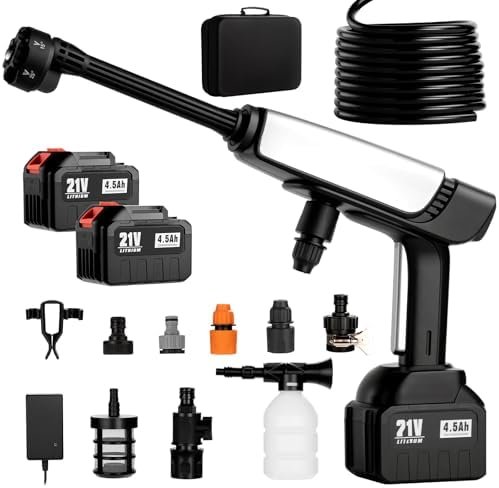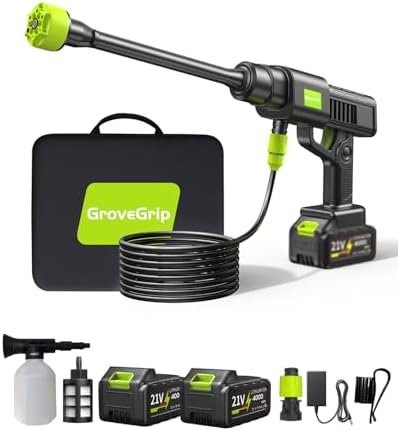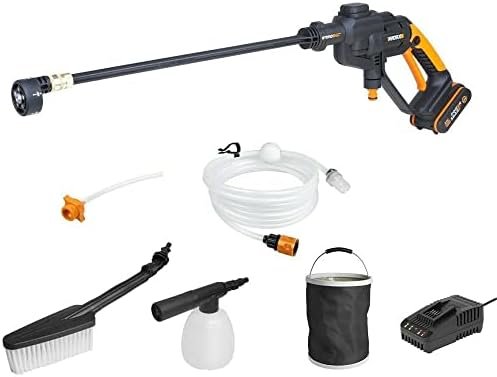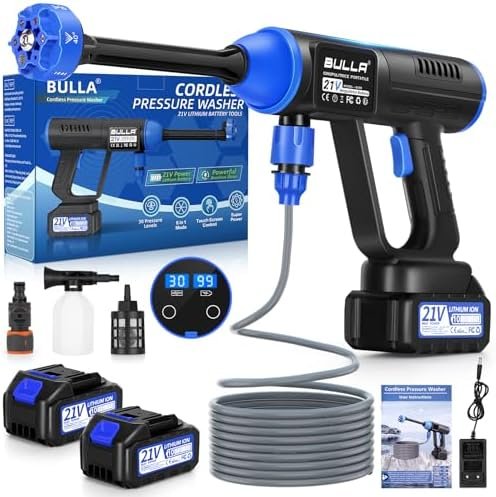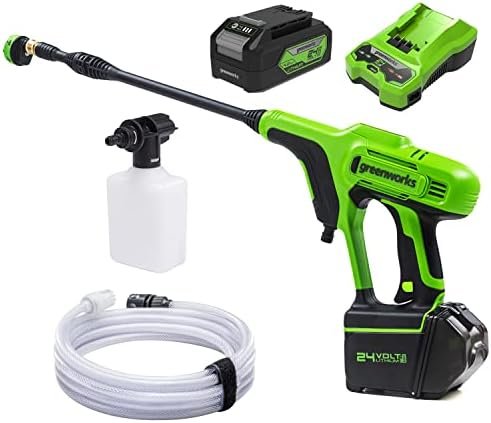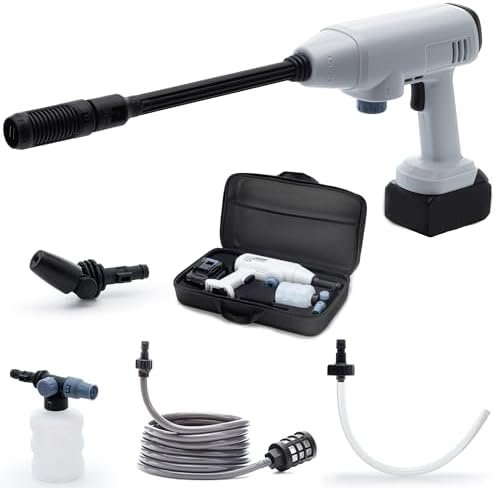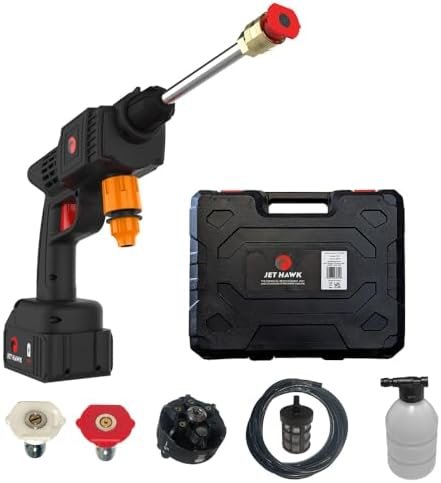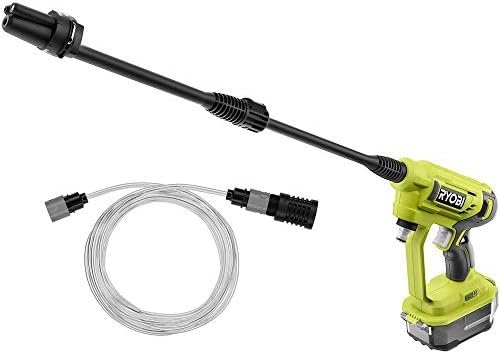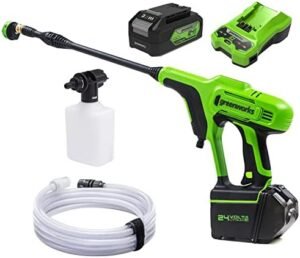
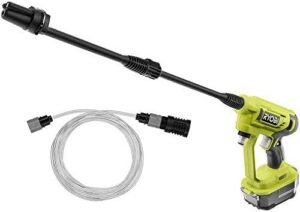

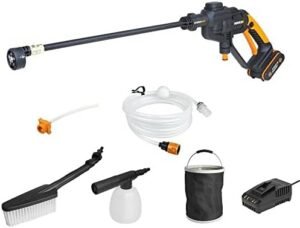
- 320 PSI output
- Dual water sources
- 6-in-1 nozzle
- Lightweight handheld
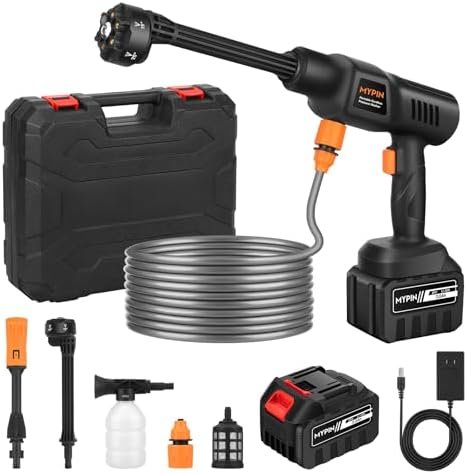
| Product | Our Rating | Key Specs | ||
|---|---|---|---|---|
HydroShot (WG6xx Series)
|
|
Check Latest Price | ||
G24PWK4
|
|
Check Latest Price | ||
ONE+
|
|
Check Latest Price |
Battery-powered pressure washers remove the constraints of mains power and hose runs. You draw water from a bucket, tank, or garden tap and clean wherever the job is, with no extension lead, no fixed hose point. The trade-off is pressure and run time. Cordless washers sit below mains-powered electric models in PSI output, and every job is on the clock. Knowing those limits helps you pick the right tool and use it well.
Why portability changes the way you approach a car wash
Cordless pressure washers use a battery-powered pump to pressurise water drawn from a self-contained source, a bucket, water tank, or garden tap. The unit connects to the water supply via a flexible intake hose with a mesh filter on the end. You drop that hose into a filled bucket, and the pump draws water up through the filter and pressurises it through the lance. The filter keeps debris out of the pump. Because there is no mains power cord, you can use them on a driveway, in a garage, at a campsite, or anywhere else without access to an outdoor socket.
The pressure output is lower than mains-powered electric washers. Most cordless models produce between 300 and 600 PSI, compared to 1000-2000 PSI for a typical electric. For car washing this is less of a limitation than it sounds. Car bodywork doesn't need high pressure, in fact, lower pressure with the right detergent often produces better results with less risk of paint damage.
Battery life is the real consideration. A standard 2.5-4.0Ah battery gives you between 15 and 25 minutes of continuous use depending on the model and pressure setting. That is enough for most car washes when used efficiently, but it rewards planning, pre-soaking with foam, working in sections, and minimising trigger time all extend what one charge can achieve.
Setting the right expectations before you buy
Compact handheld models versus full-size units, knowing the difference matters
Realistic job estimates based on a standard 2.5-4.0Ah battery
Runtime: 15-20 min | Uses most of one charge
A full rinse-off of a standard saloon or hatchback. Snow foam pre-soaking first makes the rinse quicker and more effective, stretching the battery further.
Runtime: 8-12 min | Leaves charge for a full rinse
Targeted cleaning of four wheels, arches, and sills. A compact cordless handles this efficiently because the work is focused. Combine with arch foam for best results.
Runtime: 5-10 min | Efficient battery use
Lower-surface-area jobs that suit compact cordless models perfectly. Good pressure on a small surface area, minimal battery draw, and no mains connection needed at all.
Runtime: 8-15 min | Light battery use with foam
Using a foam cannon on a cordless washer is efficient, so the pump runs at lower load when pushing foam versus a pressure rinse, making the battery go further.
Match the model to how and where you actually wash
A compact handheld model handles this comfortably. One charge covers a rinse or a foam pre-wash stage. Keep a spare battery charged and the session runs smoothly without interruption.
A cordless pressure washer with a self-priming pump fed from a large bucket or collapsible tank gives you complete independence. No tap, no socket, just water and a charged battery.
Compact models are the best choice here. The surface area is small, the battery goes a long way, and the portability means you can clean anywhere without any setup.
Check foam cannon compatibility before buying. Most models with a standard lance thread accept a foam cannon adapter. Foam stage uses less battery power than a high-pressure rinse, making one charge go further.
Go cordless if location flexibility matters, washing in a garage, on a boat, at a campsite, or without an outdoor socket. Go electric if you wash regularly, need more pressure for driveways, or want unlimited run time. Most owners with both use cordless for convenience and keep an electric for heavier jobs. See our electric pressure washer guide for a full breakdown of what electric adds.
The issues that cause frustration and short battery sessions
Cordless models produce 300-600 PSI. Mains-powered electric washers produce 1000-2000 PSI. For car paintwork this difference rarely matters, but for driveways and heavy grime, a cordless won't deliver the same result. Set expectations correctly before buying.
Plan the session to match battery capacity. A full car rinse on a single charge is achievable, but only if you work efficiently. Running flat halfway through a rinse means soap residue drying on paintwork. Have a second battery charged before you start.
Cordless removes the power cord but not the water requirement. You need either a tap connection or a large enough container, typically 10-20 litres for a full wash. Many buyers assume the unit is fully self-contained.
If you already own tools from a brand with an 18V or 20V battery platform, a cordless washer from the same range saves you buying new batteries. Buying into a new platform just for a pressure washer increases total cost significantly.
Battery-powered pumps deliver less consistent pressure as the charge drops. The last 20% of battery life often produces noticeably lower output. For best results, work the most pressure-sensitive areas, such as the foam rinse stage, early in the charge rather than at the end.
The steps that extend motor life and keep the pump in good condition
Run the pump briefly with no water connected to clear any residual water from the system. Storing with water in the pump, especially in cold conditions, risks freezing and cracking internal components.
Don't store a partially discharged lithium battery for extended periods. Top up after every use and store at room temperature. Avoid leaving batteries on charge indefinitely, most smart chargers switch off at full charge, but check the instructions.
If you ran a foam cannon or used any cleaning chemical through the unit, run clean water through the pump for 30 seconds before storing. Detergent residue left in the pump degrades seals over time.
Click through to check today's price and availability from trusted retailers.
Budget around 15-20 litres minimum. A standard 15-litre bucket handles a compact car with careful trigger discipline. For a two-stage wash and foam pre-soak followed by a full rinse, use a 20-litre bucket or plan to refill mid-session. The pump draws roughly 0.5-1 litre per minute depending on the model, so you have more capacity than it might seem.
Yes, most models accept a foam cannon via a standard M22 adapter. Check compatibility before buying separately, some compact handheld units use proprietary lance connections. The foam stage is also more battery-efficient than a high-pressure rinse because the pump runs at lower load pushing foam, so using one charge for pre-soak and a second for the rinse is a practical two-charge approach.
Yes, most cordless washers include both a bucket intake hose and a tap connector. Connecting to a tap gives continuous water supply without refilling. The cordless advantage in that setup is purely the absence of a power cable, you can still have a water hose (however check instructions for any restrictions in terms of water pressure). If you have both a tap and a socket nearby, an electric pressure washer is likely more practical for regular use.
Yes. Lithium batteries charge more slowly and deliver less run time below 5 degrees. Store batteries at room temperature before use and avoid leaving them in an unheated garage overnight in winter. Most smart chargers pause charging if the battery is too cold, this can look like a fault but is a protection feature built into the charger.
Find the best UK detailing products across our range of categories.


Your independent guide to the best car detailing products in the UK.
Hundreds of car cleaning products, pulled from trusted UK retailers across every category - shampoos, sealants, interior, glass, tools and more.
Customer ratings, review volume, price-to-performance and editor testing notes feed the score. No brand payments, ever.
Total Car Clean is 100% reader-supported. We may earn a small commission from affiliate links, but we remain unbiased to help you find the best products.