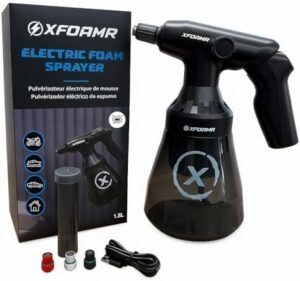
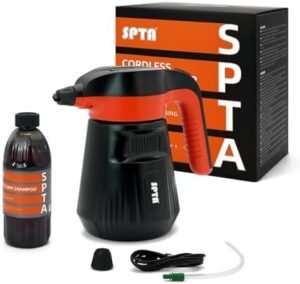
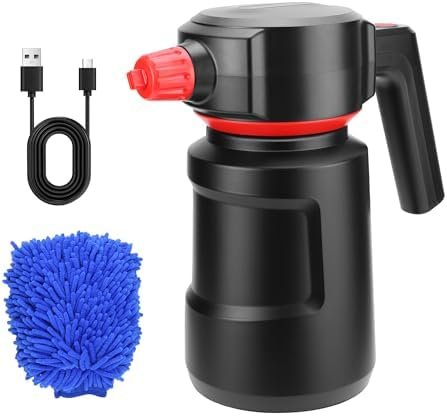
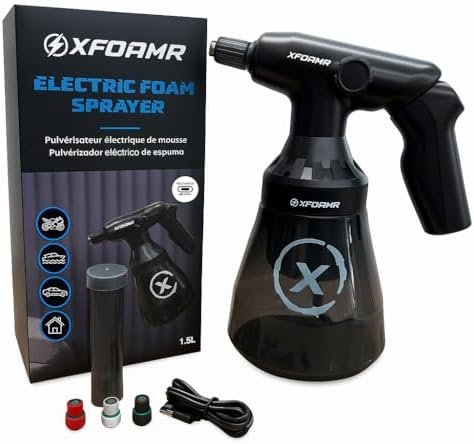
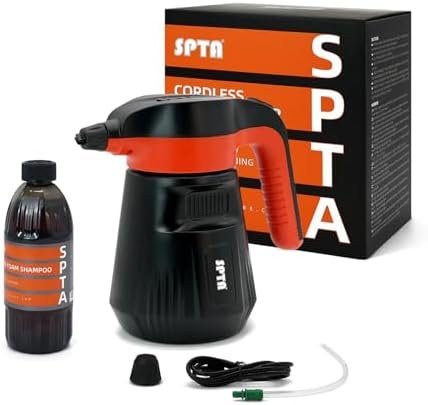
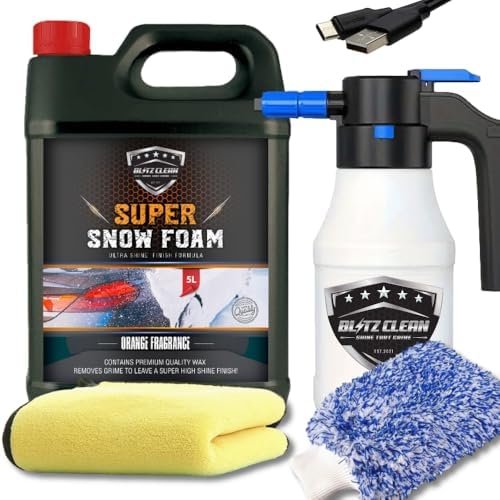
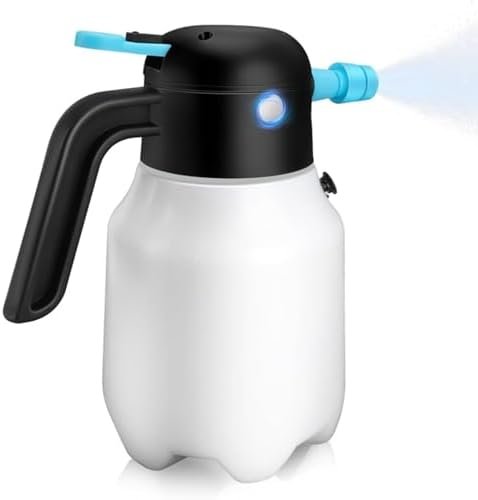
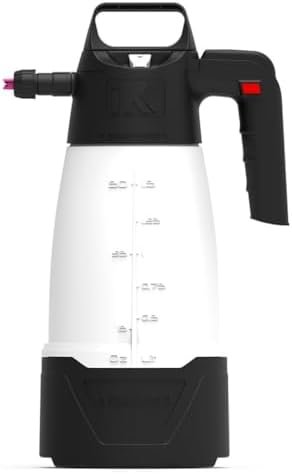
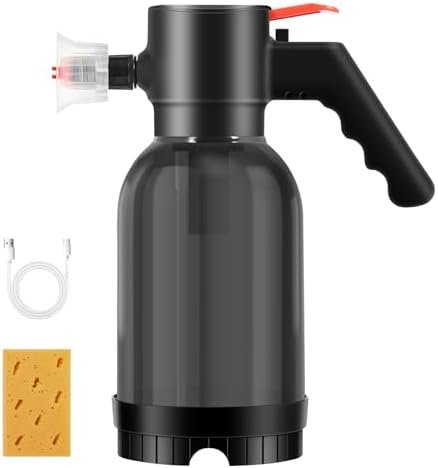
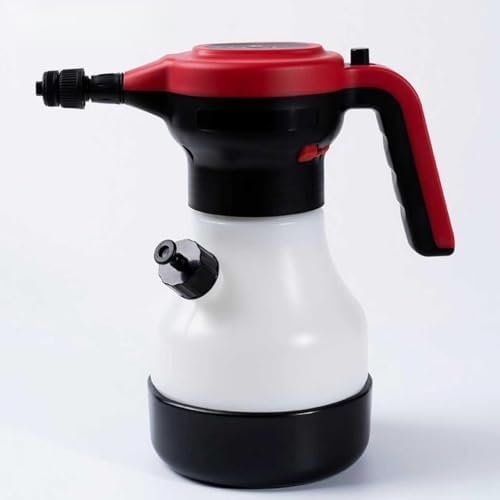
- Zero manual pumping
- 3 foam types included
- Chemical-resistant seals
- USB-C rechargeable
| Product | Our Rating | Key Specs | ||
|---|---|---|---|---|
eFoam Pro 2
|
|
Check Latest Price | ||
Electric Foam Sprayer
|
|
Check Latest Price | ||
Electric Foam Sprayer
|
|
Check Latest Price | ||
Electric Foam Sprayer
|
|
Check Latest Price |
Electric foam sprayers use a battery-powered pump to pressurise and deliver pre-wash foam automatically. There is no manual pumping, no pressure fluctuation between strokes, and no fatigue on larger vehicles. They sit between foam pump sprayers and foam cannons, more convenient than one, more portable than the other. The result is consistent, repeatable foam application without needing a pressure washer or a power outlet.
Battery pressurisation replaces manual pumping, so output stays more consistent
Electric foam sprayers use a rechargeable battery to power a small internal pump. When the trigger is pressed, the pump pressurises product from the bottle and delivers it through a foam nozzle at consistent, regulated pressure. Unlike manual pump sprayers, pressure does not drop between applications, the battery maintains constant output throughout the session.
Most models include multiple foam settings, typically wet, medium, and dry foam, adjusted via the nozzle or a dial on the unit. Some higher-end models use a dual-motor system to independently control air and liquid mixing, giving more precise control over foam density. Battery capacity typically delivers 20 to 45 minutes of continuous use on a single charge, depending on the model and settings.
Electric sprayers sit between manual pump sprayers and pressure washer foam cannons in both output and complexity. They do not produce the thick, heavy foam of a high-pressure cannon setup, but they are more consistent and less tiring than manual pumping, particularly on larger vehicles or in regular use. For anyone without a pressure washer who washes regularly, they are a meaningful step up from a hand pump.
Automatic pressurisation and consistent delivery, with practical limits
Matched to your vehicle size, session length, and frequency of use
Understanding where electric sprayers sit helps you choose the right tool for your setup
Battery capacity and build quality are the two most important specifications
A compact cordless handheld unit handles a standard car pre-wash in one charge. USB-C charging makes it easy to top up between sessions. Keep it ready with your pre-wash or snow foam product pre-diluted and the foam stage adds under five minutes to your routine.
Choose a high-capacity model with a 4000mAh or larger battery and a 1.5 to 2 litre tank. Compact models run short on both product and charge on SUVs, vans, or back-to-back vehicles. A swappable battery design removes the recharge wait entirely.
An adjustable output model with multiple foam settings and nozzle modes gives you the flexibility to use the same unit for pre-wash foam, quick detailer, and interior product application. Check that the internal seals are chemical-resistant if you are running varied chemistry through the unit.
Professional grade construction with chemical-resistant seals is the right investment. Consumer-grade electric sprayers degrade faster under daily chemical exposure. Build quality shows up quickly under regular use: seal failures, pressure drops, and nozzle blockages are the typical failure points on cheaper units.
If you already own a compatible pressure washer, a foam cannon produces better foam with more coverage speed: it is the stronger pre-wash tool. If you do not own a pressure washer and are not planning to buy one, an electric foam sprayer is the best available alternative for consistent, portable foam application without manual effort. The two tools are not really in competition: they suit different setups. See our Foam Cannon guide for the full case for cannon use alongside a pressure washer.
The habits that drain batteries early and reduce foam quality
Electric sprayers produce light to moderate foam, not the thick, heavy coverage of a pressure washer cannon. If the comparison you are making is against a foam cannon, the electric sprayer will always fall short on foam density. The right comparison is against a manual pump sprayer, where the electric clearly wins on consistency and effort.
Battery-powered sprayers deliver less consistent pressure when the charge is low. A partially charged battery produces noticeably thinner foam toward the end of the session. Charge fully between uses and keep a second battery if your model supports swappable units.
The same rule as every foam tool: too dilute gives thin coverage, too concentrated wastes product. Electric sprayers do not compensate for poor dilution. Follow the product label and adjust based on results rather than defaulting to maximum concentration.
Even with more consistent delivery than a manual pump, electric sprayer foam is lighter than cannon foam and dries faster in warm or sunny conditions. Keep your dwell time to 3 to 5 minutes and rinse before the foam sheet dries on the surface.
Leaving pre-wash product or other detailing chemicals sitting in the tank, tube, and nozzle between sessions degrades seals and blocks spray jets. After every use, empty remaining product, add clean water, run through the system briefly, and wipe down the nozzle. This five-minute routine prevents the seal failures and blockages that end the life of most budget electric sprayers prematurely.
Rinse, wash, and maintain the unit for the next session
Give the foam 3 to 5 minutes on the surface before rinsing. Rinsing immediately removes the product before it has broken down contamination. Use the dwell time to prepare your wash mitt and shampoo so the contact wash follows immediately after rinsing.
Rinse with clean water from roof to sills, directing loosened contamination off the vehicle. Ensure lower panels, arches, and door sills are fully rinsed. Follow immediately with a contact wash with a mitt and shampoo while the surface is still wet from the rinse.
Empty remaining product from the tank, run clean water through the system, and put the battery on charge ready for the next session. A clean, charged sprayer is ready to use next time without preparation: it is what makes the tool genuinely convenient.
Click through to check today's price and availability from trusted retailers.
They’re easier and more consistent because they don’t require manual pumping. Performance is similar, but electric sprayers save time and effort, especially on larger vehicles.
No. Foam cannons still produce thicker foam and better coverage. Electric sprayers are a more portable and convenient alternative, not a direct replacement.
It depends on the model, but most are designed to handle at least one full wash. Higher-capacity units last longer, especially for larger vehicles or multiple uses.
Usually due to low battery, incorrect dilution, or blocked nozzles. Make sure the unit is fully charged, the mix is correct, and the sprayer is clean.
Find the best UK detailing products across our range of categories.


Your independent guide to the best car detailing products in the UK.
Hundreds of car cleaning products, pulled from trusted UK retailers across every category - shampoos, sealants, interior, glass, tools and more.
Customer ratings, review volume, price-to-performance and editor testing notes feed the score. No brand payments, ever.
Total Car Clean is 100% reader-supported. We may earn a small commission from affiliate links, but we remain unbiased to help you find the best products.