Step 01 · Sourcing
We start with every option
Hundreds of car cleaning products, pulled from trusted UK retailers across every category - shampoos, sealants, interior, glass, tools and more.

Click through to check today's price and availability from trusted retailers.
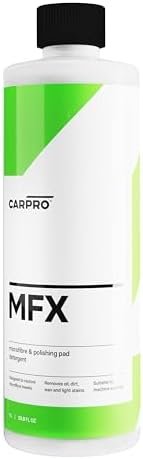
Using regular household laundry detergent on microfibre towels destroys the split-fibre structure that makes them safe on paint. Fragrance additives, fabric softeners, and filler compounds coat the microscopic fibres, closing off the particle-trapping channels that separate a quality microfibre from a plain cotton rag. A dedicated microfibre detergent strips product residue from the fibres without leaving any coating behind, keeping your towels performing across hundreds of washes rather than a handful. Pair this habit with our guide to microfibre cloths and towels when you choose piles for each task.
What regular laundry detergent does to split-fibre microfibre and why it matters for paint safety
Microfibre towels are built around a split-fibre structure in which each strand is divided into many fine wedge-shaped segments. These segments create tiny channels and hooks that trap and hold contamination particles within the pile rather than dragging them across the surface being cleaned. The performance of any microfibre cloth depends entirely on these channels remaining open and free of any coating. Regular household laundry detergent is formulated to clean cotton and synthetic fabrics, not to preserve the open-channel structure of split microfibre. Surfactant residues, fragrance compounds, brightening agents, and anti-static additives all leave deposits on the fibres that gradually close off the channels, reducing absorbency and particle-holding capacity wash by wash.
A dedicated microfibre wash detergent uses a low-residue surfactant system that lifts and suspends car care product residue from deep within the fibre structure and rinses completely clean without leaving any coating on the fibres. Most quality microfibre detergent formulas are pH neutral or close to it, which preserves the fibre integrity and prevents the gradual fibre weakening that acidic or highly alkaline detergents cause over time. They contain no fabric softener, no fragrance compounds, and no optical brighteners. The result is a towel that dries soft without any additive assistance, maintains full absorbency, and continues to perform on paint the way it did when new. Colour-coded microfibre washing, where towels sorted by use are washed in separate loads, further reduces cross-contamination between paint towels and wheel or engine towels. Large drying towels benefit just as much as small buffing cloths from this chemistry.
The frequency and method of washing matter as much as the choice of microfibre car wash detergent. Towels should be washed after every detailing session without exception. Storing used microfibre with product residue still loaded in the fibres allows that residue to set and bond more deeply into the pile, making it harder to remove in subsequent washes and increasing the risk of product transfer during the next use. Pre-rinsing heavily soiled towels before machine washing removes loose surface contamination and reduces the load placed on the detergent during the main wash cycle. Tumble drying at high heat or ironing microfibre melts the fine fibre tips and permanently closes the split-fibre channels, producing a cloth that scratches rather than cleans. Air drying or tumble drying on the lowest no-heat or air-only setting preserves the fibre tips and maintains full performance across the full working life of the towel.
A dedicated microfibre wash solution restores and preserves fibre performance, not just surface cleanliness
Matched to soil level, towel type, and whether you are washing by hand or machine
Match your wash protocol to what is actually loaded in the towel, not just how dirty it looks
Four decision points that determine which formula is right for your microfibre and how you detail
Light spray detailer and drying aid residue requires only a standard pH neutral microfibre wash detergent. Compound, polish, and wax paste residue benefit from a slightly higher dose or a pre-rinse before machine washing. Wheel and brake dust contamination requires a separate dedicated heavy-duty microfibre cleaner. Matching the detergent strength to the actual contamination level protects the fibres of lightly soiled paint towels from unnecessarily harsh chemistry.
If your microfibre cloths have already been washed with regular household laundry detergent or fabric softener, their fibre channels are likely partially coated. Start with a microfibre reviver wash rather than a standard maintenance detergent. The reviver formula penetrates deeper into the pile and strips the built-up surfactant and softener residue in a way that regular microfibre detergent cannot. After one or two reviver washes, switch to a standard microfibre wash detergent for ongoing maintenance.
Occasional detailers washing five to ten towels per session after each detail are well served by a standard ready-to-use microfibre wash solution. Regular or professional detailers washing 20 or more cloths per session will find a wash concentrate significantly more economical per wash cycle. Concentrate formulas deliver equivalent cleaning performance at 15 to 30 ml per load versus 60 to 100 ml for ready-to-use formulas, making the cost per wash two to four times lower at equivalent quality.
Most microfibre detergents are formulated for both machine and hand washing. For hand washing, slightly more mechanical agitation replaces the machine drum action, so a slightly higher temperature of up to 40 degrees Celsius helps loosen residue more effectively. For machine washing, a gentle or delicate cycle with low spin speed preserves the fine fibre tips. Avoid any setting above 40 degrees Celsius regardless of method, as heat is the most common cause of permanent microfibre fibre damage during washing.
Never use fabric softener on microfibre towels. Not once, not as a test, not to restore softness to a towel that feels rough. Fabric softener deposits a wax-like coating on every fibre in the cloth that cannot be fully removed by any subsequent wash. The coating eliminates the open split-fibre channels that allow microfibre to trap contamination safely. A microfibre towel treated with fabric softener becomes progressively less effective at its primary job of safely lifting particles away from paint, until it eventually performs no better than a conventional cotton cloth with all the scratch risk that carries.
The most common errors that shorten microfibre towel lifespan and reduce paint safety
Household detergents contain fragrance compounds, brightening agents, and anti-static additives formulated for cotton fabrics. On microfibre, these compounds leave deposits on the split fibres that reduce absorbency and particle-holding capacity with each wash. Over time the cloth performs more like cotton than engineered microfibre. Switching to a dedicated microfibre safe detergent immediately stops the degradation, though it cannot reverse damage already done.
Fabric softener is the single most damaging thing you can introduce to a microfibre wash cycle. It coats every fibre with a waxy film that permanently closes the split-fibre channels. Towels washed even once with fabric softener lose a significant proportion of their absorbency and cleaning performance. No microfibre reviver or subsequent wash protocol fully reverses this. Many detailers apply a piece of tape to their washing machine dispenser labelled "no softener" to prevent accidental addition during routine laundry habits.
Wheel and arch microfibre carries brake dust, iron particulate, and tar compounds in the pile. When washed in the same machine load as paint towels, this contamination transfers between cloths during the wash cycle agitation. The paint towel that comes out of the machine looking clean may carry brake dust particles deep in its pile that will scratch paint on the next use. A colour-coded system and strict load separation prevents this risk entirely at no extra cost.
High heat is the second most common cause of irreversible microfibre damage after fabric softener. The fine fibre tips that form the particle-trapping surface of split microfibre melt and fuse together at temperatures above 50 to 60 degrees Celsius. A tumble dryer on a medium or high heat setting easily exceeds this. The result is a cloth that feels smooth rather than plush and produces fine scratches on sensitive paintwork and coated surfaces. Always air dry or use a no-heat or air-only tumble setting for microfibre.
Microfibre cloths left unwashed with product residue still loaded in the pile allow that residue to set, bond, and harden within the fibre structure over time. A towel that would have cleaned out easily if washed immediately after use becomes progressively harder to restore the longer it sits dirty. Product residue that sets in the pile increases the risk of that product transferring onto a new surface at the start of the next detail session even if the cloth appears dry and feels clean on the surface. Wash microfibre towels after every use, every time, without exception. The cost of a single deep scratch on a coated panel from a contaminated cloth far exceeds the cost and time of a regular wash cycle.
Three habits that extend towel life and protect every surface you clean with them
Separate towels into at minimum three wash loads: paint and drying towels together, interior and glass cloths together, and wheel and arch towels alone. Washing all microfibre together in one load regardless of what it was used on is the most common way brake dust and harsh chemical residue reaches paint contact microfibre. Five minutes of sorting before loading the machine protects towels that cost significantly more than the time spent separating them.
Buffing and compound removal towels carry dense product residue that the detergent must break down and lift out of the pile. A two-minute hand rinse under warm water before the machine cycle removes the bulk of loose surface residue and allows the detergent to work on the deeper pile contamination more effectively. This also prevents product residue from depositing on other towels sharing the wash load during the early machine cycle before full dilution occurs.
After washing and drying, check each towel by pressing it lightly against a clean glass surface and observing how it moves. A fully clean, well-maintained microfibre cloth moves smoothly with high slip and leaves no residue on glass. A towel with remaining compound or wax residue in the pile feels slightly tacky and may leave a faint smear. Towels that fail this check go back for a second wash cycle rather than back into the paint contact rotation. It takes ten seconds and prevents detail-ending scratches.
No. Microfibres attract lint easily, so washing them with cotton or other fabrics will contaminate them. Always wash microfiber towels on their own.
Less than you think. Microfiber detergents are usually concentrated, so overusing them can lead to buildup. Follow the product instructions and adjust based on load size.
Usually caused by trapped product or bacteria from incomplete cleaning. This can happen if the load is too full, water is too cold, or detergent isn’t effective enough.
Sometimes. A deep clean with a proper microfiber detergent can help remove buildup, but if fibres are damaged or melted from heat, performance won’t fully return.
Find the best UK detailing products across our range of categories.


Your independent guide to the best car detailing products in the UK.
Hundreds of car cleaning products, pulled from trusted UK retailers across every category - shampoos, sealants, interior, glass, tools and more.
Customer ratings, review volume, price-to-performance and editor testing notes feed the score. No brand payments, ever.
Total Car Clean is 100% reader-supported. We may earn a small commission from affiliate links, but we remain unbiased to help you find the best products.