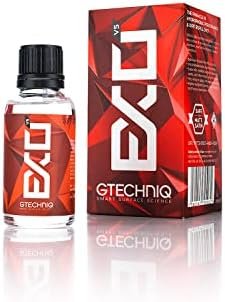
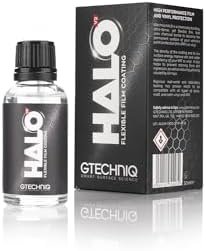
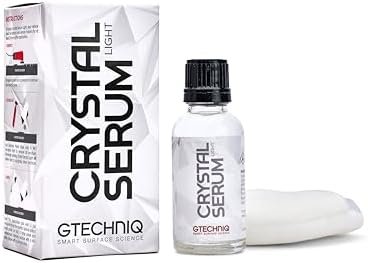
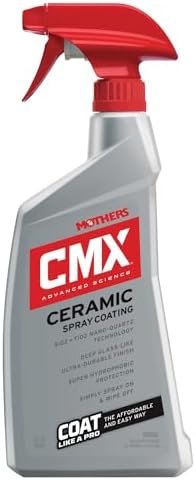
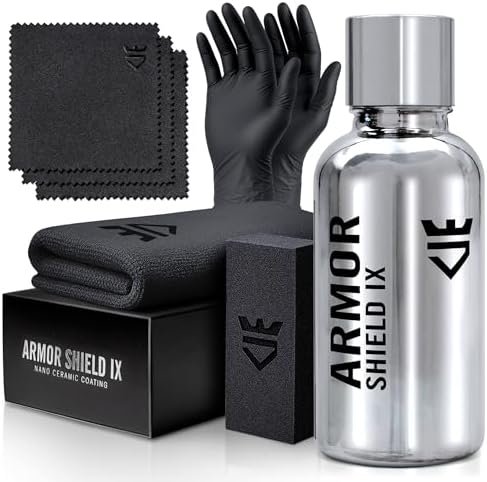
- Semi-permanent bond
- Swirl-resistant finish
- PPF and vinyl safe
- Trusted pro brand
| Product | Our Rating | Key Specs | ||
|---|---|---|---|---|
Crystal Serum Light
|
|
Check Latest Price | ||
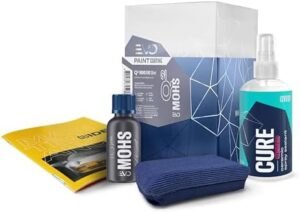
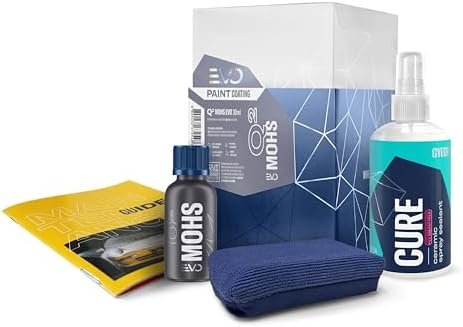
Q² Mohs EVO
|
|
Check Latest Price | ||
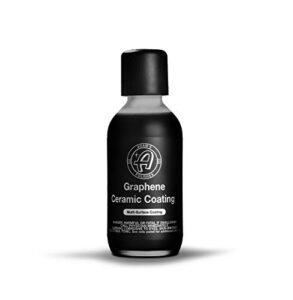
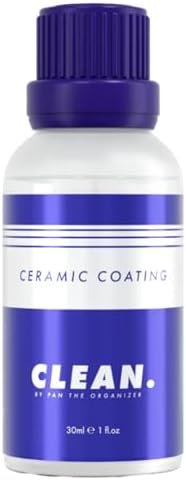
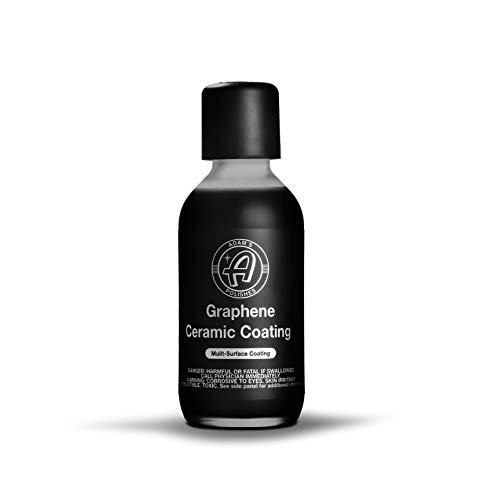
UV Graphene Ceramic Coating
|
|
Check Latest Price | ||
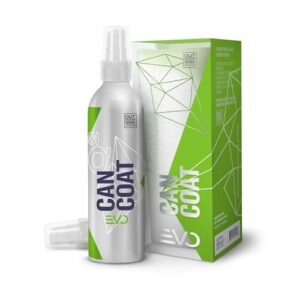
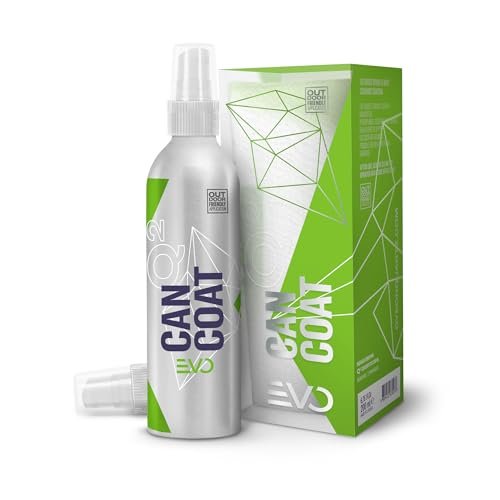
Q² CanCoat EVO
|
|
Check Latest Price | ||
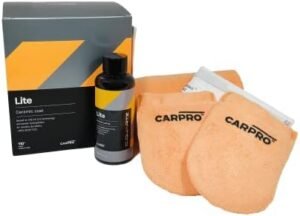
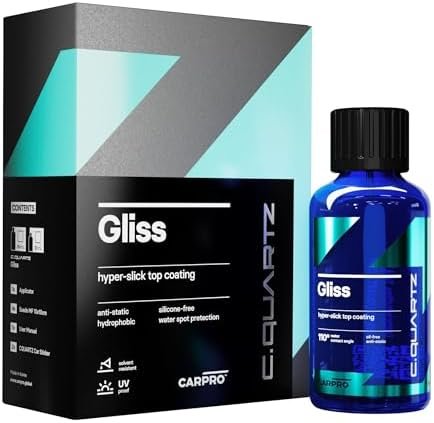
CQuartz Lite 150ml Kit
|
|
Check Latest Price |
Ceramic protection creates a hard, hydrophobic layer on your paintwork that resists contamination and makes maintenance easier. Where wax lasts weeks and sealants a few months, proper ceramic coatings protect for a year or more. The key benefit is durability, but preparation matters more than the coating itself. Apply it to contaminated or poorly prepped paint and you'll lock in problems rather than solve them.
Durability, surface hardness, and hydrophobic performance in a single application.
The hydrophobic properties of a cured ceramic coating cause water to bead up and roll off the surface, taking surface dirt and contamination with it. Washing becomes faster and easier, and the paint stays cleaner between washes for longer than with any other protection type.
Where wax needs reapplying every few weeks and sealants every few months, a properly applied ceramic coating can protect for a year or more with minimal top-up. Over time, the reduced maintenance workload is one of the most practical reasons to invest in ceramic protection.
Semi-permanent protection that rewards preparation and punishes shortcuts.
Full commitment for maximum protection, or spray format for convenience and top-ups.
Maximum durability
Liquid coatings that bond semi-permanently to clear coat. Applied panel by panel within a strict working time window, then left to cure for 24 hours or more. The most durable protection available in consumer-grade products.
12+ monthsConvenience and top-ups
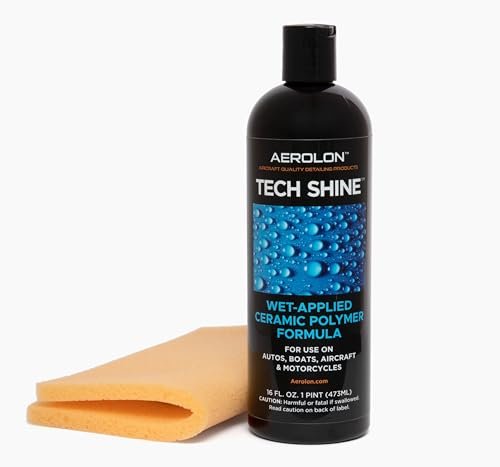
Spray-and-buff ceramic polymer products with no complex curing process or strict working time. More forgiving to apply, shorter durability. A practical choice between full coating applications or as a standalone option for lower-commitment protection.
Weeks to monthsThe coating itself takes minutes. Getting the surface ready is where the work actually is.
Stage 01
Full decontamination wash
Wash thoroughly to remove surface dirt. Follow with a fallout remover and iron decontamination spray to dissolve bonded metallic contamination that a regular wash won't shift.
Stage 02
Clay bar treatment
Run a clay bar or clay mitt over the paintwork to remove any remaining bonded contamination. The surface needs to feel completely smooth to the touch before moving forward.
Stage 03
Polish if needed
Address any swirl marks, light scratches, or oxidation now. Ceramic coatings lock in whatever is underneath. Defects present before coating will remain visible under the glass-like finish. Use polishing where appropriate.
Stage 04
IPA panel wipe
Wipe every panel with an isopropyl alcohol solution to remove all polish oils, wax residue, and fingerprints. The surface must be completely oil-free for the coating to bond correctly.
Stage 05
Apply coating, panel by panel
Work one panel at a time within the product's working time window. Apply thinly and evenly, allow to flash, then level off. Keep out of rain and away from water for at least 24 hours while curing.
Match the product to your experience level and how much time you're willing to invest.
True ceramic coatings offer the best durability and protection. If you're prepared to prep properly and follow the application process carefully, they're absolutely worth the effort. The results over 12 months or more make the initial investment of time very worthwhile.
Ceramic sprays give you the hydrophobic behaviour and contamination resistance without the process stress. They won't last as long, but the margin for error is much wider and the results are noticeably better than a standard wax or sealant.
Ceramic sprays work well as a maintenance layer on cars that already have a true coating applied. They refresh water beading, add a bit of extra protection, and extend the time before a full strip and reapplication becomes necessary.
Start with a ceramic spray. Get familiar with how ceramic products behave, what proper hydrophobic performance looks like, and how the surface responds before committing to the more involved process of a true coating application.
Make sure the paint is genuinely clean and decontaminated before applying any true ceramic coating. Applying it over existing wax or sealant residue will reduce bonding and shorten its lifespan significantly. If the paint has swirl marks or oxidation, correct those first with paint correction. Ceramic protection locks in what's underneath, so the quality of your prep determines the quality of your result.
Most failures come from preparation shortcuts, not from the product itself.
This is where most coatings fail. True coatings need clean, contamination-free paint. Skipping decontamination or applying over old wax reduces durability significantly. The coating can only bond to what it touches, and if that surface isn't clean, the bond reflects it.
Ceramic protection doesn't fill scratches or remove swirl marks. It locks in whatever is already there. If the paint has visible defects before coating, they'll remain visible under the glass-like finish. Address paint correction before applying any ceramic product.
True coatings are sensitive to temperature and humidity. Applying in direct sunlight, extreme cold, or high humidity affects curing and bonding quality. Work indoors or in a shaded garage in mild conditions. The environment during application and curing matters as much as the product itself.
Ceramic coatings work in very thin layers. Over-application creates high spots, streaking, and uneven coverage that can be difficult to correct once the product starts to cure. Less is more with ceramic products. A thin, even coat bonds better and levels more cleanly than a heavy application.
Most coatings require 24 hours or more before exposure to water. Washing too early, parking outside in rain, or even heavy dew can ruin the bond before it fully forms. We regularly see complaints from people who washed too early and ended up with patchy, uneven protection that couldn't be repaired without full removal and reapplication.
A cured ceramic coating needs less maintenance than wax or sealant, but it still needs the right care to last.
01
Don't wash, don't expose to rain, and don't touch the paint until curing is complete. Give the coating the full time it needs to bond properly. Cutting this short is the single most common cause of patchy or reduced protection.
02
Use shampoos designed for use with ceramic coatings, or at minimum pH-neutral car shampoos. Harsh chemicals and strong degreasers degrade the ceramic layer over time, shortening its lifespan and weakening the hydrophobic properties faster than normal wear would.
03
Even true coatings wear down in high-contact areas like door handles, boot edges, and pillars. Check these spots during regular washes. A ceramic spray top-up on worn areas can significantly extend the time before a full reapplication is needed.
04
Ceramic protection is durable, but it isn't permanent. It will eventually wear through and need reapplying. Staying on top of maintenance makes each application last longer, but plan for a full strip and recoat roughly in line with the product's stated durability window.
Click through to check today's price and availability from trusted retailers.
The main downside is difficulty of application and cost of mistakes. True ceramic coatings cure chemically and bond permanently to the paint. If you apply too much, leave it too long before buffing, or work on contaminated paint, you’ll get streaking or high spots that are extremely difficult to remove. Some require machine polishing to fix. Ceramic coatings also aren’t as forgiving as wax or sealant when it comes to maintenance. They still need regular washing, and if you let dirt build up or use harsh chemicals, the coating degrades faster than expected. From what we see in reviews, most complaints come from poor prep or unrealistic expectations about them being maintenance-free. They’re not scratch-proof, and they won’t hide existing defects.
True ceramic coatings can last one to two years, sometimes longer with proper maintenance. Ceramic spray products, which are easier to apply, typically last a few weeks to a couple of months. The confusion between these two product types causes a lot of frustration when people expect spray products to last as long as true coatings. Actual durability depends heavily on prep and maintenance. If the paint wasn’t properly decontaminated before application, or if you’re washing with harsh shampoos, even a true coating will degrade faster. From our experience, most DIY ceramic coatings last around 12 to 18 months with good care. Professional-grade coatings with proper prep can push beyond two years.
The paint must be spotless, fully decontaminated, and ideally polished. Any defects, oils, or contamination left on the surface will be locked in once the coating cures. Start with a thorough wash, then use clay or a decon mitt to remove embedded particles. If there are swirls, scratches, or oxidation, polish them out. The final step before coating is a panel wipe with isopropyl alcohol or a dedicated prep solution. This removes any polishing oils or residues that would prevent the coating from bonding. From what we see, skipping this step is one of the main reasons coatings fail early or don’t perform as expected. It’s the prep, not the product, that makes or breaks results.
You can, but there’s no real benefit. Ceramic coatings are already harder and more durable than wax, so layering wax on top won’t improve protection. It might temporarily boost gloss or water beading, but you’re essentially covering a superior product with an inferior one. What makes more sense is using a ceramic spray topper or a dedicated ceramic maintenance product. These are designed to work with coatings and refresh their properties without interfering with the bond. From our experience, people who wax over ceramic coatings usually do it out of habit, not because it adds value.
A proper hand wash with pH-neutral shampoo won’t damage ceramic coating, that’s exactly how you should maintain it. Automatic car washes with harsh brushes, strong alkaline chemicals, or high-pressure blowers can degrade the coating faster though. The abrasion from dirty brushes is the main risk, not the washing itself. From what we see in reviews, ceramic coatings on cars that go through automatic washes weekly tend to lose their water-repelling properties within six to eight months instead of lasting a year or more. If you want the coating to last, stick to hand washing with gentle products designed for coated or protected vehicles.
Find the best UK detailing products across our range of categories.


Your independent guide to the best car detailing products in the UK.
Hundreds of car cleaning products, pulled from trusted UK retailers across every category - shampoos, sealants, interior, glass, tools and more.
Customer ratings, review volume, price-to-performance and editor testing notes feed the score. No brand payments, ever.
Total Car Clean is 100% reader-supported. We may earn a small commission from affiliate links, but we remain unbiased to help you find the best products.