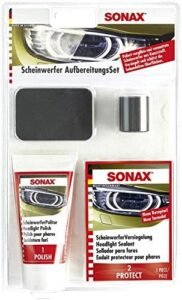
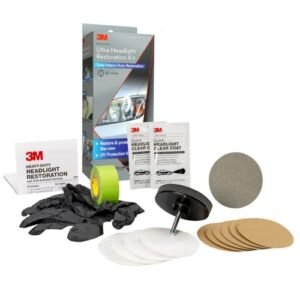
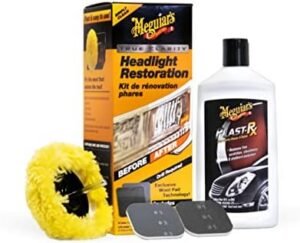
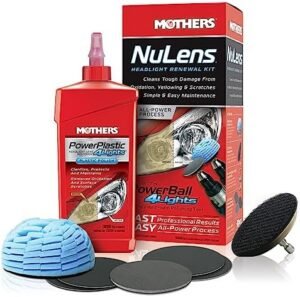
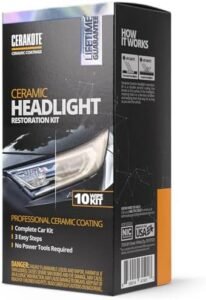
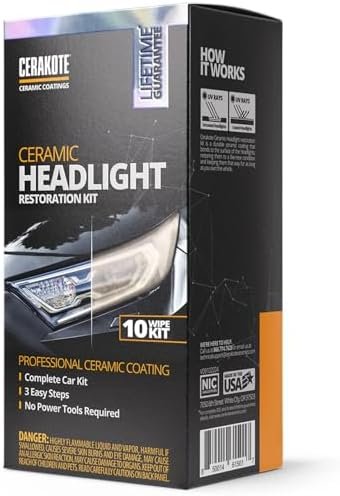
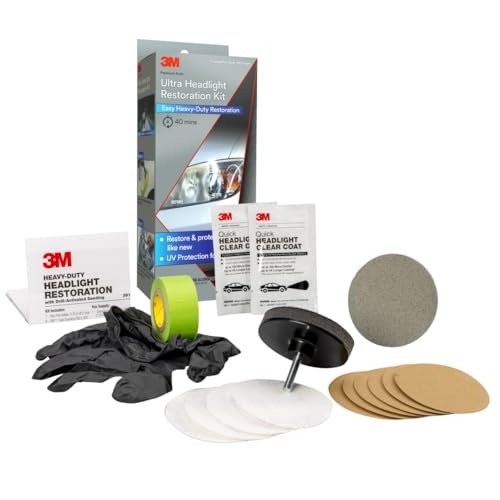
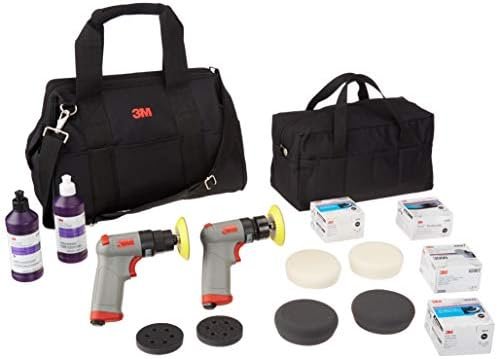
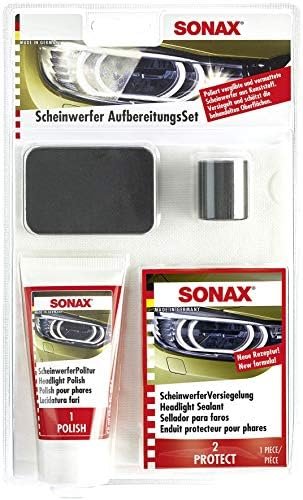
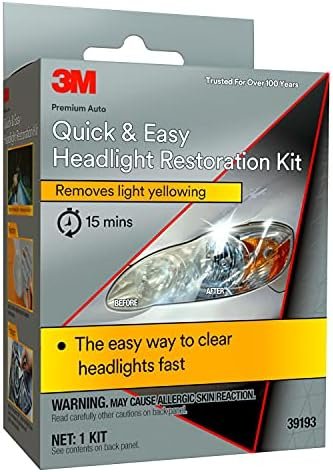
- True ceramic coating finish
- No power tools needed
- UV protection built-in
- Lifetime warranty included
| Product | Our Rating | Key Specs | ||
|---|---|---|---|---|
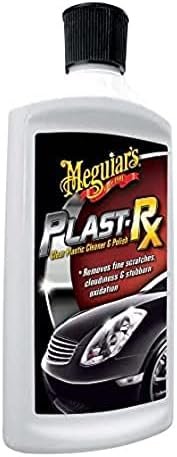
Ceramic Headlight Restoration Kit
|
|
Check Latest Price | ||
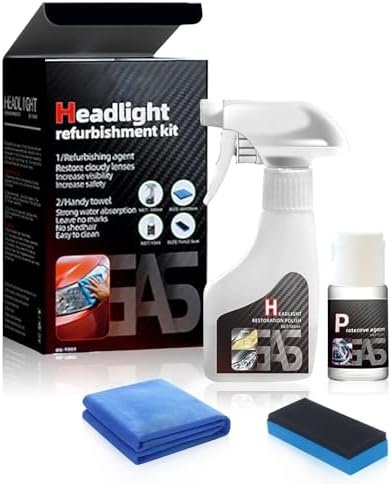
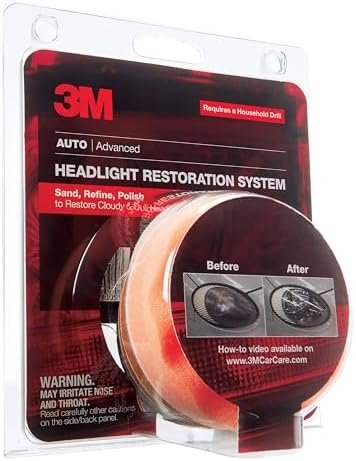
Headlight Restoration Kit
|
|
Check Latest Price | ||
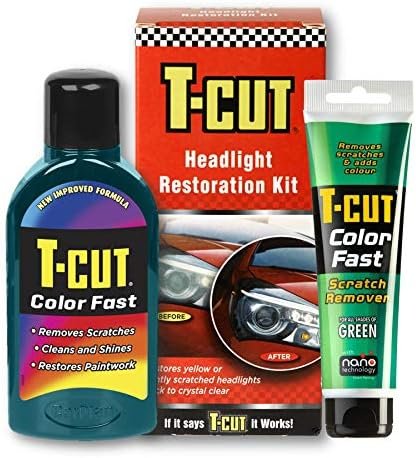
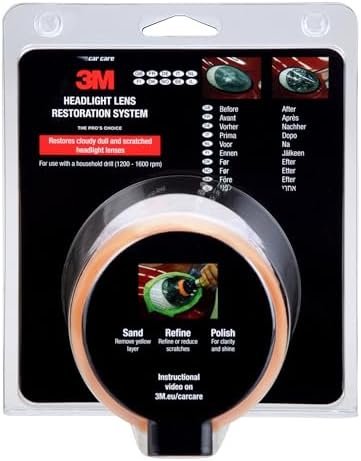
Ultra Headlight Restoration Kit
|
|
Check Latest Price | ||
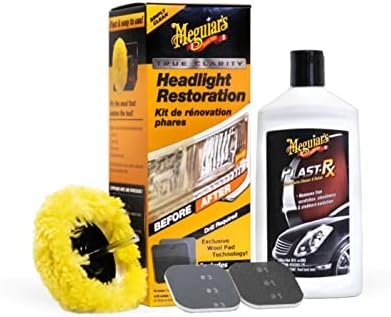
One-Step Car Headlight Restoration Kit
|
|
Check Latest Price | ||
NuLens Headlight Renewal Kit
|
|
Check Latest Price |
Oxidised headlights reduce light output and affect safety. UV damage breaks down the plastic lens surface over time, leaving it rough and hazy. Cloudy lenses scatter light instead of projecting it forward, making night driving harder. Washing won't touch this kind of damage as the oxidation is bonded to the material. Restoration removes it properly.
Oxidation bonds to the lens surface and cannot be washed off. Only restoration removes it.
Cloudy lenses scatter light instead of projecting it forward. The beam becomes diffuse and shorter, reducing your ability to see hazards ahead at night. The difference between a clear lens and a heavily oxidised one can be significant in terms of actual driving visibility.
If headlights don't meet brightness standards, a car can fail an MOT. Oxidation directly reduces how much light passes through the lens. Restoration often brings output back within acceptable limits, making it a practical as well as cosmetic improvement.
The improvement fades over time unless the lens is sealed afterwards. UV exposure continues once the car is back on the road and the oxidation process restarts without a protective barrier. A UV sealant applied after restoration is what determines how long the results last.
Restoration is targeted at oxidation. It cannot fix structural or internal lens damage.
When the lens needs replacing instead
If the lens has visible cracks, deep gouging, internal fogging that doesn't wipe away, or moisture inside the housing, no restoration kit will help. The lens casing itself is compromised and the only proper solution is a replacement unit. Attempting restoration on a cracked lens wastes time and product without improving either appearance or light output.
Match the kit to the severity of the oxidation. Starting lighter is always the safer approach.
For mild to moderate oxidation
Use abrasive compounds to remove light surface oxidation from lenses that are dull but not heavily textured or yellowed. Quick to apply and low risk as a starting point.
Best starting pointFor heavy oxidation and yellowing
Include wet-sanding pads in multiple grits to physically remove the degraded lens layer before polishing smooth. More effort but dramatically better results on heavily oxidised lenses.
More aggressiveThe right approach depends on how far the degradation has progressed.
Lens surface feels smooth but has lost its clarity. Slight yellowing or milky appearance. Light passes through but the beam projection is visibly reduced. Early-stage UV damage.
Polishing-based kitLens feels textured or rough to the touch. Significant yellowing or deep haze. Light output is noticeably reduced. Polishing alone will not be enough to restore this level of damage.
Sanding and multi-step kitVisible cracks, deep pitting, internal moisture, or clouding that does not sit on the surface. No restoration kit addresses physical or internal lens damage. Replacement is the only solution.
Replacement neededThree scenarios and one rule that applies to all of them.
Polishing-based kits are quick, low-risk, and effective at this stage. They are a good first step when the clouding is mild and the surface still feels reasonably smooth. Apply, buff off, and seal with the included UV sealant. If the results fall short, step up to a sanding kit.
Sanding kits offer the level of restoration that heavily degraded lenses need. The extra effort involved in working through multiple grits is worth it when polishing alone will not make a meaningful difference. The visual improvement on a badly oxidised lens can be dramatic.
No restoration kit will fix structural or internal lens damage. If the lens has visible cracks, moisture inside the housing, or deep physical damage, the only proper solution is a replacement lens unit. Attempting restoration on a compromised lens wastes time without improving safety or appearance.
Always try a polishing-based kit before committing to sanding. Sanding removes material permanently and requires a more careful technique to avoid creating uneven patches across the lens surface. Starting with a polishing kit and stepping up only if needed is the lower-risk approach for any lens you are unsure about. See also our correction hub and sitemap for related categories.
Three mistakes that either damage the lens or mean the results disappear within months.
This is the most common mistake by far. Without a UV sealant or protective film applied after restoration, the clarity fades quickly, sometimes within just a few months. The freshly exposed lens surface is even more vulnerable to oxidation than before. Sealing is what makes the result last.
Sanding removes material permanently. Pressing too hard on one area, or spending more time on one section than another, creates uneven patches that become visible once the lens dries. Work with consistent, even pressure across the entire lens and keep the pad moving at all times.
Restoration addresses surface oxidation only. It cannot repair cracks, deep physical damage, or internal moisture. If the lens is structurally compromised, applying a restoration kit does nothing to improve either appearance or light output. The lens needs replacing, not restoring.
The restoration removes the oxidation. These steps are what protect the result.
Whether the kit includes a sealant or you apply one separately, this step is essential and should be done the same day as the restoration. UV protection slows down the oxidation process and keeps the lenses clear significantly longer. Without it, the clarity begins to fade as soon as UV exposure resumes.
Once restored, treat the headlights carefully. Aggressive cleaners, rough cloths, or abrasive wash products can damage the freshly restored surface and reduce how long the clarity lasts. Use a gentle pH-neutral car shampoo and a soft cloth or microfibre when washing the lens area.
UV sealants break down over time, especially on surfaces as exposed as headlights. Check the condition of the lenses every six to twelve months and reapply a UV sealant as needed. Keeping the protective layer in good condition is what prevents the oxidation from returning and extends the time between full restoration sessions.
Click through to check today's price and availability from trusted retailers.
Compounds contain more abrasive particles for heavy defect removal, while headlight restorees are finer and used for refining the finish.
Hand headlight restoreing is possible but time-consuming and less effective. A dual-action headlight restoreer is highly recommended for better results.
Only when needed to remove defects. Over-headlight restoreing removes clear coat. Aim for every 1-2 years or when defects become noticeable.
Yes, headlight restoreing removes defects and ensures a perfect surface for coating application. Skipping this step can lock in imperfections.
Find the best UK detailing products across our range of categories.


Your independent guide to the best car detailing products in the UK.
Hundreds of car cleaning products, pulled from trusted UK retailers across every category - shampoos, sealants, interior, glass, tools and more.
Customer ratings, review volume, price-to-performance and editor testing notes feed the score. No brand payments, ever.
Total Car Clean is 100% reader-supported. We may earn a small commission from affiliate links, but we remain unbiased to help you find the best products.