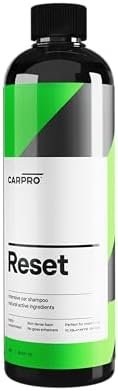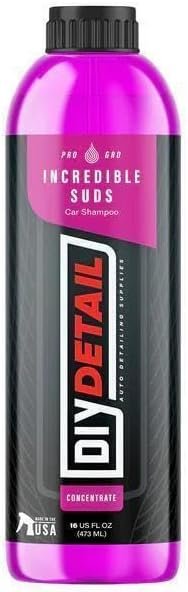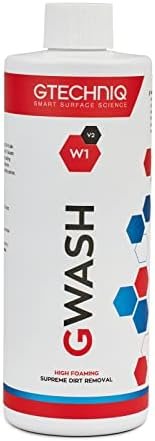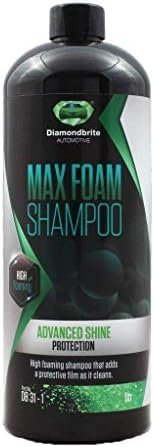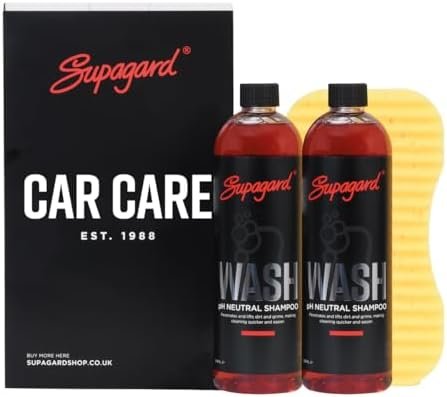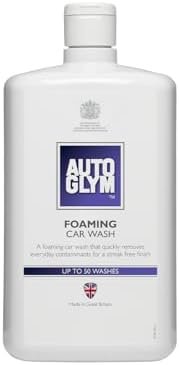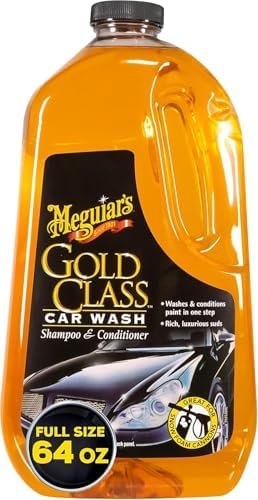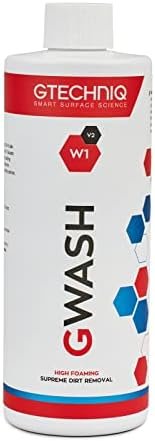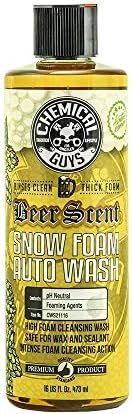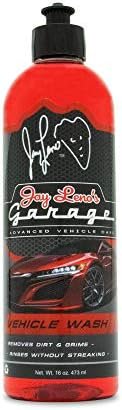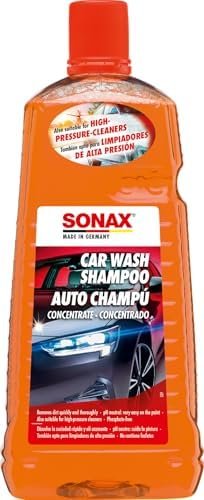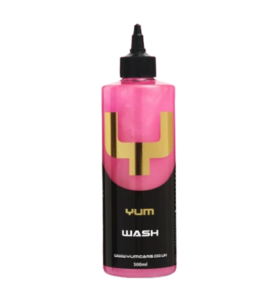

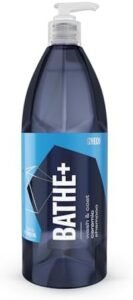

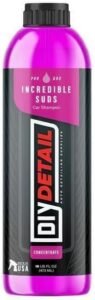

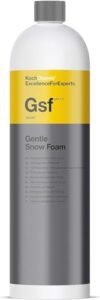

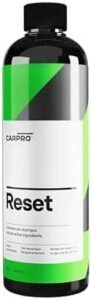
- Coating-friendly wash
- Rich dense foam
- Residue-free rinse
- Highly concentrated
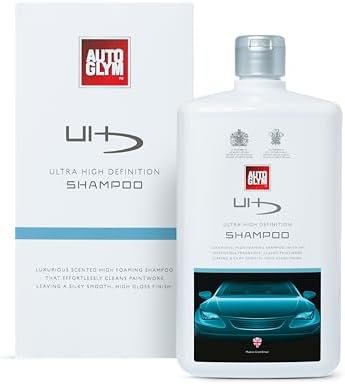
| Product | Our Rating | Key Specs | ||
|---|---|---|---|---|
Reset, intensive car shampoo
|
|
Check Latest Price | ||
WASH
|
|
Check Latest Price | ||
Bathe+
|
|
Check Latest Price | ||
Incredible Suds
|
|
Check Latest Price | ||
Gentle Snow Foam
|
|
Check Latest Price |
Washing is where most scratches and swirl marks are introduced. The right shampoo controls lubrication,allowing dirt to lift and carry away rather than drag across the surface.
The product in your bucket has a direct impact on how much damage washing does to your paint.
Shampoo's most important job is lubrication,allowing dirt to be lifted and carried away rather than dragged across the surface. Poor lubrication increases friction between grime, mitt, and paintwork. That friction is what causes swirl marks.
From our experience, changing shampoo often improves wash safety more than changing technique alone. A well-formulated product makes the whole process safer,a poorly chosen one increases risk even when everything else is done correctly.
Aggressive shampoos can remove wax and sealants in just a few washes. If your protection is wearing off faster than it should, your shampoo may be a bigger factor than you think.
Clear expectations mean you pick the right product for the right job, every time.
The right type depends on what the car has on it, and what's protecting the paint underneath.
Safe for regular maintenance washing. Compatible with waxes, sealants, and coatings,pH-neutral formulas offer balanced cleaning power without stripping existing protection.
Designed for heavy dirt or pre-correction washing where stripping protection is acceptable,or even desirable before polishing or reapplying a new protection layer.
Add temporary gloss or slickness to the paint during the wash. Cleaning performance varies widely,they're not a replacement for proper protection and results are often subtler than marketed.
Match the product to the condition of the car and what's protecting the paint underneath.
Use a pH-neutral shampoo. It's gentle, reliable, and won't strip protection between washes,the right default for most people washing weekly or fortnightly.
→ pH-neutral shampooChoose a gentle formula that won't remove wax or coatings. pH-neutral options are usually the safest bet for maintaining protection between applications.
→ Gentle / ceramic-safe pH-neutralStrong shampoos work well here, but use them occasionally rather than every wash. They clean more aggressively but will weaken existing protection over time.
→ Strong / degreasing shampoo (occasionally)Wash & wax shampoos can add a subtle boost, but keep expectations realistic. They work on already-clean, protected paint,they're not a shortcut for a full detail.
→ Wash & wax / gloss-enhancingThese habits either damage the paint directly or undo the protection you've already applied.
One of the most common mistakes we see. Household cleaners strip wax, dry out rubber seals, and aren't formulated for paintwork. They may clean, but they cause more damage than they prevent,even in a single wash.
Thick foam looks impressive but doesn't mean better cleaning or safer lubrication. What matters is how well the product glides across the surface and lifts contamination,foam volume has very little to do with either.
More shampoo doesn't mean a cleaner car,it just makes rinsing harder and can leave residue on the paint. Follow the dilution ratios on the bottle; they're there for a reason and over-dosing wastes product.
Shampoo works best when the heaviest dirt has already been loosened. Using it to do everything,including the job of a pre-wash or snow foam,forces the mitt to work harder against more contamination.
Three steps that finish the process properly and protect the work you've just done.
Leftover product can dry onto paint and leave streaks, especially in direct sunlight. Make sure every panel is fully rinsed before moving on to drying.
Use a proper microfibre drying towel rather than rubbing hard with an old cloth. A drying aid or wet coat adds lubrication and protection as part of the process.
If you've used a strong shampoo or the car's been through multiple washes, consider topping up with a wax or ceramic spray sealant to restore the layer.
Click through to check today's price and availability from trusted retailers.
There isn’t a single “best” professional car shampoo because the right choice depends on what you’re trying to achieve and how you use your car. A pH-neutral shampoo works brilliantly for regular maintenance on protected paintwork, but it might not be aggressive enough if you’re preparing a car for correction or dealing with heavy contamination. Professional detailers often keep several shampoos on hand for different situations. What matters more than the brand is choosing a product that matches your needs, whether that’s safe weekly washing, deep cleaning before polishing, or maintaining ceramic coatings without stripping them. From our experience, the best shampoo is the one that fits your specific use case rather than the one with the most marketing behind it. We’ve listed recommended car shampoos at the top of this page based on different scenarios and protection levels. These give you a solid starting point depending on whether you’re after gentle maintenance, heavy-duty cleaning, or something that adds a bit of gloss. The buying guide below explains what to look for so you can make the right choice for your situation.
You can use regular hair shampoo in an emergency, but it’s not ideal. Hair shampoo is pH-neutral and won’t strip wax or damage paint in the same way washing-up liquid does, so it’s a better option than household cleaners if you’re stuck. The main issue is that hair shampoo isn’t designed to deal with the type of dirt found on cars, like road grime, brake dust, or traffic film. Hair shampoo also doesn’t provide the same level of lubrication as proper car shampoo, which means there’s a slightly higher risk of marring during washing. It’ll clean light dust reasonably well, but it won’t perform anywhere near as effectively as a dedicated car wash product. If you’re going to use it, dilute it properly and make sure you rinse thoroughly. Leftover shampoo can leave a sticky residue on the paint, especially in warm weather. We’d only recommend this as a one-off solution, not a regular practice.
Dawn and other washing-up liquids are designed to cut through grease, which makes them far too aggressive for car paintwork. They’ll strip away wax and sealant in a single wash, leaving the paint unprotected. Repeated use can even degrade the clear coat prematurely, causing a dull appearance and making the paint vulnerable to environmental damage. From our experience, this is one of the most common mistakes we see. People reach for washing-up liquid thinking it’ll give a deeper clean, but it actually does more harm than good. The paint might look clean immediately after, but you’ve removed the protective layers that keep it looking good long-term. Car shampoo is pH-balanced specifically for automotive finishes. It’s designed to clean safely without stripping protection, which is why it’s worth using the proper product. If you’ve accidentally used washing-up liquid, you’ll need to reapply wax or sealant to restore protection to the paint.
Yes, washing-up liquid will strip wax and sealant in a single wash. It’s formulated to break down oils and fats, which is exactly what wax and sealant are made from. This is why household cleaners should never be used for regular car washing, they undo all the protection work you’ve done. We regularly see people make this mistake, often because they think stronger cleaning power means better results. The reality is that car shampoo is designed to maintain protection whilst cleaning, whereas washing-up liquid removes it completely. If the car feels rough or water doesn’t bead properly after washing, it’s usually because the protection has been stripped away. If you’ve used washing-up liquid by mistake, the paint is now unprotected and more vulnerable to contamination. You’ll need to reapply wax, sealant, or coating to restore the protective barrier. From that point onwards, stick to pH-neutral car shampoo to avoid repeating the same issue.
Find the best UK detailing products across our range of categories.


Your independent guide to the best car detailing products in the UK.
Hundreds of car cleaning products, pulled from trusted UK retailers across every category - shampoos, sealants, interior, glass, tools and more.
Customer ratings, review volume, price-to-performance and editor testing notes feed the score. No brand payments, ever.
Total Car Clean is 100% reader-supported. We may earn a small commission from affiliate links, but we remain unbiased to help you find the best products.