



Best Car Polish for Gloss and Finish Refinement

28 products ready to shop 28 products Last checked Checked:

Top Polish Picks from the TCC Team

Product Our Rating Key Specs
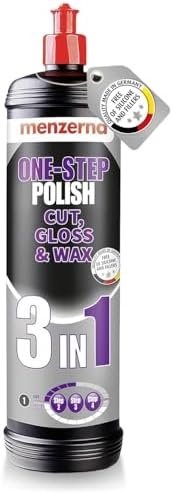
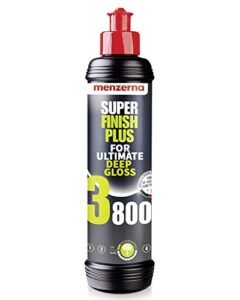
Super Finish Plus 3800
4.8

A show-car finishing polish with nano abrasives removing holograms, fine scratches, and compounding haze for maximum optical gloss on all paint types.

  • Nano-abrasive formula
  • No wax or silicone
  • Removes 3000 grit marks
  • Dark paint specialist
Check Latest Price
Profiline Perfectfinish
4.6

A nano-abrasive finishing polish rated 4 for cut and 6 for gloss, capable as a one-step correction and final polish on all paint types.

  • Cut 4 Gloss 6 rated
  • Zero dusting on pad
  • One-step on soft paints
  • Silicone-free body shop safe
Check Latest Price
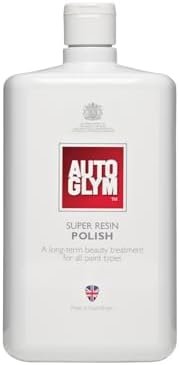
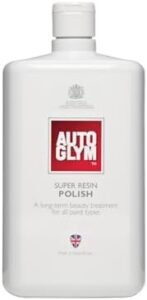
Super Resin Polish
4.5

A UK bestselling all-in-one polish combining fine abrasives, optical fillers, and a protective resin layer for a deep glossy finish on all paint types.

  • Fine abrasive and filler
  • Resin protection layer
  • 4x Polish of the Year
  • Hand or machine safe
Check Latest Price
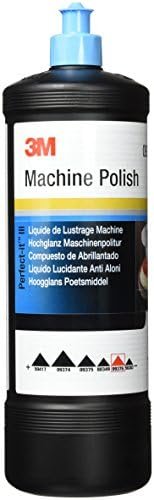
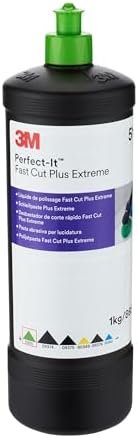
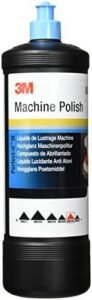
Perfect-It High Gloss
4.5

A body shop standard machine polish using aluminium oxide abrasives to remove compound swirl marks and deliver showroom-grade gloss on all paint types.

  • Aluminium oxide abrasive
  • Extended wet polishing time
  • Low sling and dusting
  • Body shop paint safe
Check Latest Price
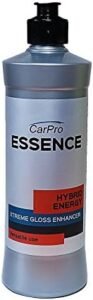
Essence
4.7

A finishing polish combining fine abrasives with SiO2 quartz resins that corrects, enhances gloss, and primes paintwork for ceramic coating in one step.

  • SiO2 quartz resin formula
  • Corrects and primes coating
  • Extreme optical gloss
  • DA, rotary, or hand
Check Latest Price
#1 Best overall
Super Finish Plus 3800 (Menzerna)
Super Finish Plus 3800
4.8
  • Nano-abrasive formula
  • No wax or silicone
  • Removes 3000 grit marks
  • Dark paint specialist
#2 Top pick
Profiline Perfectfinish (SONAX)
Profiline Perfectfinish
4.6
  • Cut 4 Gloss 6 rated
  • Zero dusting on pad
  • One-step on soft paints
  • Silicone-free body shop safe
#3 Best value
Super Resin Polish (Autoglym)
Super Resin Polish
4.5
  • Fine abrasive and filler
  • Resin protection layer
  • 4x Polish of the Year
  • Hand or machine safe
#4 Daily driver
Perfect-It High Gloss (3M)
Perfect-It High Gloss
4.5
  • Aluminium oxide abrasive
  • Extended wet polishing time
  • Low sling and dusting
  • Body shop paint safe
#5 Premium pick
Essence (CarPro)
Essence
4.7
  • SiO2 quartz resin formula
  • Corrects and primes coating
  • Extreme optical gloss
  • DA, rotary, or hand
Polish

Correction, Not Concealment.

Car polishes don't hide paint defects, they remove them. By using abrasives to level the surface, they restore the clarity and gloss that swirl marks, light scratches, and oxidation have taken away. The key difference from any other product is simple: polish equals correction, not concealment.

4 product types
Less clear coat removed
More gloss and clarity
Always protect after

Polishing Improves Paint Condition. Nothing Else Does.

Over time, paint collects swirl marks, oxidation, and haze. Polish is what actually fixes them.

Abrasives level the surface

Polishes work by removing a very small amount of clear coat to level the surface. That removes the peaks and valleys that scatter light and create the appearance of swirl marks, haze, and dullness, restoring gloss and reflection.

Start lighter, not heavier

Every time you polish, you remove a small amount of clear coat. Starting with the least aggressive product that gets the job done preserves the most material for the future. You can always step up aggression, but you can't undo unnecessary removal.

Protection is essential after

After polishing, the surface is bare and completely exposed. It has no protection at all. Wax, sealant, or coating must follow every polish session. Skipping this leaves the freshly corrected paint vulnerable to oxidation, water spotting, and contamination.

Car Polish Is (and Isn't)

Understanding the limits of polishing sets you up for realistic results every time.

✓ What it is

  • A correction step that removes swirl marks, light scratches, oxidation, and haze from clear coat
  • A way to restore gloss and reflection by levelling the paint surface using controlled abrasion
  • The core step that actually improves paint condition, not just appearance
  • A product that comes in different aggression levels to match the severity of the defects you're working on

✗ What it isn't

  • A protective product, after polishing the surface is completely bare and needs wax, sealant, or coating immediately
  • A fix for deep scratches or damage that has cut through the clear coat into base coat or primer
  • A one-pass solution for every defect, severe damage may need compounding first, then polishing to refine
  • A substitute for washing or decontamination, always start with a clean, clay-barred surface

Four Types, One Job Done at Different Aggression Levels

Match aggression to defect severity. Start lighter than you think you need to.

Final refining step

Finishing Polish

Light abrasives designed to refine the paint and maximise gloss. Used after heavier correction or on paint that is already in good condition.

Best final step
  • Very fine abrasives that refine rather than correct, leaving the highest possible gloss
  • Used as the final polishing stage after compounding or medium cutting
  • Can be used alone on paint with minimal defects where you're only enhancing rather than correcting
  • Essential for removing the haze that heavier polishes leave behind
Best for paint already in good shape, or as the final step after heavier correction.

Ideal for most users

Medium / One-Step Polish

A balance of correction and finish. Removes light defects while leaving a decent gloss level behind, often in a single stage.

Recommended
  • Corrects light swirl marks, minor scratches, and mild oxidation without needing a separate finishing stage
  • Leaves a good level of gloss on its own, reducing the total number of steps needed
  • The best starting point for most enthusiasts doing maintenance correction rather than full correction
  • Works well by hand and by machine, though machine application gets notably better results
The most practical choice for regular maintenance polishing or first-time users.

For heavier defects

Heavy Cut Polish (Compound)

Stronger abrasives for removing deeper defects. Usually followed by a finishing polish to refine the surface and restore full gloss.

Two-stage process
  • Removes deeper swirl marks, scratches, and heavy oxidation that lighter polishes can't touch
  • More material is removed per pass, making it the most aggressive option
  • Almost always needs a finishing polish afterwards to remove the haze a compound leaves
  • Machine polisher recommended, doing this by hand is very difficult and risks uneven results
Use only when medium cutting won't remove the defects. Always follow with a finishing polish.

Convenience option

All-in-One Polish

Combines light polishing with some protection in a single product. Convenient, but doesn't match the results of a dedicated correction followed by dedicated protection.

Convenience trade-off
  • Corrects light defects and leaves some protection behind in a single application step
  • Very convenient for quick refreshes or maintaining paint that's already in reasonable shape
  • The protection layer is typically lighter than a dedicated wax or sealant applied separately
  • Not suitable for more serious correction work where clear separation of steps produces better results
Good for quick maintenance. For serious correction, use dedicated correction and protection separately.

Compounds, Polishes, and Glazes Do Very Different Things

These three products are often confused but they serve completely different purposes.

The correction process often runs in sequence: compound to remove the worst of the damage, polish to refine the surface and restore gloss, and optionally a glaze to enhance the final appearance before protection. Understanding which does what prevents the common mistake of expecting polish to do a compound's job or a glaze to fix what only correction can address.

Step 1 · When needed

Compound

Remove defects

Aggressive. Uses heavy abrasives to remove deeper scratches, heavy swirl marks, and oxidation. Does the heaviest lifting but typically leaves a haze behind that needs refining.

Corrects aggressively
Step 2 · Core step

Polish

Refine the finish

Corrective but controlled. Improves clarity and gloss after compounding, or handles light defects on its own in one step. The polish is what creates the actual shine.

Corrects and refines
Step 3 · Optional

Glaze

Enhance appearance

Not correction. Glazes fill micro-imperfections temporarily to add depth and wetness to the look. They don't remove anything. The effect is cosmetic and fades over time.

Enhances only
In practice: Use a compound to remove the worst defects, polish to refine the surface and restore full gloss, and optionally a glaze for enhanced depth before applying your protection layer. If your paint only has light defects, you can often skip compounding entirely and go straight to a medium or one-step polish.

Matching the Polish to the Problem

Five common situations, five clear directions.

Light swirls and minor marks

A one-step or finishing polish is all you need. There's no reason to introduce a heavier product when lighter abrasives will get there. Start here and only step up if you're not getting results after proper technique and dwell time.

More visible defects or scratches

Start with a heavier cut polish or compound to remove the bulk of the damage, then follow with a finishing polish to refine the surface. Two stages take more time but produce noticeably cleaner results than one aggressive pass alone.

You want simplicity

One-step polishes offer the best balance of correction and finish in a single product. They're the ideal choice for most enthusiasts who want proper results without committing to a full multi-stage process. Ideal for most cars most of the time.

Working by hand, not machine

Choose lighter polishes. Heavy correction by hand is difficult and risks uneven pressure. A finishing polish or mild one-step applied by hand in a crosshatch pattern will give better, safer results than trying to force a compound by hand.

You're unsure where to start

Start less aggressive than you think you need. You can always step up to a heavier cut if lighter products aren't removing the defects, but you cannot undo unnecessary clear coat removal. When in doubt, test a small area with a mild product before committing to the whole panel.

What Goes Wrong Most Often

Four mistakes that shorten paint life or leave you with a worse result than when you started.

Using too aggressive a product

Removing more clear coat than the defects require shortens the usable life of the paint. There's a finite amount of clear coat to work with. Match the aggression to the defect, not to your impatience. Starting heavier than necessary is the most common and hardest-to-reverse mistake.

Skipping the refinement stage

Heavy polishes and compounds leave behind a micro-haze. Finishing properly is what creates gloss. If you compound or use a medium cut and stop there, the paint will look dull. The finishing step is where the actual shine comes from, not the correction stage.

Expecting instant, perfect results

Some defects require multiple passes or multiple product stages to correct properly. Deep scratches may not fully disappear in a single session. Working slowly and methodically with realistic expectations produces better outcomes than rushing through with a heavier product than needed.

Not protecting the paint afterwards

Polished paint is completely bare and exposed. Protection is not optional after correction, it is essential. Without a layer of wax, sealant, or coating, the freshly corrected finish begins to oxidize and pick up contamination almost immediately, undoing the work you just did.

Four Steps That Complete the Job

Polishing isn't finished when the product comes off. These four steps protect the work you just did.

01

Wipe down polishing oils

Most polishes leave a light oil residue on the surface. Wipe down with a clean microfibre panel wipe to ensure the surface is fully clean before applying any protection. This matters more for coatings, which need a truly bare surface to bond properly.

02

Inspect in good lighting

Check the panel in bright, direct light before moving on. Swirl marks and haze are easiest to spot under a strong single light source. It's far easier to correct a missed area now than after protection has been applied.

03

Apply protection immediately

Wax, sealant, or ceramic coating must go on immediately after polishing. The surface is completely bare and unprotected. How long that protection lasts and how well it bonds depends entirely on the product you choose, but something must go on before the car gets wet.

04

Maintain to avoid reintroducing defects

Most swirl marks come back through poor washing technique, using the wrong tools, or skipping proper two-bucket wash methods. Protecting correctly and washing carefully keeps the finish you've worked for in the best condition possible between correction sessions.

Done properly, polishing is what takes paint from dull and marked to clear and glossy. Start with the least aggressive product that gets the job done, always refine with a finishing stage, and never skip the protection step. The correction only lasts as long as the care you take afterwards.

Browse All Polishes

Click through to check today's price and availability from trusted retailers.

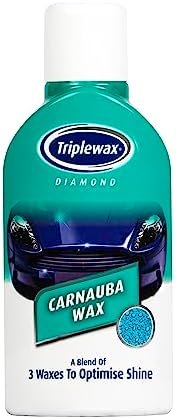
Triplewax TWD500 car Polish

Triplewax TWD500 car Polish

4.6/5
Check latest price

FAQs

Compounds are more aggressive and remove deeper defects. Polishes are finer and used to refine the finish and restore gloss after correction.

Yes, but only for light defects. Hand polishing works for minor swirls, but deeper correction usually requires a machine polisher.

Not often. Polishing removes a small amount of clear coat, so it should only be done when needed, not as part of every wash routine.

Yes. Polishing leaves the surface unprotected. Always follow with a wax, sealant, or coating to protect the finish.

Browse by Category

Find the best UK detailing products across our range of categories.

Our methodology

Your independent guide to the best car detailing products in the UK.

Step 01 · Sourcing

We start with every option

Hundreds of car cleaning products, pulled from trusted UK retailers across every category - shampoos, sealants, interior, glass, tools and more.

Step 02 · Scoring

Ranked by real-world signals

Customer ratings, review volume, price-to-performance and editor testing notes feed the score. No brand payments, ever.

Step 03 · Freshness

We keep it fresh and clean

Total Car Clean is 100% reader-supported. We may earn a small commission from affiliate links, but we remain unbiased to help you find the best products.

Independent No paid rankings UK-focused