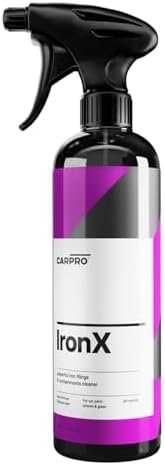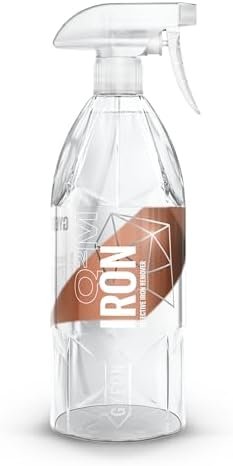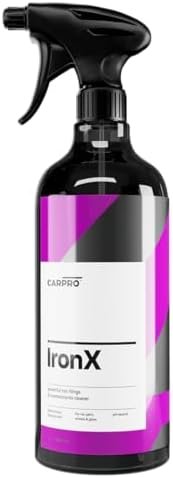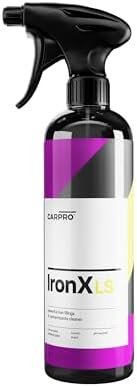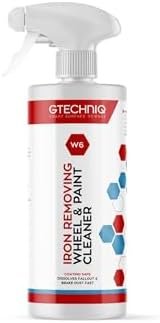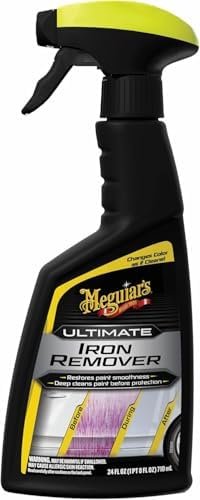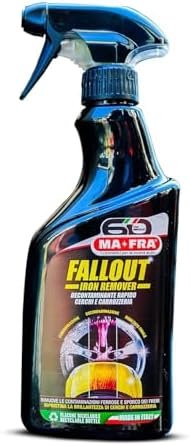

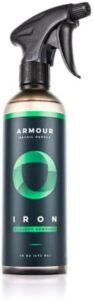

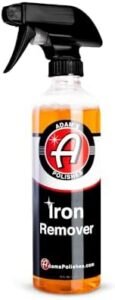
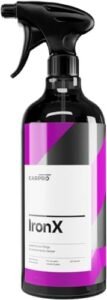

- Dedicated fallout stage
- Decon-first workflow
- Spray-on application
- Rinse after dwell
| Product | Our Rating | Key Specs | ||
|---|---|---|---|---|
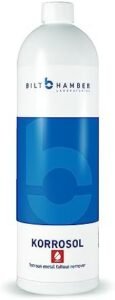
Korrosol
|
|
Check Latest Price | ||
Q²M Iron
|
|
Check Latest Price | ||
Iron
|
|
Check Latest Price | ||
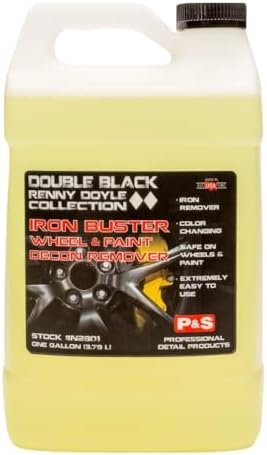
Iron Remover
|
|
Check Latest Price | ||
IronX
|
|
Check Latest Price |
Iron contamination embeds itself into paint and wheels. Brake dust and industrial fallout bond to surfaces, causing rough paint and visible speckling. No amount of washing will shift it, you need chemistry.
Bonded metallic contamination needs chemical decontamination, not just water and shampoo.
Brake dust and industrial fallout are superheated metallic particles that physically bond to the surface as they cool. They cannot be rinsed, wiped, or shampooed off. Without chemical treatment, they stay embedded and continue to oxidise.
From our experience, skipping iron removal limits how clean the surface can actually feel, no matter how thorough the wash. Even on paint that looks clean, contamination creates a rough texture that you can feel when running a finger across the surface.
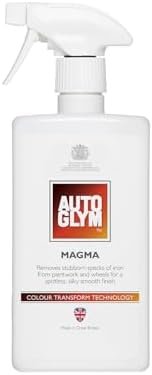
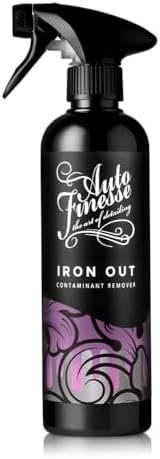
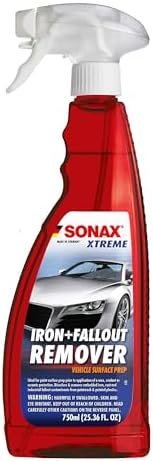
Iron removers dissolve bonded metallic particles through a chemical reaction. You spray on, let it dwell, and rinse. There is no scrubbing required and no risk of introducing scratches, which makes it one of the safest decontamination steps in the process.
A targeted chemical tool, not a general cleaner or a replacement for any other step.
The purple colour change you see when using iron remover is a visual indicator, not a measure of the product working harder. It shows where metallic contamination is dissolving. Products without visible colour change work the same way, the reaction is still happening, it is just not highlighted.
Spray-on for regular maintenance, gel for stubborn contamination and wheels.
Spray-on formulas are the most common and easiest to use. They apply evenly to both paint and wheels, suit regular maintenance schedules, and are straightforward to rinse off after the recommended dwell time. Most users find them the simplest place to start.
The natural starting point for most people. Effective on paint that is lightly to moderately contaminated and maintained regularly.
Gel-style products have a longer dwell time because they cling to vertical panels and heavily contaminated areas rather than running off. Particularly useful for wheels where brake dust builds up quickly, and for neglected paintwork that needs more contact time.
People tend to use gel formulas less often but find them more effective when contamination is stubborn. Worth having alongside a spray product for wheels and neglected areas.
Most people only need one format to start, the situation tells you which one.
Use a standard spray iron remover. It is straightforward and effective for paint that is lightly to moderately contaminated and washed on a regular schedule. Apply after washing, before claying or protection.
→ Spray-on iron removerGel-style products handle embedded iron more effectively on wheels or neglected paintwork. The longer dwell time gives the chemistry more time to dissolve stubborn bonded particles that a spray rinses past.
→ Gel iron removerLow-odour formulas exist and are worth seeking out if you are working in an enclosed space or find the smell of standard products strong. The chemistry still works, most of the odour comes from the active ingredients reacting.
→ Low-odour spray formulaIron remover is a simple process, these three habits are the most common ways it goes wrong.
Iron removers dry too quickly on warm surfaces, reducing effectiveness and making rinsing harder. Always apply in the shade or wait until the panels are cool to the touch. We always apply in the shade as standard practice.
If the product dries before you rinse, it leaves residue that is difficult to remove and can make the surface feel sticky or look dull. This is easily avoided, watch the dwell time and rinse before it dries, especially in warm conditions.
Iron removers are not needed every wash. Using them too often wastes product and adds unnecessary time to a routine that does not call for it. Use them when contamination is actually present, not as a default part of every session.
Iron removal reveals what is left, these steps determine what you do with that information.
Make sure all product is removed from every panel. Any residue left behind can interfere with protection products applied later or make paint feel sticky to the touch. A proper rinse is the only step between the chemistry and a clean surface.
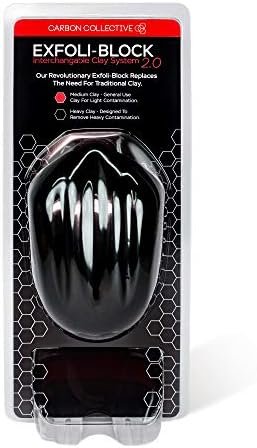
Iron removers handle embedded metallic particles, but clay removes other bonded contamination that iron remover cannot dissolve. If the paint still feels rough after iron removal, using a clay bar, clay mitt, or clay towel is the next step.
Click through to check today's price and availability from trusted retailers.
Yes, if your car is exposed to brake dust regularly or if you live near railways or industrial areas. Iron remover dissolves embedded metal particles that washing alone can’t shift. We’ve found it makes the most visible difference on wheels, where brake dust builds up fastest. For cars that are garaged and driven lightly in cleaner areas, you might not need it as often. The test is simple: if your paint feels rough after washing, or if you see rust-coloured spots, iron remover will help. Most people use it a few times a year rather than every wash.
Not always. Iron remover handles metal contamination chemically, but it won’t remove everything. If the paint still feels rough after using iron remover and rinsing, then claying is the next step. From our experience, many cars feel perfectly smooth after iron removal alone, especially if they’re maintained regularly. Run your hand over the paint after it’s clean and dry. If it feels glassy, you’re done. If it still feels gritty, clay will finish the job.
The purple colour is a chemical reaction between the iron remover and the iron particles on your paint. As the product dissolves the contamination, it changes colour to show you it’s working. Darker purple means more contamination. This reaction is useful because it gives you visual confirmation that there’s iron present. Wheels often turn deep purple within seconds because they collect so much brake dust. Bodywork might show less dramatic colour change, but that doesn’t mean the product isn’t working.
Start with a clean, cool car. Spray the iron remover onto the paintwork or wheels, making sure you cover all surfaces evenly. Let it dwell for the time specified on the bottle, usually five to ten minutes. You’ll see it turn purple as it reacts with iron particles. Don’t let it dry on the surface. If it starts looking patchy or dry, rinse it off immediately. After the dwell time, rinse thoroughly with a pressure washer or hose. We’ve found that working panel by panel in the shade gives you better control, especially on warm days.
No, when used correctly. Iron removers are pH-balanced and designed specifically for automotive paintwork. The risk comes from letting the product dry on the surface or using it on hot panels, which can leave staining or streaks. Always follow the instructions: apply to cool panels, don’t exceed the dwell time, and rinse thoroughly. We’ve not seen damage from proper use, but rushing the process or ignoring the guidelines can cause issues. Test on a small area first if you’re concerned.
Find the best UK detailing products across our range of categories.


Your independent guide to the best car detailing products in the UK.
Hundreds of car cleaning products, pulled from trusted UK retailers across every category - shampoos, sealants, interior, glass, tools and more.
Customer ratings, review volume, price-to-performance and editor testing notes feed the score. No brand payments, ever.
Total Car Clean is 100% reader-supported. We may earn a small commission from affiliate links, but we remain unbiased to help you find the best products.