



Best Water Spot Remover for Cars

8 products ready to shop 8 products Last checked Checked:

Top Water Spot Remover Picks from the TCC Team

Product Our Rating Key Specs
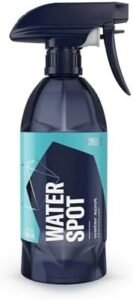
Q²M WaterSpot
4.6

A dedicated acid-based remover that dissolves mineral deposits on paintwork without polishing and, in typical use, without a full ceramic recoating cycle.

  • Thick, oily formula
  • No polishing step
  • Coating-friendly
  • Paint and glass safe
Check Latest Price
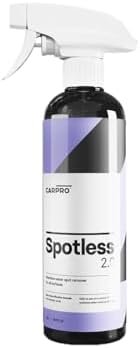
Spotless 2.0
4.5

A balanced-acid formula that chemically breaks down mineral deposits on clear coat, coatings, trim, and glass before they can etch in.

  • Proprietary acid blend
  • Stronger than original Spotless
  • Safe on CQuartz coatings
  • Glass and trim safe
Check Latest Price
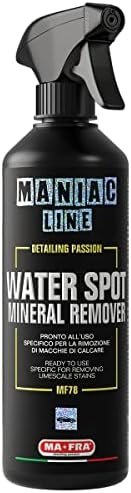
Water Spot Mineral Remover
4.3

A ready-to-use, non-abrasive decontaminant that dissolves limescale, salt residue, acid-rain staining, and light oxidation from exterior surfaces.

  • Non-abrasive acid formula
  • Tackles acid-rain residue
  • Helps sealants bond
  • Chrome and exterior surfaces
Check Latest Price
Reset
4.2

A spray-on remover that breaks down mineral deposits on paint and glass in hard-water areas before they can etch the finish.

  • Hard-water specialist
  • Paint and glass safe
  • Helps prevent permanent etching
  • Ready to use
Check Latest Price
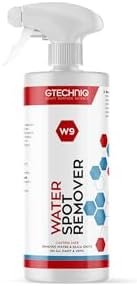
W9 Water Spot Remover
4.4

A concentrated, coating-safe formula that dissolves mineral salts, complexes metal ions, and tackles silica scale without wrecking protection.

  • Triple-action chemistry
  • Tackles silica scale
  • Safe on matte and vinyl
  • Fully coating safe
Check Latest Price
#1 Best overall
Q²M WaterSpot (Gyeon)
Q²M WaterSpot
4.6
  • Thick, oily formula
  • No polishing step
  • Coating-friendly
  • Paint and glass safe
#2 Top pick
Spotless 2.0 (CarPro)
Spotless 2.0
4.5
  • Proprietary acid blend
  • Stronger than original Spotless
  • Safe on CQuartz coatings
  • Glass and trim safe
#3 Best value
Water Spot Mineral Remover (Maniac Line)
Water Spot Mineral Remover
4.3
  • Non-abrasive acid formula
  • Tackles acid-rain residue
  • Helps sealants bond
  • Chrome and exterior surfaces
#4 Daily driver
Reset (Alien Magic)
Reset
4.2
  • Hard-water specialist
  • Paint and glass safe
  • Helps prevent permanent etching
  • Ready to use
#5 Premium pick
W9 Water Spot Remover (Gtechniq)
W9 Water Spot Remover
4.4
  • Triple-action chemistry
  • Tackles silica scale
  • Safe on matte and vinyl
  • Fully coating safe
Water Spot Remover

Act Early. Before the Minerals Etch In.

Water spots look harmless at first, but the minerals left behind bond to paint and glass surprisingly fast. Fresh spotting wipes away. Baked-in spotting needs chemistry. Etched spotting needs a polisher. The right product at the right time makes all the difference.

2 product types
3 spot severity levels
Cool panels only
Early easiest to fix

Minerals Bond Faster Than You'd Expect

Water evaporates, the minerals don't. Left behind, they become your paint's next problem.

It starts mild, then bakes in

Fresh spotting is usually just mineral residue sitting on the surface. Left too long it can etch into clear coat or glass. Treating it early means the remover does all the work. Leaving it means you may end up needing a polisher.

Not all spots respond the same way

Some wipe away easily. Some need chemical removal. Some have already etched and no remover alone can fix them. The biggest mistake is treating every water spot the same way, regardless of how long it's been sitting.

The right product for the right stage

Dedicated mineral removers are made for this job, and they're safer than improvising with household acids. A purpose-built product targets calcium and magnesium deposits specifically, with formulas designed to be safe on paint, glass, and trim.

Water Spot Remover Is (and Isn't)

Understanding what a remover can and can't do sets you up for realistic results.

✓ What it is

  • A targeted formula that dissolves mineral deposits such as calcium and magnesium left behind when water evaporates
  • Effective on paint, glass, trim, and alloys where fresh or moderate spotting has occurred
  • Purpose-built to be safer than household cleaners or DIY acid solutions
  • A front-line step before committing to polishing or correction

✗ What it isn't

  • A substitute for washing, it won't lift dirt, grime, or bonded surface contaminants
  • A fix for etched damage, if the minerals have already eaten into the clear coat, the remover may clear the residue but the outline of the spot can remain
  • A universal solution for all spot types, older or severe spotting may need polishing after the chemical step

When the spot outline stays behind

If the mark remains after the remover has cleared the mineral residue, that's a sign of etching rather than leftover deposits. The surface has been physically altered at that point, and light polishing is usually the only way to fully restore clarity. That's correction work, not decontamination.

Two Types Worth Knowing

One for targeted removal, one for regular maintenance use on lighter spotting.

Best starting point

Dedicated Mineral Removers

Purpose-made products designed to dissolve fresh or moderate mineral spotting on paint, glass, and trims.

Recommended
  • More targeted than general cleaners and far safer than improvising with harsh household chemicals
  • Formulated to work specifically on calcium and magnesium deposits at the correct dwell time and pH
  • Suitable for paint, glass, and trim without risking damage to coatings or sealants
  • Best place to start before reaching for any abrasive correction step
Best for fresh to moderate spotting, and for glass where visibility is a concern.

Lighter maintenance use

Paint-Safe Finishing Products

Lighter formulas aimed at mild spotting and ongoing maintenance for cars that pick up regular marks from hard water or sprinklers.

Secondary option
  • Easier to work into a regular routine without worrying about overuse on coatings
  • Good for catching spotting as soon as it appears, rather than waiting for it to bake in
  • Gentler on wax and sealant layers, less likely to strip protection during treatment
  • Won't do much for severe buildup or spots that have already etched into the surface
Best for light spotting caught early, and for regular maintenance on vehicles in hard water areas.

Know What You're Dealing With First

The right product and realistic expectations depend on how long the spots have been sitting.

1
Stage one

Fresh spotting

Minerals sitting on the surface, not yet bonded deeply. Usually appears after rain, washing, or sprinkler contact. The remover does all the work here, no scrubbing needed.

Dedicated mineral remover
2
Stage two

Baked-in deposits

Spots that have dried and rehardened through heat or repeated wetting and drying. A stronger dedicated remover works here. Dwell time matters more. May take more than one application.

Stronger dedicated remover
3
Stage three

Etched damage

The mineral has physically altered the surface. The remover clears the residue but the outline or haze often stays. Chemical removal is still the first step, but polishing is usually needed to fully restore clarity.

Remover first, then polish

Matching the Product to the Job

Four common scenarios, four clear directions.

For fresh water spots

Use a dedicated mineral remover designed for paint and glass. If the spotting is recent, this is usually enough to dissolve the residue cleanly without needing any aggressive correction. Apply on a cool panel, let it dwell, and rinse.

For regular hard-water maintenance

Choose a milder, paint-safe formula that you can use as soon as spotting first appears. Catching it early is far easier than dealing with baked-on deposits later. These lighter products fit into a regular routine without stripping protection layers.

For older or stubborn spots

Look for a stronger dedicated remover, but keep expectations realistic. If the marks have already etched into the surface, you will likely need polish after the chemical step. The remover clears the mineral layer, but it can't reverse physical surface damage.

For glass-heavy use

Some products are especially effective on windscreens and side glass where mineral spotting is most visible. Look for products that specify glass compatibility. These are particularly useful when clarity and visibility are the main concern rather than paint protection.

What Goes Wrong Most Often

Four mistakes that reduce results or create new problems.

Using it on hot panels

Water spot removers work best on cool surfaces out of direct sun. On hot paint they flash too quickly, making them less effective and harder to rinse away cleanly. Always work in the shade or wait until the panel cools down.

Assuming every spot is removable chemically

This catches a lot of people out. If the minerals have already etched the surface, the remover may only take away the residue layer. The outline or haze can still remain and needs polishing. Setting realistic expectations beforehand saves frustration.

Scrubbing aggressively

If a spot doesn't release quickly, more pressure usually just risks marring the finish. Let the chemistry work first before reaching for abrasive correction. A second application with proper dwell time is far safer than rubbing harder.

Using household acids or random cleaners

DIY fixes with vinegar, lemon juice, or bathroom cleaners can stain trims, lift coatings, or affect sealants in unpredictable ways. Dedicated automotive products are formulated at the right pH and are far safer and more consistent on paint and glass.

What to Do Once the Product's Off

Three steps that complete the job and protect against the next round of spotting.

01

Rinse and inspect carefully

Once the product is removed, inspect the area in good light. If the spotting has gone completely, you're done. If the outline remains, that's a sign of etching rather than leftover minerals, and the next step is light polishing, not more remover.

02

Reapply protection

Water spot removers can weaken wax, sealant, or topper layers on the treated area. Once the surface is clean, re-protect it so future spotting is less likely to bond as quickly. Even a spray sealant or detail spray buys you more time next time.

03

Move to polish if needed

If chemical removal doesn't fully clear the mark, the next step is light polishing. That's correction work, not decontamination, but it's often the only way to fully restore surface clarity once etching has occurred.

Water spot removal is easiest when you act early. Once spotting has baked in or etched, the job changes from simple decontamination to paint correction. A dedicated remover used promptly saves time, effort, and keeps your finish looking its best without reaching for a machine polisher.

Browse All Water Spot Remover

Click through to check today's price and availability from trusted retailers.

Browse by Category

Find the best UK detailing products across our range of categories.

Our methodology

Your independent guide to the best car detailing products in the UK.

Step 01 · Sourcing

We start with every option

Hundreds of car cleaning products, pulled from trusted UK retailers across every category - shampoos, sealants, interior, glass, tools and more.

Step 02 · Scoring

Ranked by real-world signals

Customer ratings, review volume, price-to-performance and editor testing notes feed the score. No brand payments, ever.

Step 03 · Freshness

We keep it fresh and clean

Total Car Clean is 100% reader-supported. We may earn a small commission from affiliate links, but we remain unbiased to help you find the best products.

Independent No paid rankings UK-focused