Step 01 · Sourcing
We start with every option
Hundreds of car cleaning products, pulled from trusted UK retailers across every category - shampoos, sealants, interior, glass, tools and more.

Click through to check today's price and availability from trusted retailers.
A detailing product is only as good as the applicator pad delivering it to the surface. The density, material, and face texture of a car applicator pad controls how much product is released, how evenly it spreads, and whether it glazes, fills, or simply sits on the surface without bonding. Using a foam applicator pad designed for polish to apply a ceramic coating, or a firm compound pad to lay down a finishing wax, undermines the product regardless of its quality and price point.
Why foam density, face material, and pad size determine whether a product performs as intended
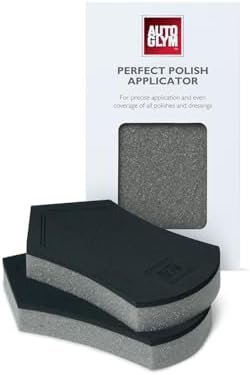
A car polish applicator pad or foam wax applicator works as a reservoir and release system between the product and the paint. When you prime a pad with product and begin working it into the surface, the foam cell structure absorbs a volume of product and then releases it progressively as you apply pressure and move the pad across the surface. The density of the foam controls the rate of release: a firm high-density foam releases product slowly and evenly under sustained pressure, making it suited to spreading polish or compound. A soft open-cell foam loads more product and releases it more freely, which suits finishing waxes and glazes that need to spread over a large area with light contact pressure.
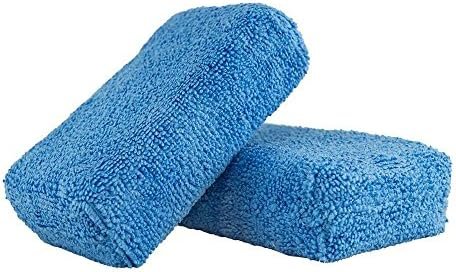
The face material of a detailing applicator pad determines how the product interacts with the paint at the point of contact. A smooth foam face maximises contact with the surface, which helps thin liquids and spray products spread without skipping. A terry or microfibre face adds texture that helps work paste products into surface imperfections and carry product into panel gaps and edges. A suede or ultra-low-nap microfibre face provides the even, residue-free application that ceramic coatings and paint sealants require, where consistent thin-film coverage matters more than product volume. Matching the face material to the viscosity and application method of the product being used is as important as matching the pad density.
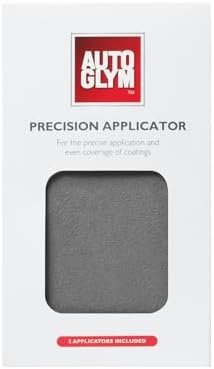
Pad size affects how precisely you can control product placement and how quickly you cover a panel. Smaller 3 to 4 inch foam applicator pads give precise control around badges, door handles, and trim edges where large applicators would overlap onto adjacent materials. Larger 5 to 6 inch pads cover flat panels more quickly but require more care around body lines and trim. For most hand application tasks, a 4 inch round foam applicator pad is a practical all-round size. For coating applicators and glass cloths, many detailers prefer the smallest pad that still allows a controlled, even wipe, since the coating itself needs to go on thinly with no pooling or heavy overlap at panel edges. Dedicated coating applicator pads and folded suede cloth blocks are designed specifically for this application requirement.
Applicator pads control how a product reaches the surface, they do not change what the product can do
Each matched to a specific detailing stage, product viscosity, and surface contact requirement
Match your applicator pad to the product stage, not just the product type
Four decisions that narrow the field to the right pad for your product and surface
Applicator pad selection starts with the detailing stage, not the specific product name. Correction and compounding stages need firm foam to deliver sustained cutting pressure. Polishing stages need medium density foam or terry face to spread evenly. Protection stages using wax and sealant need soft foam for light thin coverage. Coating stages need suede or ultra-low-nap microfibre face for controlled ultra-thin film application. Matching pad density to the stage is the single most impactful pad selection decision you can make.
Thin liquid products like spray sealants, quick detailers, and spray wax run easily and need a pad with enough surface contact area and light porosity to hold and spread without dripping. Thick paste products like carnauba wax and heavy compound benefit from a slightly more textured face such as terry cloth or medium foam that can work the paste into the surface rather than letting it sit on top. Gel and lotion consistency products sit in the middle and work well with a smooth medium foam applicator pad in most cases.
Flat panel areas where speed and coverage matter suit larger 5 to 6 inch pads that reduce the number of passes needed to apply product evenly. Detailed areas around body trim, window rubbers, badges, door handles, and panel edges need smaller 3 to 4 inch pads for precise placement. A pad that overlaps onto rubber trim or plastic inserts during wax or sealant application leaves white residue that is time-consuming to remove. Having a small detail applicator pad alongside your main panel pad covers both zones efficiently.
Paint applicator pads should never be used on wheels, tyres, or underbody surfaces. These zones carry brake dust, iron deposits, tyre compounds, and road grime that transfer into the foam cells during application and re-deposit onto painted surfaces if the same pad is used later. Tyre dressing applicators are typically a different sponge type designed to hold and release thick dressing without absorbing so much that it flings from the tyre when the wheel rotates. Interior applicator pads for leather conditioner, dashboard dressing, and trim sealant are separate from exterior paint pads.
The minimum practical set for a full detail is four dedicated applicator pads: one firm foam for polish or light compound, one medium foam or terry pad for wax, one suede or low-nap microfibre pad reserved for any coating or sealant, and one tyre sponge kept permanently separate from all paint contact pads. Washing pads between uses within a session helps, but washing does not remove all abrasive or solvent residue from previous product stages. Stage-dedicated pads eliminate the risk entirely and cost less than the damage caused by a single session of contamination transfer.
The most common errors that lead to poor coverage, cross-contamination, and product waste
A firm compound applicator pad used to apply finishing wax or ceramic coating applies too much pressure in too small a contact area. The wax goes on in streaks rather than a uniform thin film and the coating product builds up in lines rather than levelling across the panel. The result is difficult to buff and wastes product. Using a soft foam applicator pad matched to the protection stage is faster, uses less product, and produces an even finish that buffs off cleanly.
Loading too much wax, polish, or coating product onto an applicator pad leads to waste, uneven spread, and a thick layer that is difficult to remove cleanly. Most foam applicator pads require a pea-sized amount of paste product or five to eight sprays of liquid product to cover a 40 by 40 centimetre panel section. Reloading more frequently with smaller amounts produces a thinner, more even film and avoids the residue build-up that comes from over-application. With coatings in particular, too much product per pass is the primary cause of high-spot formation during curing.
A new dry foam applicator pad will absorb the first volume of product applied to it rather than releasing it onto the surface. The first pass with a new pad distributes little or no product and the second pass delivers a heavy surge as the foam reaches saturation. Priming a new pad by applying product, spreading it across the face by hand, and then making an initial light pass across a panel edge or scrap surface brings the pad to working saturation before you begin the main panel application. This prevents streaky first passes and product waste on new pad break-in.
Tyre and wheel applicator sponges are used in zones with high concentrations of brake dust, iron contamination, road tar, and tyre compounds. Even after washing, these contaminants can remain lodged in the foam cells of a tyre applicator. Using the same sponge on painted surfaces transfers these particles directly onto paint, causing scratching and product contamination. Tyre dressing applicators should be stored separately, labelled clearly, and never allowed into the paint applicator pad kit regardless of how thoroughly they have been washed.
Working through a full detail session using the same applicator pad from polish through to wax application without cleaning it between stages deposits polish residue and abrasive particles into the wax layer as it is applied. The wax goes on over a surface that still has polishing oil and abrasive residue on it, which affects bonding and clarity. Between stages, rinse the pad under warm water, squeeze out fully, and allow it to reach room temperature before using it with the next product. Better practice is to use a fresh pad for each product stage and wash all pads after the session is complete rather than between every use. For removal towels used across stages, washing with microfibre towel detergent keeps fibres strip-clean between loads.
Three habits that extend pad life and keep product application consistent session to session
Write the product stage on each pad with a permanent marker or use a colour-coded storage system: red for compound, blue for wax and sealant, black for tyre and wheel. Store pads in individual zip-lock bags or a dedicated applicator pad tray between sessions. Storing all pads loose in a single container allows residue transfer between pads and makes it easy to reach for the wrong pad at the start of the next detail. The few seconds this takes during initial setup prevents cross-contamination errors across every subsequent session.
Foam applicator pads that look clean on the surface can still carry polish residue, abrasive particles, wax carrier solvents, or coating chemistry deep in their cell structure from the previous session. These residues transfer onto the next surface at the first application pass. Rinse all pads under warm water, work the foam gently to release product, and rinse until the water runs clear. Allow to air dry completely before storing. Machine washing foam pads is not recommended as the agitation cycle breaks down the cell structure over time.
Foam applicator pads that have been stored wet, dried with heat, or used with solvent-heavy products can harden and lose their flexibility. A hardened pad cannot compress evenly under hand pressure and applies product unevenly with each pass. Pads with tears or missing sections create application voids where the product does not reach the surface. Foam cell degradation is not always visible to the eye but shows as inconsistent product release that makes uniform coverage impossible. Applicator pads are a low-cost consumable relative to the products they apply, replace them when performance degrades.
Find the best UK detailing products across our range of categories.


Your independent guide to the best car detailing products in the UK.
Hundreds of car cleaning products, pulled from trusted UK retailers across every category - shampoos, sealants, interior, glass, tools and more.
Customer ratings, review volume, price-to-performance and editor testing notes feed the score. No brand payments, ever.
Total Car Clean is 100% reader-supported. We may earn a small commission from affiliate links, but we remain unbiased to help you find the best products.