Car Paint Protection for Long-Lasting Shine
Top Picks Worth Considering
Click through to check today's price and availability from trusted retailers.
- All brands
- 3D Car Care
- Adams Polishes
- Aerolon
- Alchemy
- AngelWax
- Armor All
- Asc
- AutoBead
- Auto Finesse
- Autoglym
- Bilt Hamber
- Car Gods
- CarPlan
- CarPro
- Cerakote
- Chemical Guys
- Clean.
- CSL Shelby
- detailmate
- Diamondbrite
- diy detail
- Duel Autocare
- Ethos
- ExoForma
- Fiwiko
- Glart
- Griot's Garage
- Gtechniq
- Gyeon
- Harly Wax
- HydroSilex
- Jewels
- Meguiar's
- Pure Definition
- Simoniz
- SOFT99
- Sonax
- Technicians Choice
- The House Of Rags
- The Last Coat
- Turtle Wax
- Weiruixin
- YumCars
- Rating: High to Low
- Rating: Low to High
- Title: A → Z
- Title: Z → A
Why Protecting Your Car Matters
Paint protection isn’t just about making your car shiny. It changes how dirt and water interact with the surface, which makes every future wash easier and safer.
Unprotected paint is porous. Contaminants bond to it more aggressively. Road grime, brake dust, and tree sap cling harder, and when you wash, you’re more likely to drag particles across the surface and cause marring.
A protected surface repels contamination. Water sheets off instead of sitting in droplets. Dirt sits on top rather than bonding in. From our experience, a well-protected car stays cleaner between washes and needs less effort when you do clean it.
It also preserves the work you’ve already done. If you’ve polished out swirl marks or decontaminated the paint, protection locks in those results instead of letting them degrade over weeks.
What Protection Actually Does (and What It Doesn’t)
Protection sits on top of the clear coat as a sacrificial layer, taking environmental abuse instead of the paint. The main benefits are slickness and water behaviour.
A protected surface feels smooth to the touch, which reduces friction during washing. Water either beads up into tight droplets or sheets off cleanly, depending on the product type. Both are useful because they stop water from sitting on the paint and leaving mineral deposits.
What protection doesn’t do is make paint scratch-proof or self-cleaning. You still need to wash properly. You can still inflict damage with poor technique or contaminated wash media. The general consensus from users is that unrealistic expectations cause most disappointment with protection products.
We’ve found that durability claims vary wildly. How long protection lasts depends as much on how you prepare and maintain the surface as on the product itself.
What You Actually Need to Protect Your Car
You don’t need the most expensive product to protect your paint—you need the one you’ll actually apply properly and maintain.
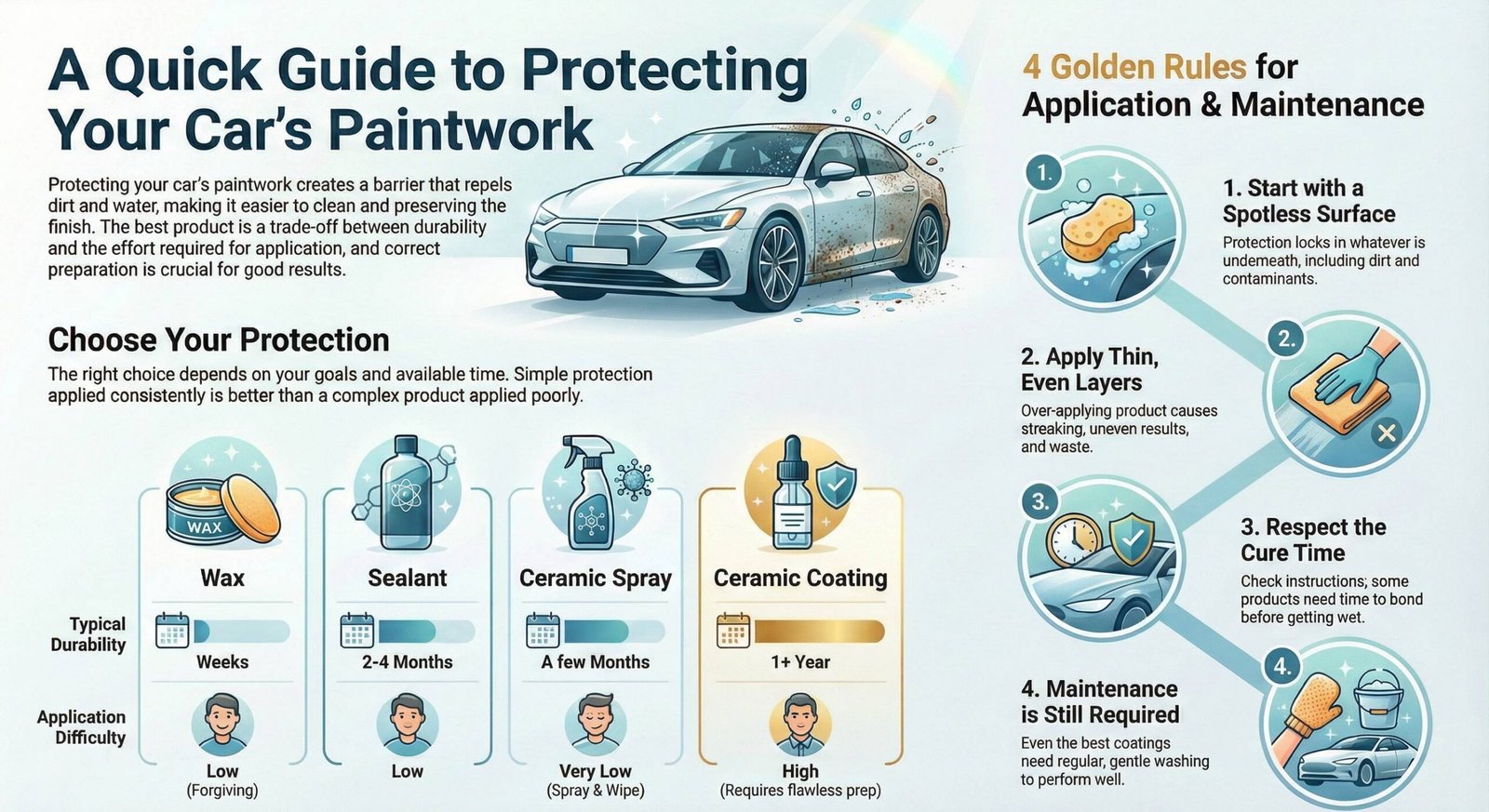
Wax
Wax is traditional paint protection. Natural waxes like carnauba give a warm, deep shine. Synthetic waxes last longer and perform more consistently in wet conditions.
From our experience, wax is forgiving to apply. It buffs off easily and doesn’t punish minor application mistakes. The trade-off is durability. Most waxes need reapplying every few weeks to a couple of months, depending on weather and how often you wash.
Wax suits people who enjoy regular detailing sessions or want that classic warm glow on their paint. It’s also one of the easier products for beginners to get right first time.
Sealants
Sealants are fully synthetic. They bond to paint more aggressively than wax, which gives better durability and more consistent water beading.
We tend to see sealants lasting two to four months in regular use, sometimes longer if conditions are kind. They don’t always have the same depth of shine as a good carnauba wax, but the difference is subtle unless you’re looking closely.
What makes sealants popular with daily drivers is the lower maintenance. You’re not reapplying every month. A lot of users mention they prefer sealants during winter when frequent waxing isn’t practical.
Ceramic Coatings & Sprays
This is where terminology gets messy. True ceramic coatings and ceramic spray products are different things entirely, even though they’re often grouped together.
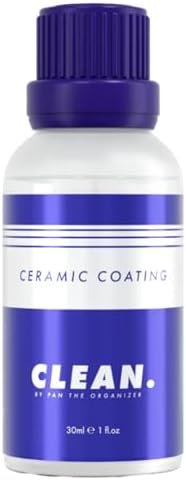
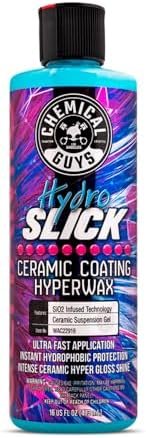
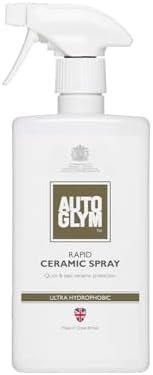
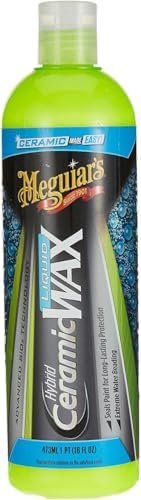
Ceramic spray sealants are quick-apply products. You spray them on, wipe them off, and you’re done in minutes. They’re chemically boosted sealants that offer decent durability—usually a few weeks to a couple of months. They don’t require perfect paint prep, and if you mess up the application, it’s easy to correct.
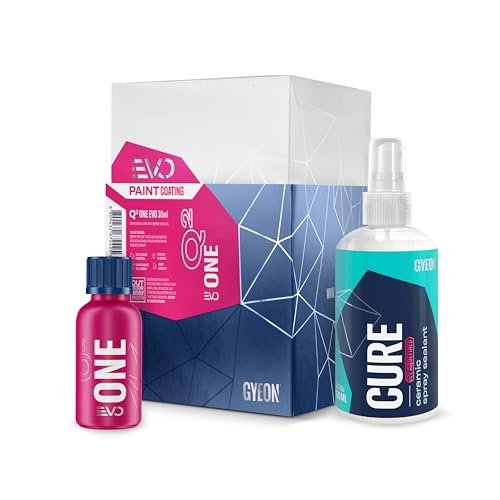
True ceramic coatings are semi-permanent. They cure and bond to the paint chemically, creating a hard layer that can last a year or more. But they demand flawless surface preparation. Any defects, oils, or contaminants left on the paint will be locked in. Application needs to be methodical. Too much product, uneven coverage, or letting it cure too long before buffing causes streaking or high spots that are difficult to remove.
From what we see in reviews, ceramic sprays are where most people should start. They give a taste of ceramic performance without the risk or effort. True coatings reward patience and preparation, but poor prep or application causes most complaints.
Be honest about your skill level and available time. Neither option is scratch-proof, and both still need maintenance washing. The biggest difference is durability and how much effort you’re willing to invest upfront.
→ View Ceramic Coatings & Sprays
Quick Detailers
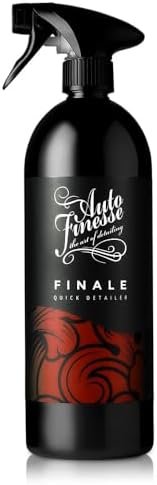
Quick detailers are light spray-and-wipe products. They’re not primary protection—they’re for topping up between proper applications.
Most quick detailers add a thin layer of gloss and slickness. Some include light cleaning agents to remove dust or fingerprints. We use them after a wash to boost water beading or between washes to keep the paint feeling smooth.
They don’t replace wax or sealant. Durability is measured in days, not weeks. But they’re useful for maintaining protection you’ve already applied, especially if you want to extend the life of a coating or refresh beading before winter.
Winter Protection
Winter is harsher. Road salt, grit, moisture, and freeze-thaw cycles all attack paint more aggressively than summer conditions. UK winters mean constant damp, salt-laden spray from motorways, and washing in low light when it’s harder to spot contamination.
Thicker or more durable protection makes sense here. Some products are specifically formulated to handle salt and grime better. Wheels and lower panels take the worst of it, so we often see people doubling up protection on those areas or using separate products designed for high-contamination zones.
From our experience, applying strong protection before winter starts saves effort later. You’ll wash more often in winter, and having a tough barrier in place reduces the risk of inflicting damage during those frequent washes.
→ View Winter Protection Products
How to Choose the Right Protection
- For low-effort, long-lasting protection
Sealants or ceramic spray products. Apply once, maintain with regular washing, reapply every few months. - For maximum gloss and regular care
Wax. Requires more frequent application but gives that warm, deep shine enthusiasts love. - For serious durability and you’re confident with prep
True ceramic coatings. Best results come from meticulous preparation and careful application. - For winter driving or high-mileage use
Winter-specific protection or a durable sealant. Focus extra protection on wheels, lower panels, and high-impact areas.
Simple protection applied consistently beats chasing durability claims. That’s why we focus on products that are easy to apply and easy to maintain. If you’re not sure, start with a sealant or ceramic spray and build from there.
Recommended Protection Order
Protection builds on the work that comes before it. Skipping steps reduces how well it bonds and how long it lasts.
- Wash
Remove all loose dirt and grime. Paint must be clean before you do anything else. - Decontaminate (if needed)
If the paint feels rough or gritty, use clay, iron remover, or a decontamination mitt. Protection can’t bond properly to contaminated surfaces. - Polish (optional)
Polishing removes defects and creates a perfectly smooth surface for protection to bond to. Not essential, but it makes a difference if you want the best results. - Apply protection
Whether it’s wax, sealant, or coating, follow the product instructions. Less is usually more. Thin, even layers work better than thick applications. - Maintain
Use pH-neutral shampoos that won’t strip protection. Add a quick detailer occasionally to top up gloss and slickness.
Each step supports the next. Proper prep affects longevity more than the product itself.
Common Protection Mistakes to Avoid
- Applying protection to dirty or contaminated paint
This is the most common mistake we see. Protection bonds to whatever’s on the surface. If that’s dirt or embedded contaminants, you’ve just sealed them in. - Over-applying product
More isn’t better. Thick layers cause streaking, uneven curing, and wasted product. Most protectants work best when applied thinly and buffed thoroughly. - Ignoring cure times
Some products need time to bond before they’re exposed to water. Washing too soon or getting caught in rain can ruin the application. Always check the instructions. - Expecting coatings to be maintenance-free
Even true ceramic coatings need regular washing. They reduce how much dirt bonds, but they don’t eliminate it. Neglecting maintenance shortens their lifespan and dulls their performance. - Not testing in a small area first
New products behave differently on different paints. Test on a small, inconspicuous panel before committing to the whole car. This is especially important with ceramic coatings.
What to Do After Protecting
Protection isn’t a one-and-done step. Maintaining it properly extends its life and keeps performance consistent.
- Use gentle, pH-neutral shampoos
Harsh or highly alkaline shampoos strip protection faster. Stick with products designed for maintained or protected vehicles. - Top up with quick detailers
A quick spray after washing refreshes gloss and water behaviour. It’s not essential, but it helps stretch time between full reapplications. - Reapply before protection fails completely
Don’t wait until water stops beading entirely. Reapply when you notice performance dropping—usually when beading weakens or the paint starts feeling less slick. - Inspect regularly
Check for areas where protection has worn faster, like door handles, boot edges, or high-contact panels. These spots may need more frequent attention.
Regular maintenance instead of reactive reapplication keeps your car looking better with less overall effort.
FAQs
What's the difference between wax, sealant, and ceramic coating?
Wax lasts 1-3 months with traditional gloss. Sealants last 3-6 months with synthetic durability. Ceramic coatings last 1-5+ years with hard, hydrophobic protection.
Can I apply wax over sealant?
Yes, but sealants may not bond well over wax. Apply sealant first, then wax on top for layered protection.
How long does ceramic coating last?
Professional coatings can last 5+ years, while consumer-grade coatings typically last 1-2 years with proper maintenance.
Do I need to polish before applying protection?
Yes, polishing removes defects and ensures protection bonds properly. Skipping polishing can lock in imperfections under the protection.
Related Insights and Articles
Explore More Categories
Discover more of our curated buying guides to continue your research.


