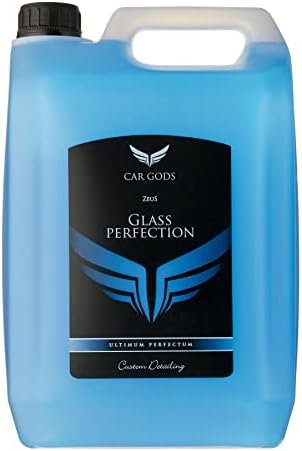
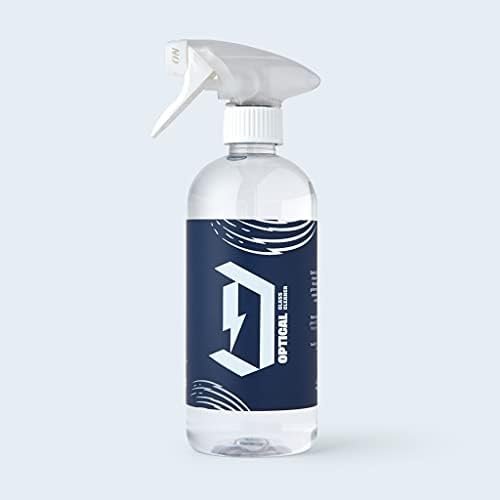
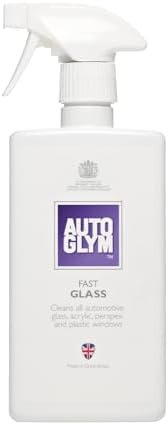
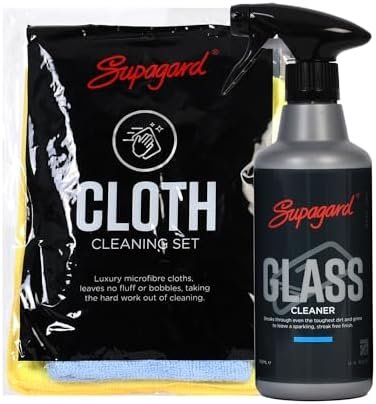
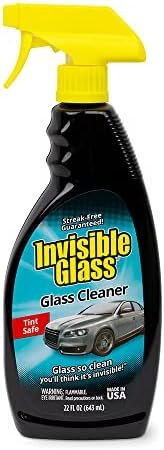
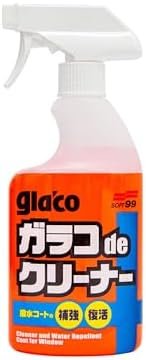
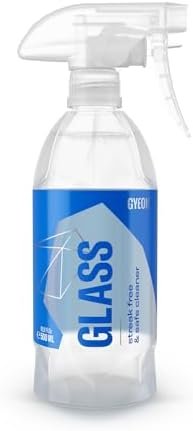
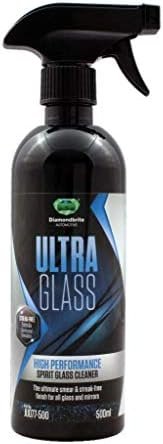
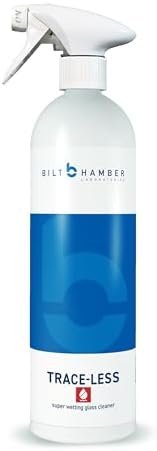
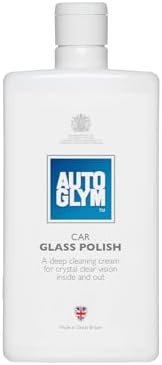
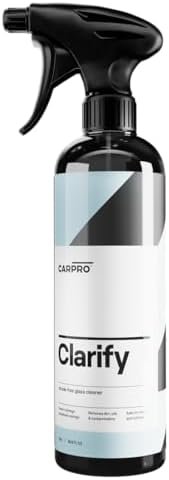
How Glass Cleaner Maintains Visibility and Appearance
Clean glass is more than just about appearance, it directly affects visibility and driving safety. Grease, fingerprints, traffic film, and interior haze all scatter light and reduce clarity, especially at night or in low sun.
The main issue we see is people using household glass cleaners or just water. These either leave streaks, don’t cut through automotive grime, or create residue that makes things worse. Proper car glass cleaners are formulated to remove the specific contamination that builds up on vehicle glass without leaving anything behind.
From our experience, getting glass properly clean is the foundation for everything else. You can’t assess whether you need protection, or how well that protection is working, if the glass itself isn’t spotless to begin with.
What Glass Cleaner Is (and Isn’t)
Glass cleaner is a chemical product designed to remove contamination from automotive glass surfaces. It handles grease, fingerprints, traffic film, light grime, and the interior haze that builds up from plastics and upholstery outgassing.
It’s not a protective product. Any water beading you get from a glass cleaner is incidental, not a core function. If you want protection, that’s what sealants and coatings are for.
Glass cleaners also don’t fix scratches, wiper marks, or embedded contamination like tree sap or tar. For those issues, you need clay, polish, or dedicated removers. What glass cleaner does is maintain clarity between deeper cleaning sessions.
We’ve found that regular use keeps glass in good condition and makes it easier to spot when something more serious needs attention, like wiper damage or bonded contaminants.
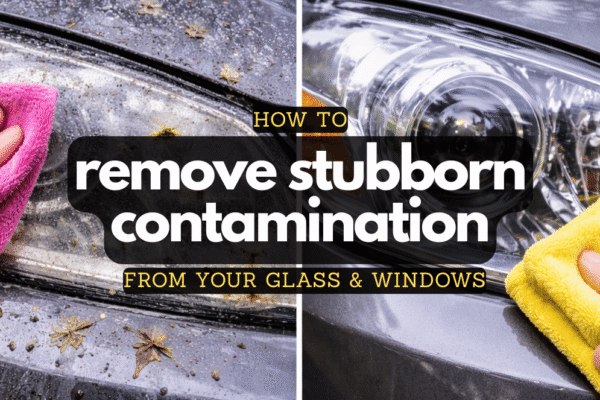
“If your glass has bonded contamination that won’t shift with normal cleaning, you’ll need to remove it first before the glass cleaner can work properly. See our guide on removing stubborn contamination from car windows and glass for the proper removal methods.”
Glass Cleaner Types (Where It Matters)
-
Ammonia-Based Cleaners
- Ammonia-based formulas cut through grease and grime effectively. They’re strong cleaners and tend to dry quickly, which helps avoid streaking if you work fast.
- The downside is the smell, and they can affect tinted windows or damage interior plastics if you’re not careful. We tend to use these on exterior glass where ventilation isn’t an issue.
- What stands out for us is how well they handle oily residue, but you do need to be mindful of overspray onto trim or dashboards.
-
Ammonia-Free Cleaners
- Ammonia-free products are gentler and safer for tinted windows and interior surfaces. They don’t have the harsh smell, which makes them better for working inside the car.
- These formulas can take a bit more effort to remove stubborn grime, but for regular maintenance they work well. We regularly see people prefer these for interior glass where you’re working in an enclosed space.
- The general consensus is that they’re the safer choice if you’re unsure about compatibility with window films or if you want something that won’t irritate during use.
-
Foam Cleaners
- Foam formulas cling to vertical glass, which gives them more contact time with contamination. This can make them more effective on heavily soiled windows or interior glass with a lot of haze.
- They’re easier to control than sprays, less likely to run onto seats or trim. From our experience, foam works particularly well on the inside of windscreens where you need the product to stay put while you work.
- What we’ve found is that you use less product overall compared to liquid sprays, though they can cost a bit more per bottle.
-
Spray Cleaners
- Spray bottles are the most common format. They’re quick to apply and easy to distribute evenly across the glass surface.
- The main complaint we see is overspray, especially on interior glass where you don’t want cleaner on the dashboard or seats. Spraying onto a cloth first solves this but uses more product.
- These work well for regular maintenance where the glass isn’t heavily contaminated. For tougher jobs, you might need to spray multiple times or let the product sit longer.
How to Choose the Right Glass Cleaner
- For exterior glass without tint
Ammonia-based cleaners work well here. They cut through traffic film and road grime effectively, and ventilation isn’t an issue outdoors.
- For tinted windows
Use ammonia-free formulas to avoid damaging or discolouring the tint film. Check the product label to confirm it’s safe for tinted glass.
- For interior glass
Ammonia-free or foam cleaners are better. The smell is less harsh in an enclosed space, and foam reduces the risk of overspray onto trim and upholstery.
- For heavily soiled glass
Foam formulas or stronger ammonia-based sprays give you more cleaning power. You may need to let the product dwell for a minute before wiping.
- For regular maintenance
A basic ammonia-free spray does the job. If the glass is cleaned frequently, you don’t need heavy-duty formulas.
Common Glass Cleaner Mistakes to Avoid
- Using household glass cleaner on car glass
Household cleaners often leave residue or don’t handle automotive grime well. Car glass cleaners are formulated for the specific contamination you get on vehicles.
- Cleaning glass in direct sunlight
The cleaner dries too quickly, leaving streaks. Work in shade or on a cool panel for best results.
- Using dirty or low-quality cloths
Old towels or paper products leave lint and streaks. Microfibre glass towels designed for this job make a noticeable difference.
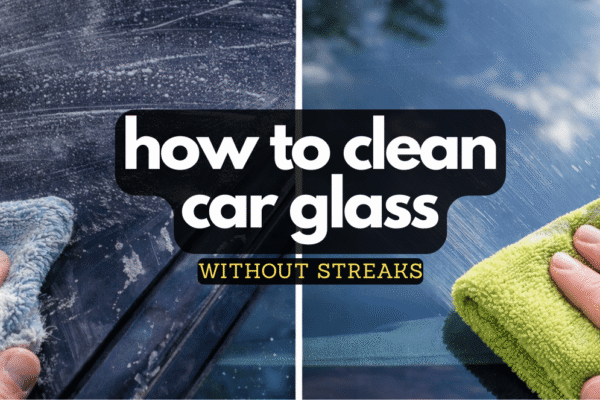
“If you’re struggling with streaks no matter which cleaner you use, it’s usually down to cloth choice and technique rather than the product itself. Our guide on how to clean car glass without streaks covers the exact cloths and wiping methods that work.”
- Spraying cleaner directly onto interior glass
Overspray gets onto the dashboard, seats, and trim. Spray onto the cloth first, then wipe the glass.
- Not addressing embedded contamination first
If the glass has tar, tree sap, or bonded grime, cleaner alone won’t shift it. Use a dedicated remover or clay bar first, then clean.
- Using too much product
More cleaner doesn’t mean better results. It just makes streaking worse and wastes product. A light mist is usually enough.
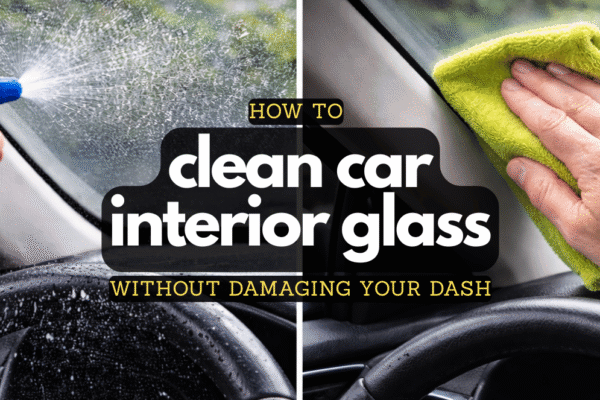
“Interior glass needs more care than exterior because of the surrounding surfaces. For a safe interior cleaning technique that protects your dashboard and trim, read our guide about cleaning interior car glass.“
What to Do After Cleaning Glass
- Inspect the glass in different lighting
Streaks and residue often show up in direct light or at night with oncoming headlights. Check from multiple angles to confirm the glass is actually clean.
- Apply protection if needed
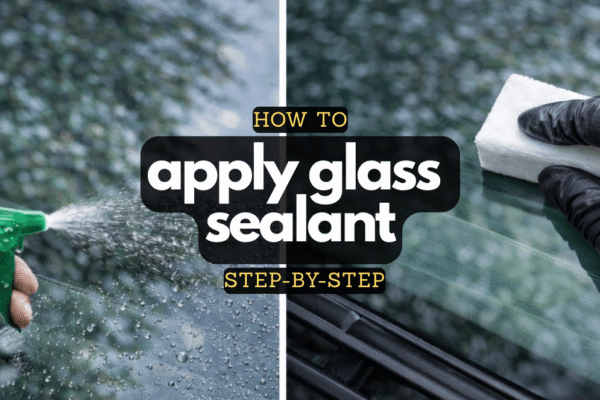
Once the glass is clean, that’s the right time to apply a sealant or coating if you want water repellency. Protection bonds better to clean glass.
- Check your wipers
If the glass is clean but you’re still getting streaks or judder, the issue is likely the wiper blades. Clean or replace them as needed.
- Maintain regular cleaning
Glass contamination builds up gradually. Cleaning every few weeks, or when visibility drops, keeps it manageable and avoids heavy buildup.
Clean glass is the foundation of all other glass care. Get this right and everything else, from protection to visibility, becomes easier to manage.