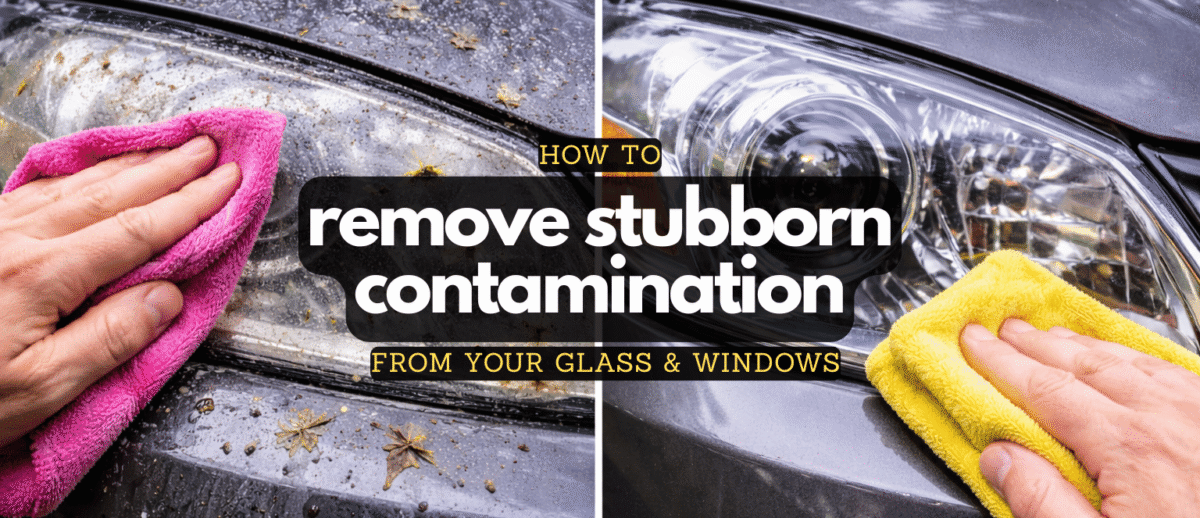
If your windows or lights still look hazy after careful cleaning, the problem probably isn’t technique anymore.
This is where people get frustrated. They clean their glass properly, and they use good cloths too. The streaks improve, but certain marks just won’t shift. At this point, many assume the cleaner isn’t strong enough.
In reality, glass cleaners aren’t designed to remove bonded contamination. So we’ll explain what that contamination is, why it behaves differently on glass, and how to deal with it safely without scratching or overdoing it.
What’s actually happening on contaminated glass
Glass is hard, but it isn’t smooth.
Over time, contaminants bond to the surface:
- Tree sap hardens and grips the glass
- Bug residue bakes on with heat
- Traffic film builds up invisibly
- Tar spots cling along lower edges
Once bonded, these contaminants don’t dissolve with normal glass cleaners. Wiping harder just spreads residue or drags it across the surface, which is why glass can look worse in certain light, even after cleaning.
This is also why contamination often shows up most at night or in low sun.
Where people usually go wrong
Most mistakes come from trying to solve the problem in one step.
- Scrubbing harder with the same cleaner
Pressure doesn’t remove bonded contamination. It increases the risk of fine scratches. - Using abrasive pads or household tools
Glass is resistant, but these tools leave permanent marks that show up in glare. - Jumping straight to polish
Polishing removes material. It’s unnecessary for most contamination and easy to misuse. - Treating glass like paint
The risks are different, but the damage is just as visible.
Once glass is scratched or unevenly worn, it’s difficult to correct without specialist tools.
What usually works
The safest approach is to start gentle and only step things up when you have to.
In most cases:
- Clean the glass properly first
- See what remains once it’s dry
- Deal with what’s left using targeted methods, not brute force
Sticky contamination like sap, tar, and bugs responds best to dedicated removers used sparingly. These products are designed to soften the contamination so it can be lifted rather than scrubbed away.
Key points:
- Apply to a cloth, not the glass
- Let the product do the work
- Wipe gently and re-clean afterwards
Sometimes glass still hazes even after proper cleaning. This is usually caused by a thin layer of contamination that builds up over time and sticks to the glass. In these cases, a gentle clay bar or clay mitt can help lift the residue when used with plenty of lubrication.
Normal Glass Cleaners still play a role here, not as the solution, but as the reset step once contamination is removed.
When this approach doesn’t apply
If glass shows:
- Deep wiper marks
- Etching from hard water
- Long-term mineral damage
Cleaning and decontamination won’t fix it. These issues require polishing or professional correction, and trying to solve them with cleaners or aggressive tools usually makes the problem more visible.
Knowing when to stop is part of safe glass care.
So remember, when glass won’t clean properly, the issue usually isn’t effort or product strength.
It’s contamination behaving differently than dirt.
Remove it gently, reset the surface, and let glass cleaners do what they’re meant to do, i.e. maintaining clarity, not fighting bonded residue.