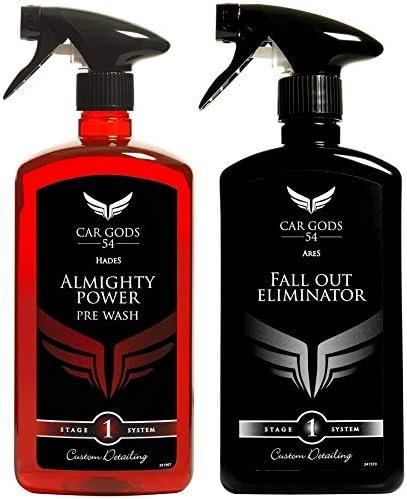
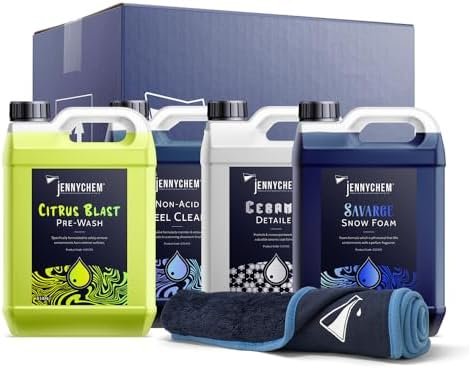
Pre-Wash Products for Heavily Soiled Cars
Top Picks Worth Considering
Click through to check today's price and availability from trusted retailers.
- All brands
- AutoBead
- Auto Finesse
- Autoglym
- Bilt Hamber
- Car Gods
- CarPlan
- Cleenly
- Duel Autocare
- Gtechniq
- Gyeon
- Hydro
- Jennychem
- Triplewax
- Turtle Wax
- ValetPRO
- Rating: High to Low
- Rating: Low to High
- Title: A → Z
- Title: Z → A
FAQs
Is pre-wash worth it?
Yes, pre-wash is worth it if you care about reducing scratches during the contact wash. The biggest benefit is removing bonded contamination before you touch the paint with a mitt, which is where most marring happens. From our experience, people who skip pre-wash and go straight to shampooing are far more likely to introduce swirl marks over time. The value depends on how dirty the car is. If you’re washing weekly and the car’s only lightly soiled, a quick rinse might be enough. But if the car’s covered in road grime, brake dust, or hasn’t been washed in weeks, pre-wash makes a real difference to wash safety. It’s not about making the car look clean, it’s about softening and loosening dirt so the contact wash is less aggressive.
What is a prewash?
A prewash is a cleaning product applied before the main contact wash to loosen and dissolve bonded contamination. It’s designed to tackle dirt that a standard shampoo won’t shift, things like tar, road film, brake dust, and baked-on grime. The product is sprayed on, left to dwell for several minutes, then rinsed away. Pre-wash isn’t the same as snow foam, though they serve a similar purpose. Pre-wash products are often stronger and more targeted at stubborn dirt, whilst snow foam is generally gentler and designed to cling to vertical surfaces. Some people use both in sequence for heavily soiled cars, but for regular washing, one or the other is usually enough.
How do you pre-wash?
Spray the pre-wash product onto dry or lightly rinsed panels, starting from the bottom and working up. The lower panels tend to be dirtiest, so they benefit from more product and longer dwell time. Let the product sit for five to ten minutes, keeping an eye on it to make sure it doesn’t dry on the surface. After the dwell time, rinse thoroughly with a pressure washer or hose, working from top to bottom. The goal is to remove all the loosened dirt and product residue before you start the contact wash. We’ve found that working in the shade and on cool panels gives you more dwell time without the product drying too quickly. If it starts to look dry or patchy before the time’s up, rinse it off immediately.
Do you rinse off pre-wash?
Yes, you must rinse off pre-wash thoroughly before moving to the next stage. Pre-wash products loosen dirt and contamination, but they don’t remove it on their own. If you skip the rinse and go straight to shampooing, you’re just moving that loosened grime around with your wash mitt, which defeats the purpose. Use a pressure washer or strong hose to rinse from top to bottom, making sure all product and dirt are completely removed. We tend to spend a bit more time rinsing the lower panels and wheel arches because that’s where the heaviest contamination sits. Any pre-wash residue left on the surface can interfere with the shampoo stage and potentially cause streaking.
What can I use as a pre-wash?
A dedicated pre-wash spray is the best option because it’s designed for the job. These products are formulated to loosen dirt and rinse away cleanly without leaving residue. If you don’t have a specific pre-wash, a diluted citrus-based degreaser can work, but be careful on protected cars because these products can strip wax or sealant if used too often. Some people use snow foam as a pre-wash, and that works fine for light to moderate dirt. The main difference is that snow foam is generally gentler and designed to cling to panels, whilst pre-wash sprays are stronger and more targeted at stubborn contamination. Avoid using household cleaners or washing-up liquid, these aren’t designed for car paint and can cause more harm than good.
How long does a prewash cycle take?
If you're doing it manually, allow ten to fifteen minutes for the full pre-wash stage. This includes application time, dwell time (five to ten minutes), and rinsing. The actual time depends on how dirty the car is and how quickly you can work. Heavily soiled cars might need a bit longer for the product to work effectively. Working efficiently helps, but don't rush the dwell time. The product needs time to break down contamination, and rinsing too early means you're not getting the full benefit. We've found that doing the pre-wash stage properly saves time during the contact wash because there's less dirt to deal with, and you can work more confidently knowing the surface is cleaner.
When should I use pre-wash?
Use pre-wash when the car's genuinely dirty, hasn't been washed in a while, or has visible contamination like tar, road film, or heavy brake dust. It's particularly useful in winter or after long motorway trips when the car picks up more grime than usual. For light weekly washing, a good rinse followed by shampoo might be enough. If you've got protection on the car like wax or a ceramic coating, choose a gentle pre-wash that won't strip those layers. Save the stronger citrus-based products for when the car's filthy and really needs the extra cleaning power. We use pre-wash as a regular part of our process, but we adjust the strength based on how dirty the car actually is.
Related Insights and Articles
Explore More Categories
Discover more of our curated buying guides to continue your research.


